




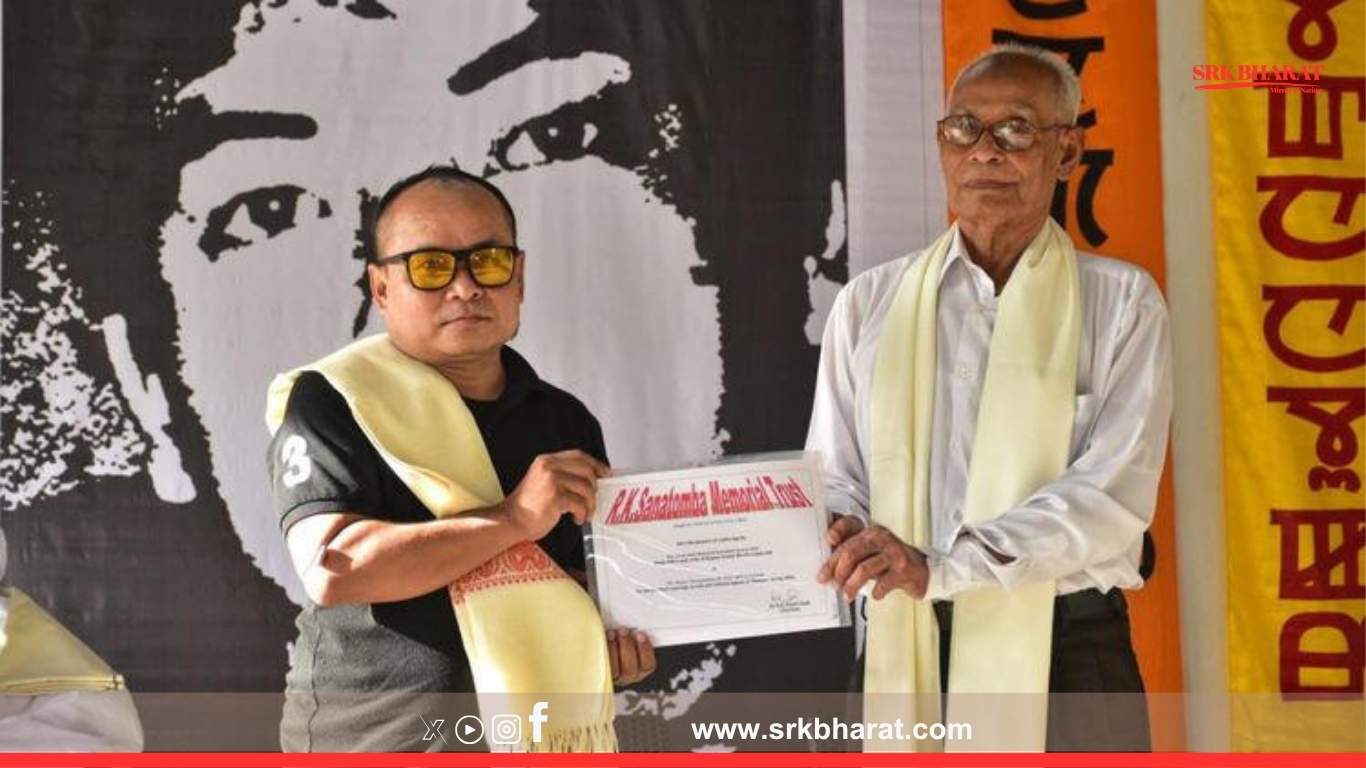
Celebrating the power of cultural journalism in preserving and promoting indigenous heritage, renowned journalist Ningthoujam (N) Priya Devi has been conferred the prestigious RK Sanatomba Award for Excellence in Cultural Reporting 2025. The award was presented at a solemn function organised at the Manipur Press Club on Monday, attended by prominent journalists, cultural scholars, and civil society leaders.
About The RK Sanatomba Award
Instituted in memory of RK Sanatomba Singh, a pioneering Manipuri journalist, cultural activist, and editor of Poknapham, the award honours journalists who have:
- Significantly contributed to documenting cultural practices
- Preserved indigenous art forms through authentic reporting
- Promoted Manipuri literature, dance, theatre, and folklore in mainstream discourse
Citation Highlights
The award citation noted:
“N. Priya Devi’s detailed features on endangered folk performances, indigenous textiles, and rituals have inspired cultural revival initiatives across Manipur.”
Profile: Awardee N. Priya Devi
| Aspect | Details |
|---|---|
| Profession | Senior cultural correspondent |
| Organisation | The Sangai Express |
| Years in journalism | 12 |
| Key coverage areas | Lai Haraoba rituals, Shumang Leela theatre, weaving traditions, Meitei oral literature |
| Other awards | Manipur State Journalism Fellowship (2022) |
Her Landmark Works
- Revival of Shumang Leela:
Her 2023 series documented struggles of Shumang Leela theatre troupes during the pandemic, highlighting their socio-economic importance. - Weaving Beyond Borders:
An in-depth feature on Manipuri weavers’ global outreach, inspiring policy support for looms under state handicrafts initiatives. - Vanishing Folklore:
Her award-winning story on dying Meitei folktales sparked digital archiving efforts by state universities.
Award Ceremony Highlights
The RK Sanatomba Award ceremony was graced by:
- RK Nimai Singh, retired IAS officer and cultural historian, as chief guest
- Thokchom Ratan Kumar, President, Editors’ Guild Manipur
- Dr. Saroj Nalini Devi, folklorist, who delivered the keynote lecture on “Journalism as cultural stewardship”
During her acceptance speech, N. Priya Devi stated:
“This award strengthens my resolve to tell stories of our cultural wisdom and artisans who keep our identity alive.”
Importance Of Cultural Reporting In Manipur
Manipur, with its rich tapestry of Meitei, Naga, Kuki, and Pangal cultural traditions, relies on informed journalism to:
- Document oral histories before they vanish with older generations
- Provide a platform for endangered art forms facing neglect
- Inspire youth to take pride in indigenous identities
Past Recipients Of RK Sanatomba Award
| Year | Recipient | Contribution |
|---|---|---|
| 2018 | Laishram Robindro | Ethnomusicology reporting |
| 2019 | Khumanthem Sunita | Indigenous medicinal knowledge features |
| 2020 | Wangkhem Chaoba | Documentary photography on ritual landscapes |
| 2021 | Naorem Rajesh | Political-cultural commentary on Meitei identity |
| 2022 | Chinglen Nongthombam | Visual journalism on textile traditions |
| 2023 | Mutum Sarita | Folk theatre preservation stories |
| 2024 | Loitongbam Anita | Women artisans’ cultural entrepreneurship reporting |
Voices From The Journalism Community
RK Nimai Singh:
“Cultural journalism is not just reporting events. It is documenting our civilisational continuity. Priya’s work is exemplary.”
Editors’ Guild Manipur President Thokchom Ratan Kumar:
“As mainstream media shifts to sensation, cultural journalism anchors society to its roots. Awards like RK Sanatomba inspire this spirit.”
Cultural Experts On Her Impact
Dr. Saroj Nalini Devi, folklorist:
“Her features on dying folktales inspired oral history classes at Manipur University. That is transformative journalism.”
Oja Thongam Manglem, Shumang Leela guru:
“During lockdown, when our troupes faced extinction, her stories brought donations and state attention. She saved lives and art.”
Challenges Faced By Cultural Journalists In Manipur
- Limited Funding: Cultural beats rarely receive sponsorship compared to politics or crime reporting.
- Language Barriers: Documenting oral traditions requires linguistic proficiency in multiple tribal dialects.
- Digitisation Gaps: Lack of platforms to host rich multimedia cultural content.
- Youth Disinterest: Urban youth’s drift from traditional arts lowers readership, challenging coverage sustainability.
Policy Recommendations From The Event
Speakers urged:
- State government to create fellowships for cultural journalism under the Department of Art and Culture.
- Universities to integrate journalism students into heritage documentation projects.
- Editors to allocate dedicated pages for indigenous arts and literature reporting weekly.
Broader Implications For Indian Journalism
The RK Sanatomba Award ceremony underlined how cultural journalism:
- Strengthens local identities against homogenising global media narratives
- Enables inclusive development by showcasing marginalised artisans
- Preserves intangible heritage, aligning with UNESCO’s cultural conservation goals
Government’s Stand On Cultural Journalism
An official from the Manipur Directorate of Information and Public Relations (DIPR) present at the event stated:
“We will propose new state journalism awards specifically for indigenous culture and language reporting.”
What’s Next For N. Priya Devi?
She shared plans to:
- Launch a podcast series documenting Meitei and tribal folktales narrated by elders.
- Collaborate with Manipur University on a digital folk archive project.
- Mentor young cultural reporters through workshops in collaboration with Editors’ Guild Manipur.
Key Takeaways
- N. Priya Devi received the RK Sanatomba Award for Excellence in Cultural Reporting 2025, recognising her contributions to documenting and preserving Manipur’s rich heritage.
- The award highlights the critical role of cultural journalism in safeguarding endangered traditions and empowering artisan communities.
- Speakers at the event called for institutional support, fellowships, and editorial commitment to strengthen cultural reporting as a vital pillar of journalism.
Disclaimer
This article is for informational and editorial purposes only. Data are based on official award citations, interviews with journalists and cultural scholars, and public domain reportage. Readers are advised to refer to award committee announcements for complete official details.