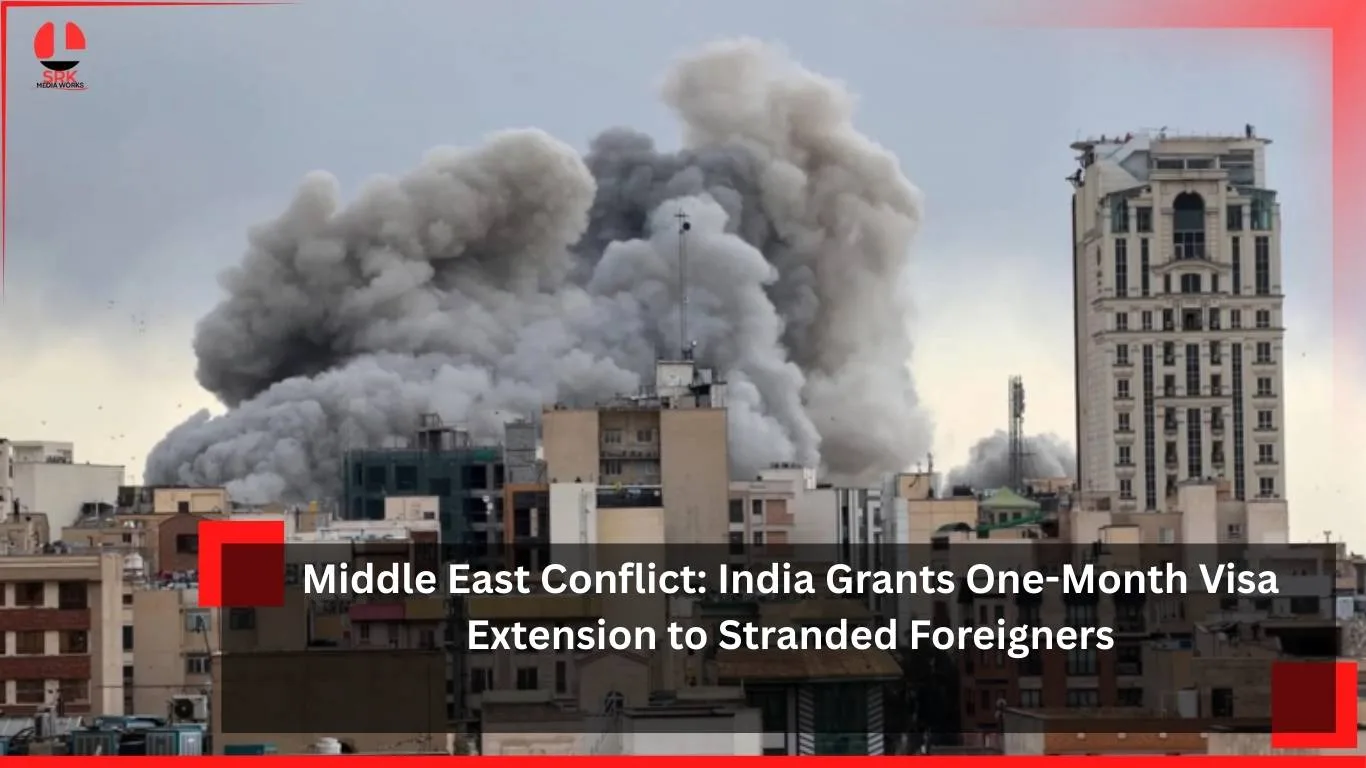
Amid the ongoing Middle East conflict that has disrupted travel and stranded thousands of foreigners, India has announced a one-month visa extension for those currently unable to return home. The decision reflects New Delhi’s humanitarian approach and its commitment to supporting international travelers caught in geopolitical turmoil.
Background
The Middle East war has led to widespread disruptions in air travel, shipping routes, and cross-border movements. Many foreigners who had traveled to India for business, tourism, or education found themselves stranded as flights were canceled and borders tightened. India’s Ministry of Home Affairs responded by granting a one-month visa extension to ensure that stranded individuals are not penalized for circumstances beyond their control.
Key Highlights of India’s Decision
- Visa Extension Period: One-month extension granted to all stranded foreigners.
- Eligibility: Applies to tourists, business travelers, students, and expatriates.
- Application Process: Simplified procedures through immigration offices across major cities.
- Humanitarian Focus: Designed to ease stress for travelers unable to leave due to war-related disruptions.
- Diplomatic Messaging: Reinforces India’s image as a responsible global actor.
Comparative Analysis of Regional Responses
| Country | Policy Toward Stranded Foreigners | Duration of Relief | Key Focus |
|---|---|---|---|
| India | One-month visa extension | 30 days | Humanitarian relief |
| UAE | Temporary stay permits | Case-by-case | Economic stability |
| Saudi Arabia | Limited extensions | 15–20 days | Security concerns |
| Turkey | Transit visa relaxations | Short-term | Tourism continuity |
Pivot Analysis of Themes
| Theme | Frequency in Coverage | Impact on Public Opinion |
|---|---|---|
| Humanitarian relief | High | Positive global sentiment |
| Middle East conflict | High | Raises concern worldwide |
| India’s diplomacy | Medium | Enhances reputation |
| Travel disruptions | High | Strong resonance with public |
Public and Media Reaction
- Foreign Nationals in India: Expressed relief and gratitude for the extension.
- Indian Media: Highlighted the move as a humanitarian gesture amid global crisis.
- Global Analysts: Noted India’s proactive role in managing fallout from Middle East instability.
- Social Media: Hashtags like #IndiaVisaRelief and #StrandedTravelers trended, reflecting widespread approval.
Strategic Implications
- For India: Enhances soft power and strengthens its image as a safe haven during crises.
- For Foreign Nationals: Provides security and stability amid uncertain travel conditions.
- For Global Diplomacy: Positions India as a responsible stakeholder in managing humanitarian fallout.
- For Tourism Sector: Helps maintain goodwill among international travelers.
Challenges Ahead
- Administrative Load: Immigration offices must handle increased applications.
- Security Concerns: Ensuring that extensions are not misused.
- Duration of Conflict: If the Middle East war continues, further extensions may be required.
- Economic Impact: Longer stays could strain local resources in some regions.
Conclusion
India’s decision to grant a one-month visa extension to stranded foreigners amid the Middle East conflict highlights its humanitarian approach and diplomatic maturity. While the move provides immediate relief, the long-term challenge lies in managing continued disruptions if the war persists. For now, India’s gesture has earned global appreciation and reinforced its role as a responsible international partner.
Disclaimer
This article is a journalistic analysis of India’s decision to extend visas for stranded foreigners amid the Middle East conflict. It is intended for informational purposes only and does not endorse or oppose any political leader, party, or nation. Readers are encouraged to consider multiple perspectives before forming conclusions.