



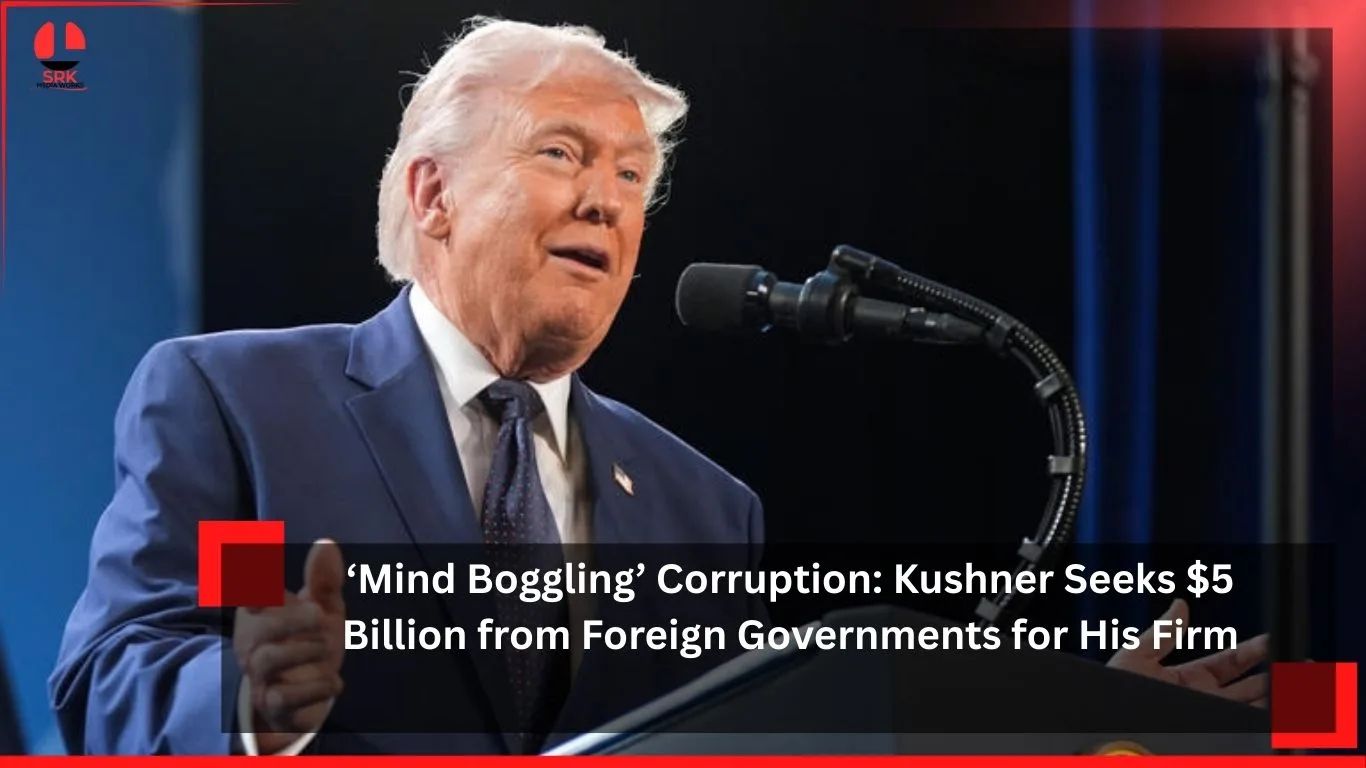
Jared Kushner, former senior adviser to U.S. President Donald Trump, has once again come under scrutiny after reports surfaced that he is seeking $5 billion in investments from foreign governments for his private equity firm. Critics have described the move as “mind boggling” corruption, raising questions about ethics, influence, and the blurred lines between politics and business.
Background
Kushner, who played a central role in Trump’s administration, particularly in Middle East diplomacy, launched his private equity firm shortly after leaving office. His efforts to secure billions in funding from foreign governments have sparked controversy, with many questioning whether his political connections are being leveraged for personal gain.
Key Highlights
- Funding Goal: Kushner’s firm is reportedly seeking $5 billion in commitments.
- Foreign Governments Involved: Potential investors include Gulf states and other international partners.
- Criticism: Opponents argue this represents a conflict of interest and undermines democratic accountability.
- Supporters’ View: Some claim Kushner’s global network makes him uniquely positioned to attract investment.
Comparative Analysis of Ethical Concerns
| Issue | Kushner’s Position | Critics’ Position | Public Perception |
|---|---|---|---|
| Foreign Investments | Legitimate business strategy | Conflict of interest | Divided |
| Political Connections | Valuable global network | Exploiting former office | Negative |
| Transparency | Limited disclosures | Lack of accountability | Concerned |
| Economic Impact | Potential growth opportunities | Risk of undue influence | Mixed |
Pivot Analysis of Themes
| Theme | Frequency in Coverage | Impact on Public Opinion |
|---|---|---|
| Corruption allegations | High | Strong negative sentiment |
| Foreign funding | High | Raises ethical concerns |
| Political influence | Medium | Sparks debate |
| Business legitimacy | Medium | Divided opinions |
Public and Media Reaction
- Critics: Label the move as “mind boggling corruption,” arguing it undermines trust in democratic institutions.
- Supporters: Highlight Kushner’s ability to attract global capital as a sign of business acumen.
- Media Coverage: Focuses on the ethical implications of former officials seeking foreign funding.
- Social Media: Hashtags like #KushnerCorruption and #ForeignFunding have trended, reflecting widespread debate.
Strategic Implications
- For Kushner: Potential to secure massive capital but at the cost of reputational damage.
- For the U.S.: Raises questions about post-office conduct of senior officials.
- For Foreign Governments: Opportunity to strengthen ties with influential figures, but risk of backlash.
- For Global Business: Highlights the intersection of politics and private equity.
Challenges Ahead
- Regulatory Scrutiny: Possible investigations into foreign funding and ethics.
- Public Trust: Risk of eroding confidence in political institutions.
- Diplomatic Fallout: Foreign governments may face criticism for investing in politically connected firms.
- Long-Term Sustainability: Questions remain about whether such funding models are viable without political influence.
Conclusion
Jared Kushner’s pursuit of $5 billion from foreign governments for his private equity firm has reignited debates about corruption, ethics, and the overlap between politics and business. While supporters argue his global connections make him a strong investment magnet, critics see the move as a troubling example of influence peddling. As scrutiny intensifies, the controversy underscores the need for clearer boundaries between public service and private gain.
Disclaimer
This article is a journalistic analysis of reports regarding Jared Kushner’s efforts to secure foreign funding for his private equity firm. It is intended for informational purposes only and does not endorse or oppose any political leader, party, or nation. Readers are encouraged to consider multiple perspectives before forming conclusions.