


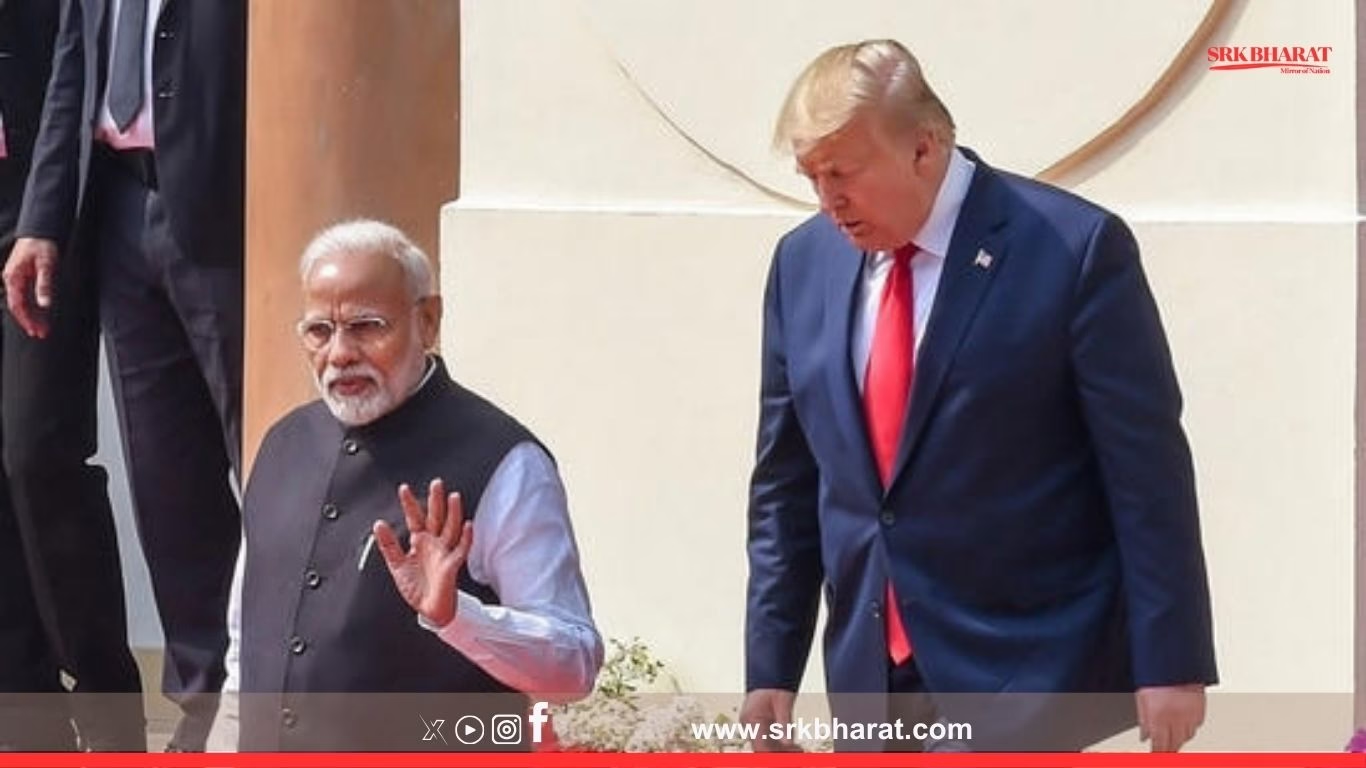
In a striking op-ed published by the Jerusalem Post, Israeli defence policy expert Zaki Shalom has drawn a sharp comparison between Indian Prime Minister Narendra Modi and Israeli Prime Minister Benjamin Netanyahu, suggesting that Israel could learn from Modi’s strategic restraint and emphasis on national honour. The article, titled “What Israel Can Learn From Modi,” highlights how Modi’s refusal to immediately apologise during diplomatic tensions with the United States demonstrated a firm assertion of sovereignty—something Shalom believes Netanyahu failed to emulate during the recent Khan Younis hospital shelling incident.
The op-ed comes amid heightened scrutiny of Israel’s response to civilian casualties in Gaza and reflects growing introspection within Israeli strategic circles about the country’s global posture. Shalom argues that Modi’s approach during the Trump administration—particularly his refusal to accept mediation in the India–Pakistan conflict and his silence in the face of tariff escalations—was rooted in a deep sense of national pride and strategic clarity.
🧭 Timeline of Key Incidents Compared in the Op-Ed
| Incident | Country | Leader’s Response | Strategic Outcome |
|---|---|---|---|
| Khan Younis Hospital Shelling (Aug 2025) | Israel | Netanyahu, IDF issued immediate apology | Perceived panic, domestic criticism |
| Operation Sindoor Ceasefire (2024) | India | Modi declined Trump’s mediation calls | Maintained autonomy, praised for restraint |
| US Tariff Hike on India (2025) | India | Modi remained silent, did not apologise | Asserted sovereignty, avoided escalation |
Shalom’s analysis suggests that Modi’s responses were calculated to preserve India’s global standing and avoid appearing subordinate.
🔍 Highlights from Zaki Shalom’s Jerusalem Post Op-Ed
| Quote / Assertion | Context / Implication |
|---|---|
| “Modi did not rush to apologise…” | Refers to India’s refusal to react hastily to US pressure |
| “He declined four phone calls from President Trump.” | Indicates Modi’s strategic distancing during Operation Sindoor |
| “Israel must learn to defend its national honour.” | Suggests Netanyahu’s response lacked symbolic strength |
| “Statements conveyed anxiety—perhaps even panic.” | Critiques IDF and Netanyahu’s immediate apology after Gaza shelling |
The op-ed positions Modi’s diplomatic style as a model for leaders navigating global crises with dignity.
📉 Comparative Leadership Styles: Modi vs Netanyahu
| Attribute | Narendra Modi (India) | Benjamin Netanyahu (Israel) |
|---|---|---|
| Crisis Communication | Deliberate, restrained | Immediate, apologetic |
| Strategic Messaging | Sovereignty-first | Security-first |
| Response to US Pressure | Silent, firm | Reactive, conciliatory |
| Use of National Honour | Central to diplomacy | Secondary to operational optics |
Shalom argues that national honour should be treated as a strategic asset, not a liability.
🔥 Why Modi’s Response Resonates Globally
- Assertive Sovereignty: Modi’s refusal to accept Trump’s mediation in the India–Pakistan conflict was seen as a bold assertion of India’s autonomy.
- Tariff Diplomacy: Despite the US imposing 50% tariffs on Indian exports, Modi did not retaliate with public statements, choosing strategic silence.
- Narrative Control: India downplayed Washington’s role in the Sindoor ceasefire, maintaining control over its diplomatic narrative.
These moves, according to Shalom, helped India project strength without escalating tensions.
🧠 Expert Commentary on the Op-Ed’s Impact
| Expert Name | Role | Comment |
|---|---|---|
| Meera Iyer | Foreign Policy Analyst | “This op-ed reflects a growing admiration for India’s diplomatic maturity.” |
| Rajiv Bansal | Strategic Affairs Consultant | “Modi’s approach is being studied as a template for middle powers.” |
| Dr. Rakesh Sinha | Historian of Global Diplomacy | “The comparison underscores a shift in how national honour is being redefined.” |
Experts believe the op-ed could influence future Israeli responses to international criticism.
📦 India–Israel Strategic Relations Snapshot
| Area of Cooperation | Key Developments (2021–2025) |
|---|---|
| Defence & Security | Joint missile development, UAV tech sharing |
| Trade & Investment | Bilateral trade crossed $10 billion in 2024 |
| Cybersecurity | Joint task force on AI and cyber threats |
| Cultural Exchange | Indo-Israel Innovation Bridge, student programs |
Despite differing diplomatic styles, India and Israel continue to deepen strategic ties.
📅 Upcoming Diplomatic Milestones
| Event | Date | Strategic Importance |
|---|---|---|
| Netanyahu’s India Visit | October 2025 | Expected to discuss Gaza fallout, trade |
| UN General Assembly | September 2025 | Modi and Netanyahu to address separately |
| Indo-Israel Defence Summit | November 2025 | Focus on joint tech and border security |
These events may offer opportunities to recalibrate diplomatic messaging and strategic posture.
📌 Conclusion
The Jerusalem Post’s op-ed comparing Narendra Modi’s diplomatic restraint to Benjamin Netanyahu’s reactive posture has sparked a fresh debate on leadership, sovereignty, and strategic communication. As Israel grapples with global scrutiny over its Gaza operations, the article suggests that Modi’s emphasis on national honour and calculated silence offers a blueprint for navigating crises without compromising dignity. Whether Netanyahu takes a cue remains to be seen—but the message from Tel Aviv is clear: sometimes, not rushing to apologise is the most powerful statement a leader can make.
—
Disclaimer: This article is based on publicly available op-eds, news reports, and expert commentary as of September 9, 2025. It is intended for informational purposes only and does not constitute diplomatic or political advice.
Your point of view caught my eye and was very interesting. Thanks. I have a question for you.