
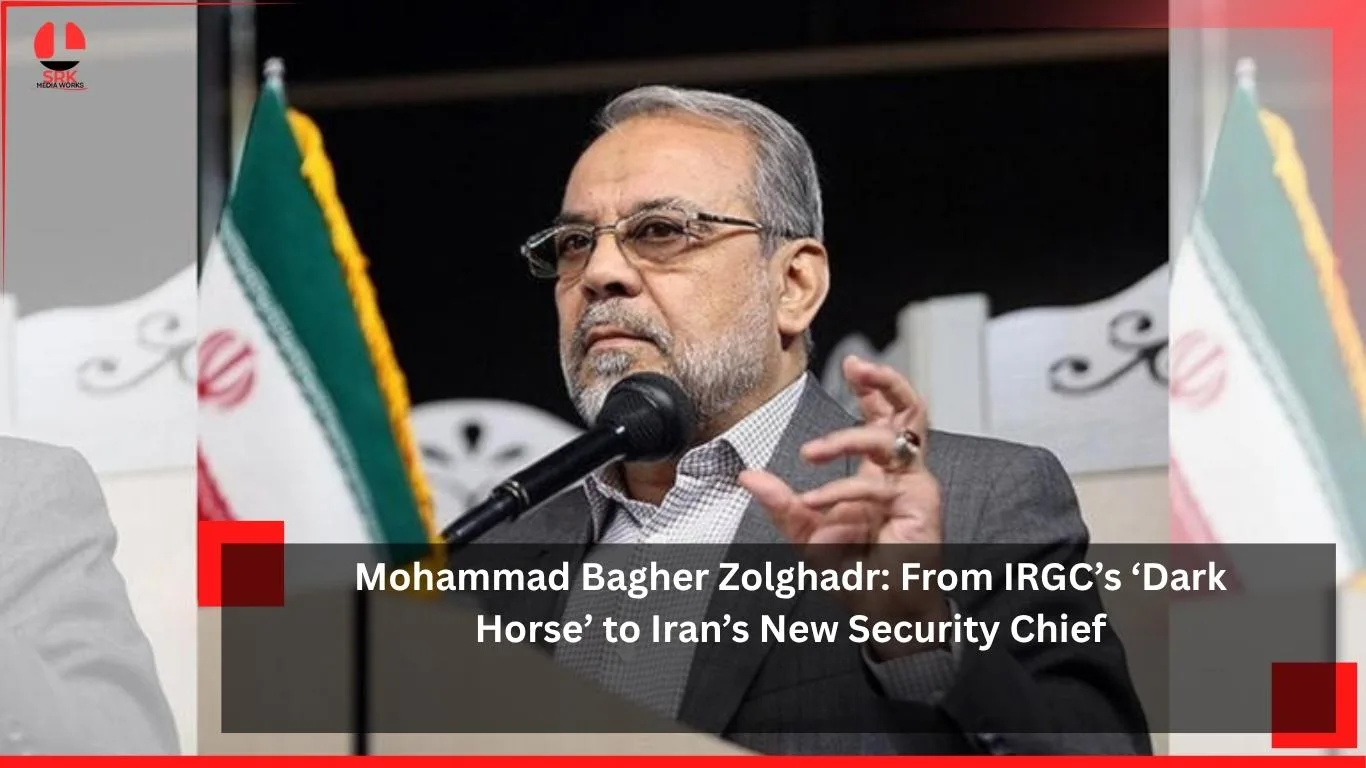
Mohammad Bagher Zolghadr, a former Islamic Revolutionary Guard Corps (IRGC) commander and seasoned political strategist, has been appointed as Iran’s new security chief following the assassination of Ali Larijani. His rise marks a significant shift in Iran’s power structure, with implications for regional security and global diplomacy.
Early Life and Revolutionary Roots
- Born: 1954, Tehran, Iran.
- Political Beginnings: Associated with the Islamic Revolution Mojahedin Organisation (IRMO), which opposed the Shah’s monarchy.
- Revolutionary Guard Career: Rose to the rank of brigadier general in the IRGC, earning a reputation as a hardliner and strategist.
Career Highlights
- Deputy Chief of Armed Forces General Staff: Oversaw military planning and security operations.
- Interior Ministry Role: Served as deputy for security, managing domestic stability.
- Judiciary Advisor: Focused on crime prevention and internal order.
- Expediency Council Secretary: Played a key role in shaping Iran’s long-term policy framework.
- Supreme National Security Council (SNSC): Appointed secretary after Ali Larijani’s death in March 2026.
Why Zolghadr Was Considered the ‘Dark Horse’
- Low Public Profile: Unlike other IRGC commanders, Zolghadr avoided media spotlight.
- Strategic Mindset: Known for behind-the-scenes influence rather than public speeches.
- Hardline Reputation: Advocated strong resistance against U.S. and Israeli influence.
- Institutional Loyalty: Maintained close ties with both military and political establishments.
Comparative Analysis of Iran’s Security Chiefs
| Leader | Background | Approach | Outcome |
|---|---|---|---|
| Ali Larijani | Politician, diplomat | Pragmatic, balanced | Assassinated in 2026 |
| Qassem Soleimani | IRGC Quds Force | Regional military expansion | Killed in 2020 strike |
| Mohammad Bagher Zolghadr | IRGC commander, strategist | Hardline, institutional | Current SNSC chief |
Pivot in Iran’s Security Strategy
Zolghadr’s appointment signals a pivot toward hardline security policies:
- Increased Military Readiness: Strengthening IRGC’s role in domestic and regional defense.
- Focus on Asymmetric Warfare: Leveraging proxy groups and cyber capabilities.
- Resistance Economy: Linking security with economic resilience against sanctions.
- Regional Assertiveness: Expanding influence in Iraq, Syria, and Lebanon.
Sentiment Analysis
| Group | Sentiment Toward Zolghadr | Likely Response |
|---|---|---|
| Iranian Hardliners | Supportive | Strengthen his role |
| Reformists | Concerned | Push for moderation |
| Regional Rivals | Alarmed | Increase counter-strategies |
| Global Powers | Wary | Monitor Iran’s moves |
Broader Implications
- Domestic Stability: His hardline stance may tighten internal security.
- Regional Tensions: Could escalate confrontations with Israel and U.S. allies.
- Global Diplomacy: His leadership may complicate nuclear negotiations.
- Institutional Continuity: Ensures IRGC remains central to Iran’s governance.
Conclusion
Mohammad Bagher Zolghadr’s rise from IRGC’s “dark horse” to Iran’s new security chief reflects Tehran’s determination to consolidate hardline leadership amid external threats. His appointment underscores Iran’s pivot toward militarized security strategies, with far-reaching consequences for regional stability and global diplomacy.
Disclaimer
This article is intended for informational purposes only and does not represent official government policy or intelligence assessments. The content is based on public reports and general geopolitical analysis. Readers should note that leadership appointments and political claims are subject to verification and interpretation.