

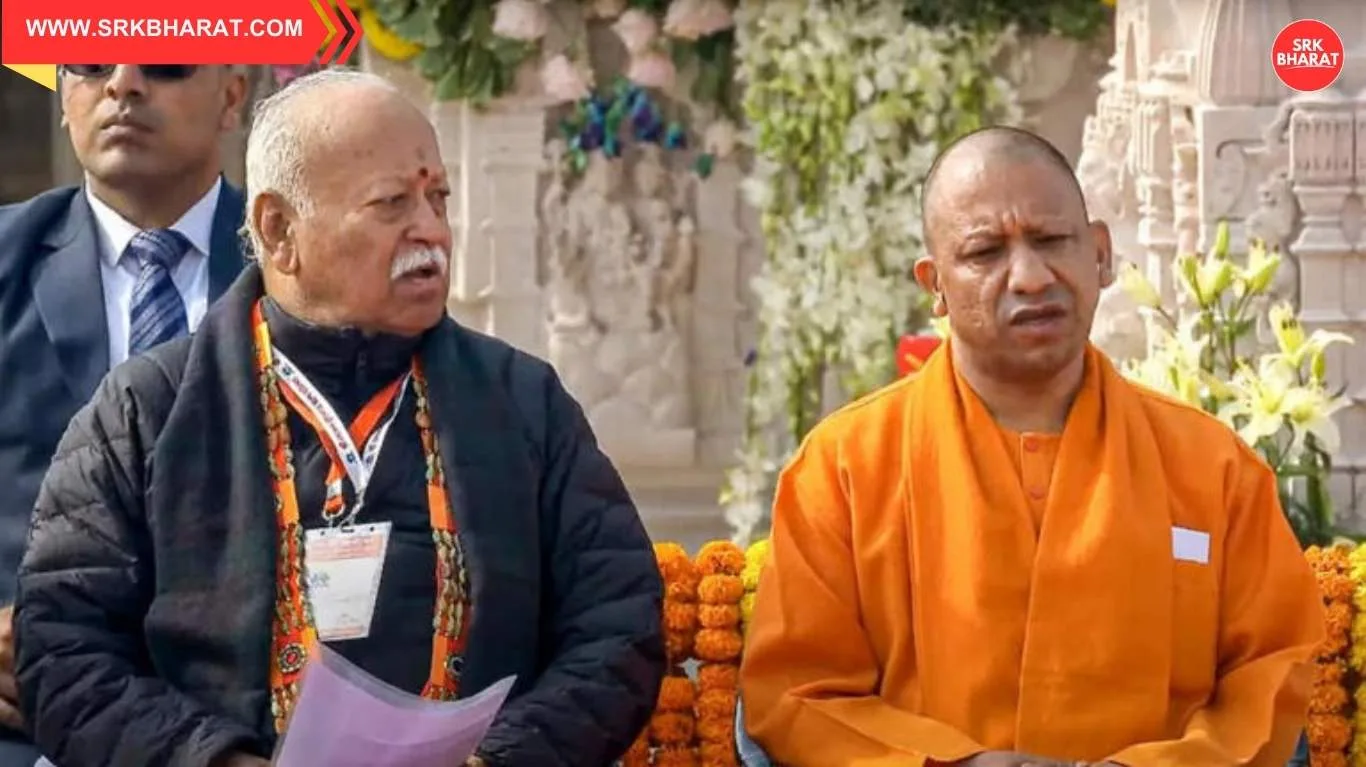
Rashtriya Swayamsevak Sangh (RSS) chief Mohan Bhagwat’s two-day visit to Lucknow has set off intense political chatter in Uttar Pradesh. His closed-door meetings with Chief Minister Yogi Adityanath, Deputy Chief Ministers Keshav Prasad Maurya and Brajesh Pathak, and other senior leaders have been interpreted as a strategic intervention ahead of the 2027 Uttar Pradesh Assembly elections. While officially described as courtesy calls, the timing and nature of these interactions suggest a deeper organizational push to align the Sangh and BJP machinery for the upcoming polls.
Key Highlights of Bhagwat’s Lucknow Visit
- Closed-Door Meetings: Bhagwat met Yogi Adityanath at the RSS office complex in Nirala Nagar, with discussions lasting over 35 minutes.
- Organizational Coordination: Talks reportedly focused on cabinet expansion, reshuffling, and strengthening coordination between government and RSS cadres.
- Social Messaging: Bhagwat emphasized themes of social unity, larger families, and temple reforms, signaling cultural consolidation alongside political strategy.
- Centenary Outreach: The visit coincided with RSS’s centenary year outreach program, adding symbolic weight to the meetings.
Strategic Context: Why 2027 Matters
Uttar Pradesh, with 403 assembly seats, is the largest state in India and a political bellwether. The BJP’s dominance in the state has been central to its national strength. However, with opposition parties regrouping and social equations shifting, the RSS’s involvement signals a proactive approach to ensure continuity of power.
Comparative Analysis of Political Positioning
| Factor | BJP/RSS Strategy | Opposition Strategy | Likely Impact |
|---|---|---|---|
| Leadership | Yogi Adityanath as CM face, backed by RSS | Akhilesh Yadav (SP), Priyanka Gandhi (Congress) | BJP retains strong leadership advantage |
| Organizational Strength | RSS cadres mobilized at booth level | Opposition focusing on alliances | BJP’s grassroots reach remains unmatched |
| Social Messaging | Hindutva, temple reforms, family values | Caste-based mobilization, welfare promises | Polarization of voter base |
| Development Agenda | Infrastructure, law & order, welfare schemes | Employment, farmer issues | Mixed voter response |
Inside the RSS Push
Bhagwat’s emphasis on social unity and temple reforms reflects the RSS’s long-term cultural agenda. By aligning these themes with political mobilization, the Sangh aims to consolidate Hindu votes while countering caste-based fragmentation. The push for larger families also ties into demographic concerns, reinforcing RSS’s ideological narrative.
Political Buzz and Speculation
- Cabinet Expansion: Rumors suggest possible reshuffling in Yogi’s cabinet to balance caste and regional representation.
- Organizational Reshuffle: RSS may push for stronger coordination between BJP leaders and Sangh cadres.
- Mission 2027: The meetings are widely seen as part of a larger roadmap to secure BJP’s dominance in the next assembly elections.
Analytical Perspective
Bhagwat’s Lucknow huddle illustrates how RSS remains the ideological backbone of BJP’s electoral strategy. While the BJP government projects development and governance, RSS ensures cultural and social consolidation. This dual approach—development plus Hindutva—has been the cornerstone of BJP’s success in Uttar Pradesh.
The opposition, however, is expected to counter this with alliances and caste-based mobilization, particularly focusing on farmer issues, unemployment, and social justice. The 2027 elections could thus become a contest between development plus Hindutva vs welfare plus caste alliances.
Disclaimer
This article is a synthesized news analysis based on publicly available reports and political developments. It is intended for informational purposes only and does not represent official statements from RSS, BJP, or opposition parties. Readers are advised to follow verified updates for formal announcements and election outcomes.