




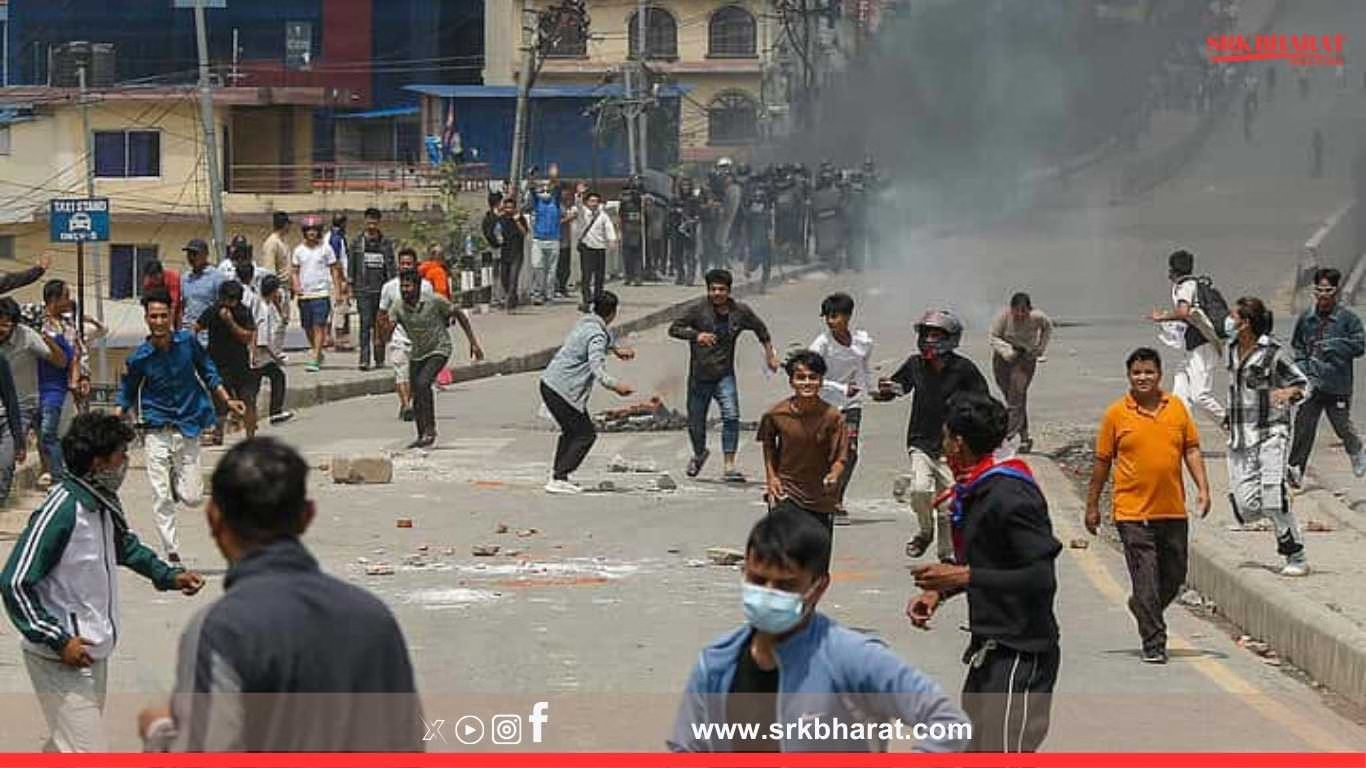
In an unprecedented political upheaval, Nepal’s President Ramchandra Paudel resigned on September 9, 2025, just hours after Prime Minister KP Sharma Oli stepped down amid violent Gen Z-led protests that have engulfed the Himalayan nation. The dual resignations mark the collapse of Nepal’s government following days of unrest triggered by a controversial social media ban and long-standing grievances over corruption, censorship, and youth disenfranchisement.
The protests, which began on September 5 after the government blocked access to 26 social media platforms including Facebook, Instagram, WhatsApp, YouTube, and X, quickly escalated into a nationwide movement. Demonstrators stormed Parliament, torched government buildings, and clashed with police forces, resulting in at least 19 deaths and over 500 injuries.
President Paudel’s resignation came shortly after he accepted Oli’s exit and called for restraint and dialogue. However, with the capital Kathmandu under curfew and ministers being evacuated by military helicopters, the country now faces a constitutional vacuum and a deepening crisis.
🧭 Timeline of Nepal’s Political Collapse
| Date | Event Description | Outcome / Reaction |
|---|---|---|
| Sept 5, 2025 | Government bans 26 social media platforms | Gen Z protests erupt nationwide |
| Sept 8, 2025 | Police crackdown kills 19, injures 500+ | Home Minister Ramesh Lekhak resigns |
| Sept 9, 2025 | PM KP Sharma Oli resigns | Parliament building set ablaze |
| Sept 9, 2025 | President Ramchandra Paudel resigns | Government collapses, curfew imposed |
The resignations have plunged Nepal into a constitutional crisis with no clear succession plan.
🔍 Key Quotes from Resignation Statements and Protest Leaders
| Speaker / Source | Quote | Context / Implication |
|---|---|---|
| Ramchandra Paudel | “The country is passing through a difficult situation.” | Appeals for national unity and restraint |
| KP Sharma Oli | “I resign to pave the way for a political solution.” | Acknowledges loss of public trust |
| Gen Z Protest Leader | “We want accountability, not apologies.” | Demands systemic reform and youth inclusion |
| Kathmandu Mayor Balen | “Restraint is needed, but the youth must be heard.” | Calls for peaceful resolution |
The youth-led movement has shifted Nepal’s political discourse toward transparency and digital rights.
📉 Breakdown of Protest Triggers and Fallout
| Trigger / Policy | Description | Public Reaction |
|---|---|---|
| Social Media Ban | Blocked 26 platforms citing non-compliance | Viewed as censorship and authoritarianism |
| Corruption Allegations | Accusations against ministers and bureaucrats | Demands for resignations and investigations |
| Police Brutality | Use of live rounds and tear gas on protesters | Condemned by civil society and global media |
| Youth Disenfranchisement | Lack of representation and employment | Mobilized Gen Z across cities |
The protests were marked by drone disruptions, QR-coded posters, and encrypted messaging coordination.
🔥 Political Reactions and Global Concern
- Rashtriya Swatantra Party: 21 MPs resigned en masse, citing moral failure of leadership.
- Civil Society: Lawyers and academics have called for an interim government and constitutional review.
- International Bodies: UN and EU have expressed concern over human rights violations and urged peaceful transition.
- India and China: Both neighbors are monitoring the situation closely, given Nepal’s strategic importance.
The collapse of the government has raised fears of instability in the region and potential foreign interference.
🧠 Expert Commentary on Nepal’s Crisis
| Expert Name | Role | Comment |
|---|---|---|
| Meera Iyer | South Asia Political Analyst | “This is Nepal’s Arab Spring moment—digitally mobilized and youth-driven.” |
| Rajiv Bansal | Constitutional Law Consultant | “The dual resignation creates a legal vacuum that must be addressed urgently.” |
| Dr. Rakesh Sinha | Historian of Himalayan Politics | “Nepal’s Gen Z has rewritten the rules of political engagement.” |
Experts agree that the crisis could redefine Nepal’s governance model and youth participation.
📦 Nepal’s Institutional Status Post-Resignation
| Institution | Status / Action Taken | Notes |
|---|---|---|
| Parliament | Building damaged, sessions suspended | Security tightened, curfew imposed |
| Judiciary | Expected to review emergency powers | Calls for constitutional clarity |
| Military | Evacuating ministers, securing zones | Neutral stance maintained |
| Election Commission | No announcement yet | Pressure to call early elections |
The absence of executive leadership has left Nepal’s institutions in a state of flux.
📅 Upcoming Milestones and Uncertainties
| Event | Date | Strategic Importance |
|---|---|---|
| Interim Government Formation | TBD | Essential to restore governance |
| Emergency Parliament Session | TBD | May decide succession and reforms |
| UN Human Rights Review | Oct 2025 | Nepal’s crackdown under global scrutiny |
| Youth Dialogue Summit | Nov 2025 | Proposed by civil society to engage Gen Z |
The next few weeks will determine whether Nepal stabilizes or descends into deeper unrest.
📌 Conclusion
The resignation of Nepal’s President Ramchandra Paudel, following Prime Minister KP Sharma Oli’s exit, marks a seismic shift in the country’s political landscape. Triggered by a Gen Z-led revolt against censorship and corruption, the collapse of the government reflects a generational demand for transparency, accountability, and digital freedom. As Nepal navigates this constitutional crisis, the world watches closely to see whether the youth’s voice will lead to reform—or further instability.
—
Disclaimer: This article is based on publicly available news reports, verified statements, and expert commentary as of September 10, 2025. It is intended for informational purposes only and does not constitute legal or political advice.