





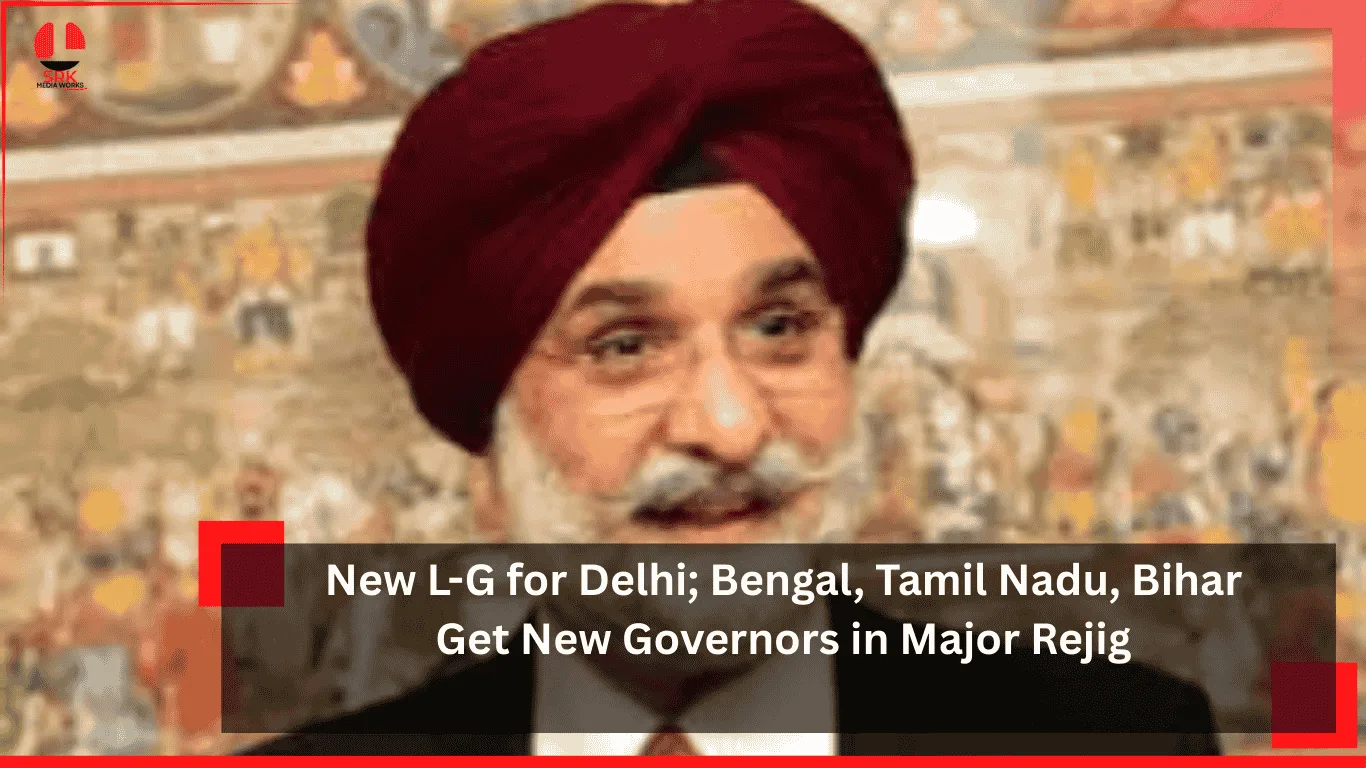
In a significant reshuffle of gubernatorial appointments, the central government has announced new Lieutenant Governor (L-G) for Delhi and fresh governors for West Bengal, Tamil Nadu, and Bihar. This move marks one of the most extensive changes in recent years, reflecting both administrative priorities and political considerations.
Background of the Reshuffle
Governors and Lieutenant Governors play a crucial constitutional role in India, acting as the link between the Union government and the states or union territories. While their positions are largely ceremonial, they often hold decisive powers in times of political instability, legislative deadlock, or constitutional crises.
The latest appointments are seen as part of a broader strategy to strengthen governance, ensure coordination between the Centre and states, and bring in experienced administrators to handle sensitive regions.
Key Appointments
- Delhi: A new Lieutenant Governor has been appointed, tasked with overseeing the capital’s administration, which often witnesses tussles between the elected government and the Centre.
- West Bengal: The new governor is expected to play a pivotal role in managing Centre-state relations, especially given the politically charged atmosphere in the state.
- Tamil Nadu: The appointment comes at a time when the state is navigating complex political dynamics and demands for greater autonomy.
- Bihar: The new governor will oversee a state that has historically been politically volatile and strategically important.
Comparative Overview of New Appointments
| State/UT | New Appointment | Role & Significance |
|---|---|---|
| Delhi | New L-G | Oversees capital administration, coordinates with Centre |
| West Bengal | New Governor | Manages Centre-state relations amid political tensions |
| Tamil Nadu | New Governor | Ensures constitutional balance in a state with strong regional identity |
| Bihar | New Governor | Supervises governance in a politically sensitive state |
Political and Administrative Implications
- Centre-State Relations: These appointments are expected to influence the balance of power between the Union government and state administrations.
- Policy Implementation: Governors play a role in ensuring central schemes are implemented effectively.
- Political Messaging: The reshuffle signals the Centre’s intent to assert greater influence in states with strong opposition presence.
- Administrative Stability: Experienced governors can help manage crises and ensure smooth governance.
Historical Context of Governor Appointments
Governor reshuffles are not new in India. They often occur after major political changes or ahead of elections.
| Year | Major Reshuffle | States Affected | Context |
|---|---|---|---|
| 2014 | Post-election reshuffle | Multiple states | Change in central government |
| 2019 | Pre-election reshuffle | Key states | Strengthening Centre’s influence |
| 2026 | Current reshuffle | Delhi, Bengal, Tamil Nadu, Bihar | Administrative and political priorities |
Expert Opinions
- Political Analysts: Suggest the appointments are aimed at tightening Centre’s grip on politically sensitive states.
- Constitutional Experts: Emphasize the importance of governors acting impartially despite political pressures.
- Regional Leaders: Express mixed reactions, with some welcoming experienced administrators while others view it as central interference.
Broader Impact on Governance
- Delhi: The new L-G’s approach will be crucial in managing the frequent disputes between the elected government and the Centre.
- West Bengal: The governor’s role could influence political stability and Centre-state coordination.
- Tamil Nadu: The appointment may affect debates on federalism and autonomy.
- Bihar: The governor’s leadership will be vital in maintaining political balance and ensuring development initiatives.
Comparative Analysis of Governor Roles
| State/UT | Key Challenges | Governor’s Role |
|---|---|---|
| Delhi | Centre vs State disputes | Mediation, constitutional oversight |
| West Bengal | Political unrest, Centre-state tensions | Ensuring law and order, neutrality |
| Tamil Nadu | Regional autonomy debates | Balancing federal principles |
| Bihar | Political volatility, development needs | Stability, policy implementation |
Conclusion
The appointment of a new L-G for Delhi and governors for West Bengal, Tamil Nadu, and Bihar marks a major administrative reshuffle with far-reaching implications. While governors are expected to act as neutral constitutional authorities, their role often becomes politically significant in states with strong opposition presence or governance challenges.
This reshuffle reflects the Centre’s strategy to strengthen its influence, ensure smoother governance, and prepare for upcoming political developments. The effectiveness of these appointments will be judged by how well they balance constitutional responsibilities with political realities.
Disclaimer
This article is based on publicly available information and expert analysis. The details of the appointments are subject to official confirmation and may evolve with subsequent government notifications. Readers are advised to treat the content as informational and not as definitive legal or political guidance.