


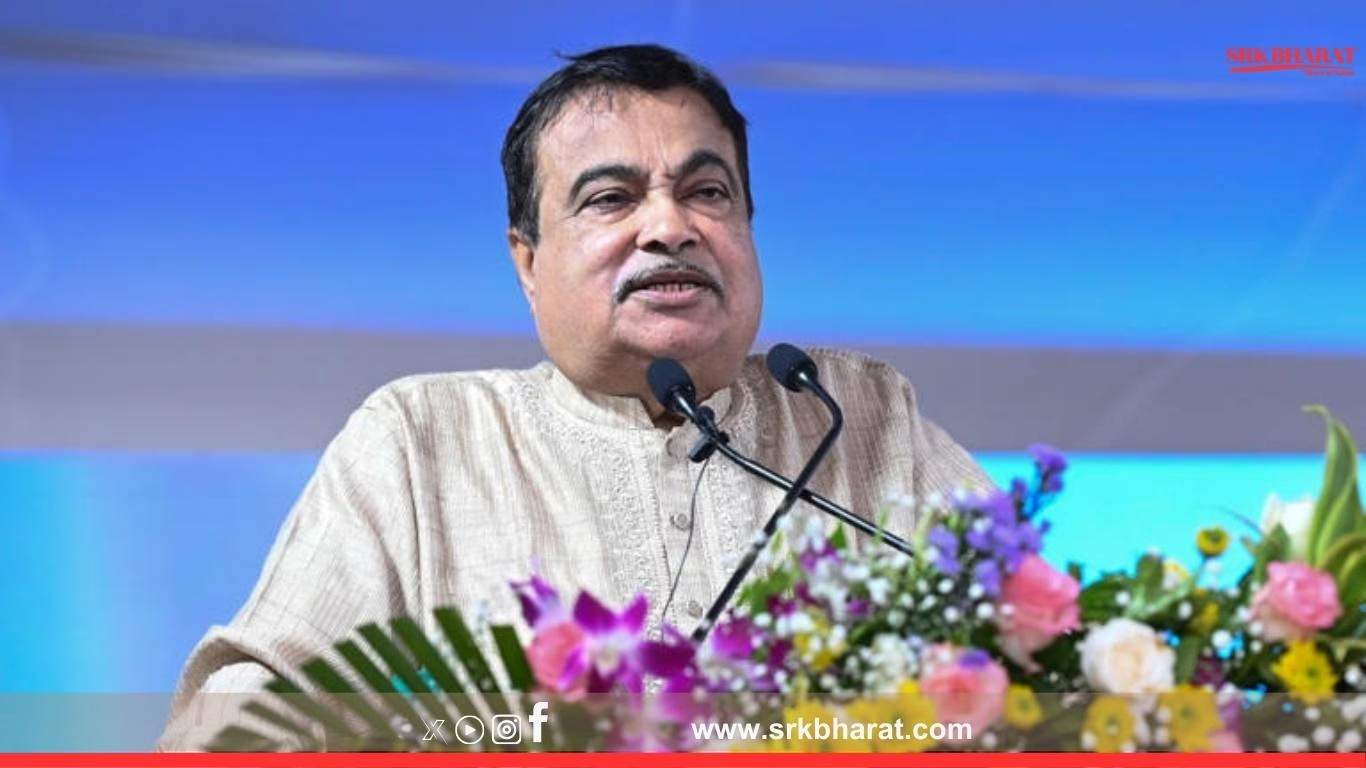
Union Minister Nitin Gadkari has ignited a nationwide debate after making a provocative statement during an event in Nagpur, suggesting that “one who can best fool the people is the best leader.” The remark, delivered at the Akhil Bharatiya Mahanubhav Parishad on August 31, 2025, has drawn sharp reactions across the political spectrum, with critics accusing Gadkari of endorsing deception in leadership, while supporters argue he was merely reflecting on the harsh realities of political life.
Gadkari, known for his candid and often unfiltered commentary, clarified that his statement was not a personal endorsement of dishonesty but a reflection of how political success is often shaped by perception and persuasion. He balanced his controversial remark by quoting Lord Krishna from the Bhagavad Gita, stating that “truth is the ultimate victor,” and emphasized the importance of values like honesty, credibility, and dedication.
🧭 Key Highlights from Gadkari’s Speech in Nagpur
| Segment / Theme | Statement / Message |
|---|---|
| Leadership Definition | “Jo logon ko sabse acchha moorkh bana sakta hai, wahi sabse acchha neta ho sakta hai” |
| Political Reality | “Speaking the truth wholeheartedly is discouraged in politics” |
| Ethical Reflection | “Shortcuts may give quick results but cut you short” |
| Personal Philosophy | “Honesty, credibility, dedication, and truth are timeless values” |
| Spiritual Reference | “Truth always wins – Bhagavad Gita” |
Gadkari’s remarks were delivered in Marathi and later translated, sparking widespread media coverage and social media reactions.
🔍 Political Reactions and Public Sentiment
The statement has triggered a wave of responses from opposition leaders, civil society, and political analysts. While some interpreted it as a cynical admission of political manipulation, others viewed it as a philosophical critique of modern-day politics.
| Political Entity / Leader | Reaction Summary | Tone / Implication |
|---|---|---|
| Congress Party | “Shocking and shameful” | Accused BJP of normalizing deceit |
| AAP | “Truth must be the foundation of leadership” | Called for ethical introspection |
| Shiv Sena (UBT) | “Gadkari is exposing BJP’s real face” | Used remark to target ruling party |
| BJP (Internal) | “Taken out of context” | Defended Gadkari’s philosophical stance |
| Civil Society Groups | “Raises questions about democratic integrity” | Called for leadership accountability |
Social media platforms saw hashtags like #LeadershipEthics and #GadkariRemark trending, with thousands of users debating the role of truth in governance.
📉 Ethics vs Strategy: Leadership in the Spotlight
Gadkari’s comment has reignited the age-old debate: Should leadership be judged by results and persuasion, or by moral integrity and truthfulness?
| Leadership Trait | Strategic Value | Ethical Value |
|---|---|---|
| Persuasion | Mobilizes support, wins elections | Can mislead or manipulate |
| Charisma | Builds public image | May overshadow substance |
| Truthfulness | Builds trust and credibility | May limit political flexibility |
| Transparency | Encourages accountability | Can expose vulnerabilities |
| Pragmatism | Enables adaptability | Risks compromising principles |
Gadkari’s dual message—acknowledging political manipulation while affirming ethical values—highlights the tension between realpolitik and idealism.
🔥 Not the First Time: Gadkari’s History of Candid Commentary
Nitin Gadkari has a reputation for speaking his mind, often diverging from party lines and offering blunt assessments of governance and politics.
| Year | Statement / Incident | Reaction / Outcome |
|---|---|---|
| 2018 | “I am not responsible for election promises” | Sparked debate on political accountability |
| 2020 | “Politics is more about perception than truth” | Widely quoted in media and academia |
| 2023 | “We need to stop selling dreams” | Seen as critique of populist politics |
| 2025 | “Best leader can fool people” | Triggered national controversy |
His remarks often serve as conversation starters on governance, ethics, and the nature of public leadership.
🧠 Expert Opinions on Gadkari’s Leadership Philosophy
| Expert Name | Role | Comment |
|---|---|---|
| Dr. Rakesh Sinha | Political Theorist | “Gadkari is highlighting the paradox of leadership” |
| Meera Iyer | Ethics Scholar | “This is a wake-up call for value-based politics” |
| Rajiv Bansal | Governance Analyst | “The remark reflects the strategic pressures leaders face” |
Experts agree that Gadkari’s statement, while controversial, opens up necessary dialogue on the evolving expectations from political leaders.
📦 Public Trust and Democratic Values: What’s at Stake?
In a democracy, leadership is not just about winning elections—it’s about earning and sustaining public trust. Gadkari’s remark has prompted introspection on how leaders are chosen and judged.
| Democratic Principle | Current Challenge | Suggested Reform |
|---|---|---|
| Accountability | Eroded by spin and misinformation | Strengthen transparency laws |
| Integrity | Undermined by strategic deception | Ethics training for public officials |
| Public Awareness | Influenced by media narratives | Civic education and media literacy |
| Electoral Standards | Focused on popularity over substance | Revise candidate evaluation criteria |
The debate underscores the need for systemic reforms that prioritize ethical leadership and informed citizenry.
📌 Conclusion
Nitin Gadkari’s remark that “one who can best fool the people is the best leader” has sparked a political and ethical storm, challenging India to reflect on the nature of leadership in a democracy. While Gadkari balanced his statement with affirmations of truth and integrity, the controversy reveals the deep tensions between political strategy and moral responsibility. As India prepares for future elections and governance challenges, the question remains: Should leaders be judged by their ability to persuade—or by their commitment to truth?
—
Disclaimer: This article is based on publicly available speeches, media reports, and expert commentary as of September 2, 2025. It is intended for informational purposes only and does not constitute political endorsement, criticism, or legal advice.