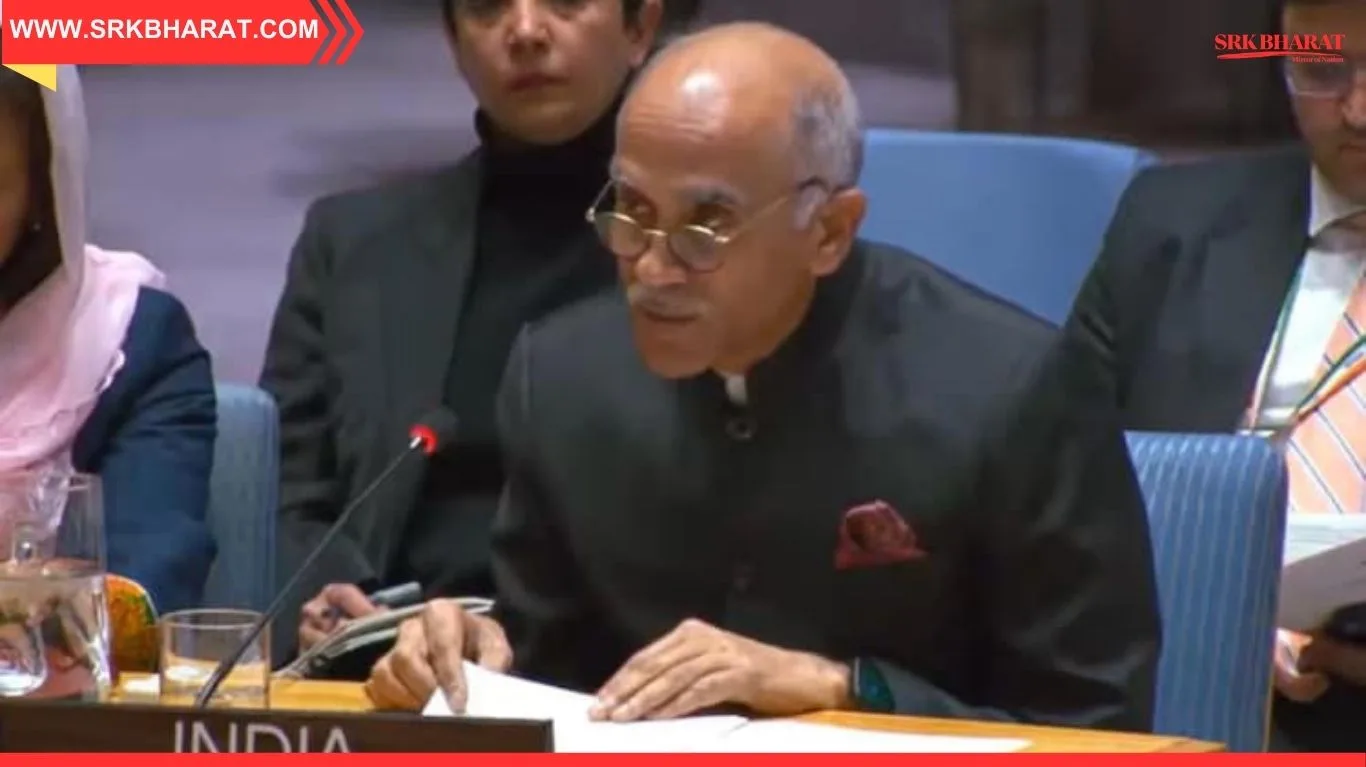
India’s diplomatic stance on Jammu & Kashmir was once again firmly reiterated when an Indian envoy strongly criticized Pakistan for its repeated and “unwarranted” claims on the region. The envoy accused Pakistan of maintaining an “obsessive focus on harming India and its people”, stressing that such rhetoric has no place in international forums. The statement has reignited debates on cross-border relations, sovereignty, and the global perception of South Asia’s most sensitive geopolitical issue.
Background of the Diplomatic Clash
- Pakistan has consistently raised the issue of Jammu & Kashmir at international platforms, often drawing sharp rebuttals from India.
- India maintains that Jammu & Kashmir is an integral part of the country and rejects any external interference.
- The envoy’s remarks came in response to Pakistan’s latest attempt to internationalize the issue, which India described as baseless and politically motivated.
- The strong language used underscores India’s frustration with Pakistan’s repeated attempts to malign its image globally.
Key Highlights of the Envoy’s Statement
| Indicator | Details |
|---|---|
| Speaker | Indian envoy |
| Target | Pakistan’s claims on Jammu & Kashmir |
| Statement | “Obsessive focus on harming India and its people” |
| Context | Response to Pakistan’s remarks at international forum |
| Impact | Reaffirmed India’s sovereignty stance |
Impact of Pakistan’s Claims vs India’s Response
| Factor | Pakistan’s Approach | India’s Response | Global Implication |
|---|---|---|---|
| Diplomatic Strategy | Internationalizing Kashmir | Rejecting interference | Divided global opinion |
| Public Sentiment | Appeals to domestic audience | Reinforces national unity | Heightened tensions |
| Sovereignty Narrative | Challenges India’s position | Asserts territorial integrity | Shapes global discourse |
| Bilateral Relations | Strained further | Defensive and assertive | Limits cooperation |
Why This Statement Matters
- Reaffirmation of Sovereignty: India’s envoy reiterated that Jammu & Kashmir is an inseparable part of India.
- Countering Propaganda: The remarks aim to neutralize Pakistan’s attempts to spread misinformation.
- Global Messaging: India’s strong words send a clear signal to the international community about its stance.
- Domestic Assurance: The statement reassures Indian citizens of the government’s firm position on national integrity.
Historical Context of the Kashmir Issue
| Year | Event | Impact |
|---|---|---|
| 1947 | Partition of India | Dispute over accession of Jammu & Kashmir |
| 1948 | First war between India and Pakistan | UN involvement, ceasefire line established |
| 1972 | Simla Agreement | Bilateral resolution framework |
| 1999 | Kargil conflict | Reinforced India’s military resolve |
| 2019 | Abrogation of Article 370 | Strengthened India’s sovereignty claim |
The Kashmir issue has remained central to India-Pakistan relations for decades, with both nations holding firm to their narratives.
Expert Opinions
- Diplomats: Stress that Pakistan’s repeated claims are aimed at domestic political gains rather than genuine international concern.
- Analysts: Note that India’s strong rebuttals are crucial to maintaining its global image.
- Security Experts: Highlight that Pakistan’s focus on Kashmir often distracts from its internal challenges.
- Citizens: Express support for India’s firm stance, viewing it as a matter of national pride.
Challenges Ahead
- Persistent Rhetoric: Pakistan is unlikely to stop raising the issue internationally.
- Global Perception: Some nations may remain sympathetic to Pakistan’s narrative.
- Regional Stability: Continued disputes hinder peace and cooperation in South Asia.
- Diplomatic Fatigue: Constant rebuttals may strain India’s diplomatic bandwidth.
Opportunities for India
- Strengthening Alliances: Building stronger ties with nations that support India’s sovereignty.
- Global Narrative Control: Using international platforms to highlight Pakistan’s internal issues.
- Domestic Unity: Reinforcing national solidarity through strong diplomatic messaging.
- Economic Diplomacy: Shifting focus to development and trade to overshadow negative narratives.
Broader Context of India-Pakistan Relations
- Relations between the two nations remain tense, with limited dialogue and frequent diplomatic clashes.
- Cross-border terrorism and ceasefire violations continue to strain ties.
- India’s focus has shifted toward global partnerships, while Pakistan remains fixated on Kashmir.
- The envoy’s remarks reflect India’s broader strategy of rejecting external interference while pursuing global leadership.
Public Sentiment
- Indian citizens largely welcomed the envoy’s strong words, seeing them as a defense of national pride.
- Critics argued that diplomatic language should remain measured, but acknowledged the need for firmness.
- Social media discussions highlighted widespread support for India’s stance.
- The incident has reinforced the perception of Pakistan as being fixated on Kashmir at the expense of broader cooperation.
Conclusion
The Indian envoy’s sharp rebuke of Pakistan’s “unwarranted” claims on Jammu & Kashmir and the accusation of an “obsessive focus on harming India and its people” underscores the deep-rooted tensions between the two nations. While Pakistan continues to internationalize the issue, India remains steadfast in asserting its sovereignty. The statement not only reassures domestic audiences but also sends a clear message to the global community. As South Asia navigates complex geopolitical challenges, the Kashmir issue will remain a defining factor in India-Pakistan relations, with diplomacy, sovereignty, and national pride at its core.
Disclaimer
This article is intended for informational purposes only and does not constitute political or diplomatic advice. Statements, strategies, and outcomes are subject to change based on evolving circumstances. Readers are encouraged to follow official updates for accurate information. The author and publisher are not responsible for any decisions made based on this article.