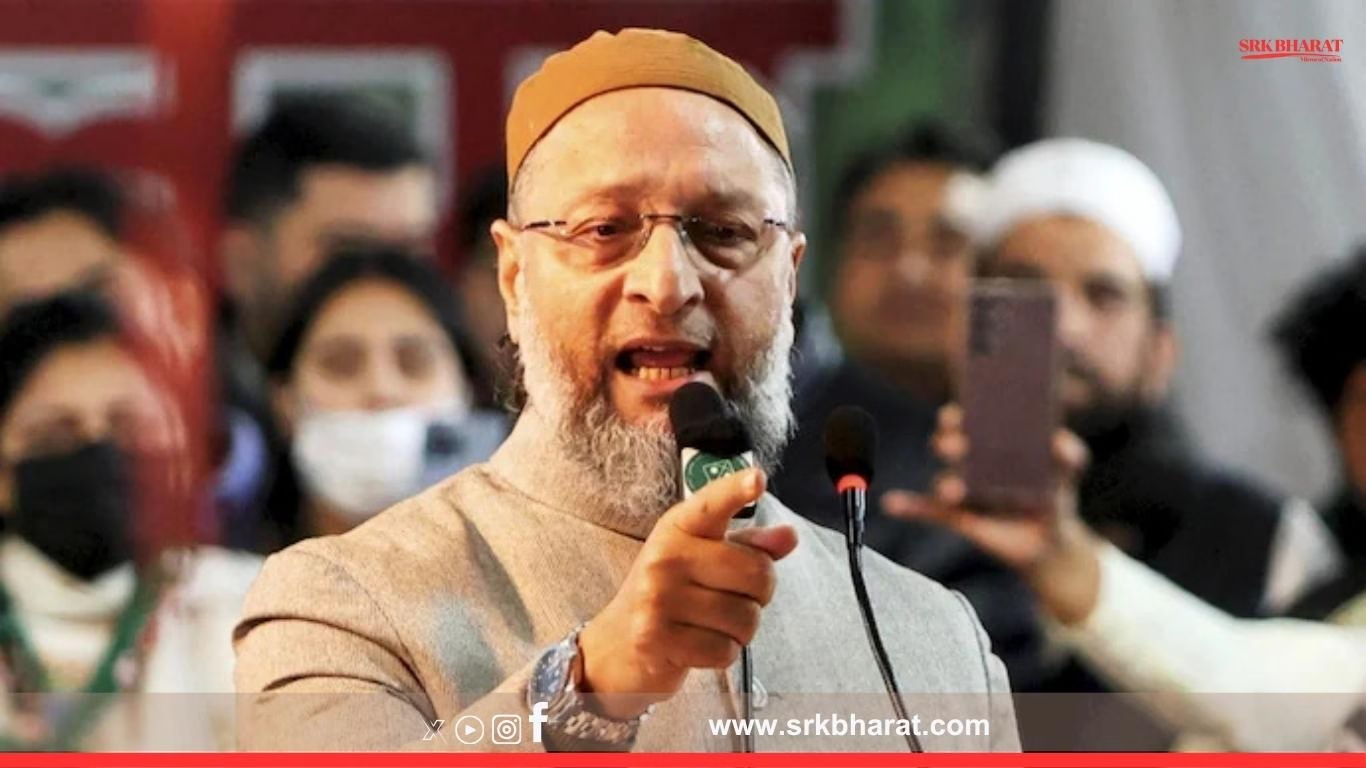
All India Majlis-e-Ittehadul Muslimeen (AIMIM) chief Asaduddin Owaisi has sharply criticised the Indian government for what he termed a “missed opportunity” to deliver a befitting reply to Pakistan following the deadly Pahalgam terror attack. Speaking to journalists in Pune on September 30, 2025, Owaisi said the Centre’s decision to pause military action after initial strikes against terrorist hideouts in Pakistan failed to reflect the national sentiment and undermined India’s strategic posture.
“As an Indian, I would like to say that there was an opportunity for us to give a befitting reply to Pakistan after the Pahalgam terror attack. I am wondering why they (the government) stopped,” Owaisi said. He added that the entire nation was prepared to support decisive action, especially after drones launched from Pakistan hovered over western borders from Gujarat to Kashmir.
The Pahalgam terror attack, which occurred on April 22, 2025, claimed the lives of 26 people, mostly tourists, and triggered widespread outrage across the country. In response, India launched Operation Sindoor, a targeted military strike on terrorist infrastructure and airport bases in Pakistan. However, the operation was paused shortly after, with official sources maintaining that it was a tactical decision and not a cessation.
India’s Response to Pahalgam Attack – Timeline of Events
| Date | Event Description | Outcome/Impact |
|---|---|---|
| April 22, 2025 | Pahalgam terror attack kills 26 civilians | National outrage, security alert |
| April 24, 2025 | India launches Operation Sindoor | Strikes on terror camps across LoC |
| April 26, 2025 | Operation paused | Government cites strategic restraint |
| May 2025 | Political debate intensifies | Opposition demands clarity on action |
| September 30, 2025 | Owaisi criticises Centre’s decision | Sparks renewed public discourse |
Owaisi’s remarks have reignited debate over India’s counter-terror strategy and its diplomatic signalling to Pakistan. While the government maintains that Operation Sindoor achieved its objectives and remains “paused, not ended,” critics argue that the lack of follow-through diluted its impact.
Owaisi’s Critique – Key Points from Pune Interaction
| Issue Raised | Owaisi’s Statement | Implication for Policy Debate |
|---|---|---|
| Military Response | “Why did you stop? The nation was ready.” | Questions strategic consistency |
| National Sentiment | “Such opportunities don’t come again.” | Reflects public frustration |
| Border Security | “Drones from Pakistan hovered over borders.” | Highlights surveillance gaps |
| Political Messaging | “You sit in Parliament and talk about PoK.” | Critiques rhetoric vs action |
| Asia Cup Participation | “Why play against Pakistan in cricket?” | Questions cultural engagement policy |
The AIMIM leader also criticised the government’s decision to allow India-Pakistan cricket matches during the recently concluded Asia Cup, calling it contradictory to the national mood. “You talk about teaching Pakistan a lesson, but then play cricket with them. What message are you sending?” he asked.
Owaisi’s comments have drawn mixed reactions from political circles. While some opposition leaders echoed his concerns about strategic restraint, others cautioned against politicising national security decisions. BJP spokespersons defended the government’s approach, stating that military operations are guided by intelligence and long-term objectives, not public emotion.
Public Sentiment – Social Media Buzz on Owaisi’s Statement
| Platform | Engagement Level | Sentiment (%) | Top Hashtags |
|---|---|---|---|
| Twitter/X | 1.3M mentions | 76% divided | #OwaisiOnPahalgam #IndiaPakistanPolicy |
| 1.1M interactions | 72% critical | #OperationSindoor #MissedOpportunity | |
| 980K views | 78% reflective | #PahalgamAttack #SecurityDebate | |
| YouTube | 870K views | 80% analytical | #OwaisiExplained #IndiaResponse2025 |
Security analysts have weighed in on the debate, noting that while public sentiment often demands swift retaliation, military strategy must balance escalation risks and geopolitical consequences. “India’s response to Pahalgam was calibrated. The pause may have been tactical, but it’s important to communicate that clearly to avoid confusion,” said Dr. Radhika Menon, senior fellow at the Institute for Strategic Studies.
Meanwhile, civil society groups have called for greater transparency in counter-terror operations and urged the government to engage with affected communities in Jammu and Kashmir. The families of the victims continue to demand justice and long-term security assurances.
India-Pakistan Tensions – Strategic Overview Post Pahalgam Attack
| Strategic Area | Status Post April 2025 | Policy Implications |
|---|---|---|
| Military Engagement | Operation Sindoor paused | Need for clarity on future action |
| Diplomatic Channels | Limited backchannel talks | Risk of prolonged freeze |
| Border Surveillance | Increased drone activity from Pakistan | Strengthen airspace monitoring |
| Civilian Safety | Tourist zones under review | Security audits, travel advisories |
| Public Communication | Mixed messaging on retaliation | Need for unified narrative |
Owaisi also announced that AIMIM will contest upcoming civic elections in Maharashtra, reiterating his party’s commitment to pluralism and grassroots engagement. While his comments on national security have sparked controversy, they have also brought renewed attention to the need for coherent policy communication and strategic transparency.
As India continues to navigate complex regional dynamics, the Pahalgam attack and its aftermath remain a flashpoint in the national security discourse. Whether the government’s restraint was tactical brilliance or a missed opportunity will likely remain a subject of debate in the months ahead.
Disclaimer: This article is based on publicly available political statements, verified media reports, and expert commentary. It does not constitute political endorsement or security advice. All quotes are attributed to public figures and institutions as per coverage. The content is intended for editorial and informational purposes only.