

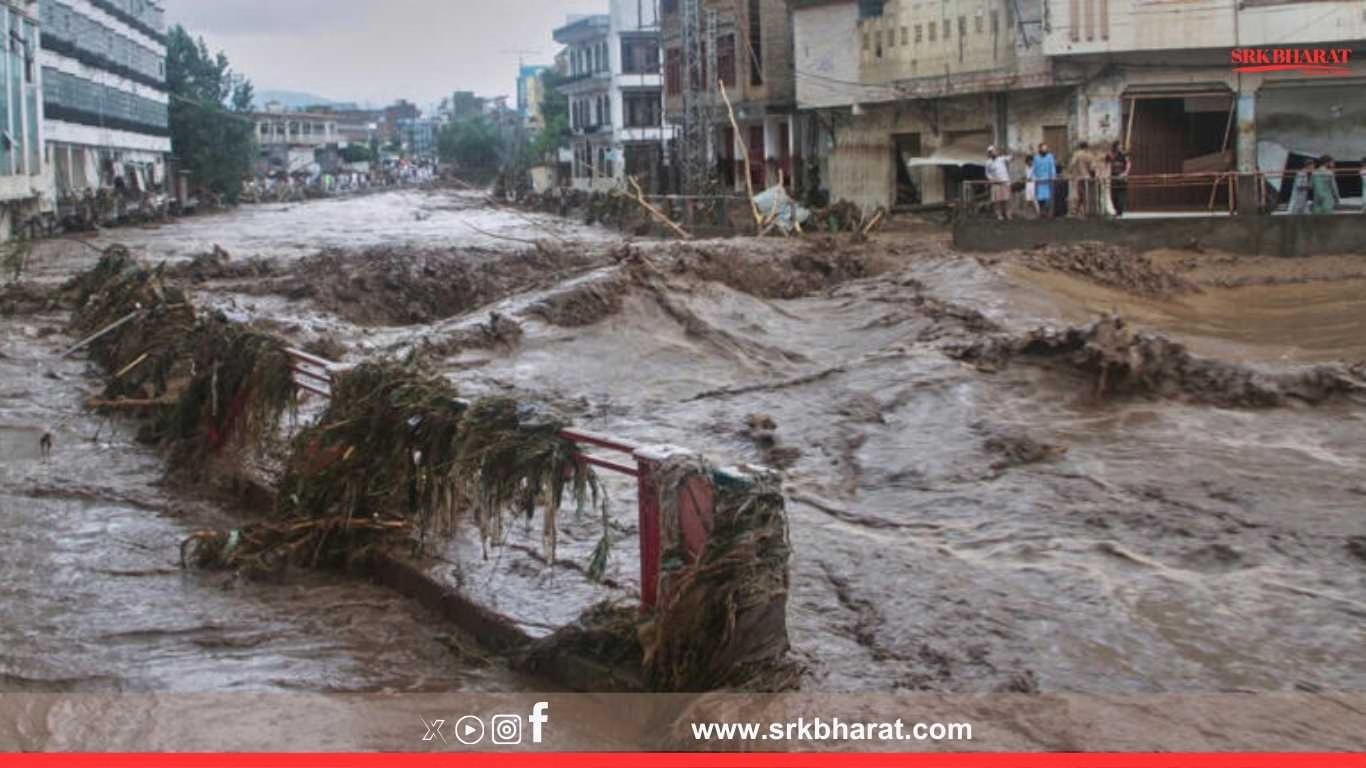
Amid rising water levels and devastating floods across the subcontinent, Pakistan has confirmed that India shared hydrological data through diplomatic channels, despite the suspension of the Indus Water Treaty (IWT) earlier this year. At a weekly press briefing in Islamabad on September 5, 2025, Foreign Office spokesperson Shafqat Ali Khan acknowledged the exchange of flood-related information but expressed dissatisfaction over the level of detail provided. He reiterated Pakistan’s demand for India to fully adhere to the provisions of the IWT, which has governed water-sharing between the two nations since 1960.
The diplomatic exchange comes in the wake of unusually heavy monsoon rains that have caused widespread flooding in both countries. India had suspended the IWT in April 2025 following the Pahalgam terror attack, which killed 26 civilians and was allegedly carried out by Pakistan-based group Lashkar-e-Taiba. Since then, India has opted to share flood data on humanitarian grounds, bypassing the formal mechanisms of the treaty.
🧭 Timeline of Indus Water Treaty Developments and Flood Data Exchange
| Date | Event Description | Outcome / Impact |
|---|---|---|
| April 22, 2025 | Pahalgam terror attack | India suspends IWT as part of punitive measures |
| May 2025 | India launches Operation Sindoor | Targets terror infrastructure in Pakistan |
| August 2025 | Heavy monsoon rains trigger cross-border flooding | Rivers in spate across Punjab and Sindh |
| September 5 | Pakistan confirms receipt of flood data via diplomatic channel | Calls for full IWT compliance |
India’s External Affairs Ministry clarified that the data was shared through its High Commission in Islamabad, citing humanitarian considerations.
🔍 India’s Position on Flood Data Sharing Post-IWT Suspension
| Communication Mode | Description | India’s Justification |
|---|---|---|
| Diplomatic Channel | Data shared via High Commission in Islamabad | Humanitarian grounds, public safety |
| No Use of IWT Mechanism | Indus Water Commissioners not involved | Treaty officially in abeyance |
| Limited Data Scope | Basic flood alerts, river level updates | Not as comprehensive as previous years |
| MEA Statement | “We are sharing data based on humanitarian considerations” | No revival of treaty mechanisms |
India has emphasized that the data exchange does not imply a reinstatement of the treaty, which remains suspended.
📉 Pakistan’s Response and Demands
| Statement by FO Spokesperson | Key Concerns Raised | Diplomatic Implication |
|---|---|---|
| “Details not as comprehensive as in past” | Lack of technical depth in shared data | Potential risk to flood preparedness |
| “India should fully comply with IWT” | Urges return to treaty-based cooperation | Seeks revival of Indus Water Commission |
| “Established channels not used” | Criticizes bypassing of formal mechanisms | Diplomatic strain amid regional tensions |
Pakistan has also expressed concern over India’s dam releases and their impact on downstream flood severity.
🔥 Indus Water Treaty: Historical Context and Current Status
| Treaty Element | Description | Status Post-April 2025 |
|---|---|---|
| Brokered by World Bank | Signed in 1960 to govern water sharing | Suspended by India after Pahalgam attack |
| Covers Six Rivers | Indus, Jhelum, Chenab (Pakistan); Ravi, Beas, Sutlej (India) | Data sharing halted under treaty mechanisms |
| Indus Water Commission | Annual meetings, technical exchanges | No meetings held since suspension |
| Dispute Resolution | Neutral expert and arbitration provisions | Currently inactive |
The suspension has raised concerns about long-term water security and regional stability.
🧠 Expert Commentary on IWT Suspension and Flood Diplomacy
| Expert Name | Role | Comment |
|---|---|---|
| Meera Iyer | Water Policy Analyst | “Humanitarian data sharing is a positive step, but treaty mechanisms must be restored.” |
| Rajiv Bansal | South Asia Geopolitical Consultant | “India’s suspension of IWT is a strategic signal, but risks long-term fallout.” |
| Dr. Rakesh Sinha | Historian of India–Pakistan Relations | “The IWT has survived wars—its suspension marks a new diplomatic low.” |
Experts agree that while humanitarian exchanges are welcome, formal treaty compliance is essential for trust-building.
📦 Impact of Floods and Data Sharing on Ground Realities
| Region Affected | Flood Severity Level | Role of Shared Data |
|---|---|---|
| Punjab (Pakistan) | Severe | Early warnings helped mitigate damage |
| Sindh (Pakistan) | Moderate to severe | Data gaps hindered evacuation planning |
| Jammu & Kashmir (India) | Moderate | Local alerts issued, dam gates opened |
| Reasi (India) | High water levels in Chenab | Salal Dam releases coordinated |
Despite limited data, Pakistan acknowledged that India’s alerts helped prepare for rising river levels.
📅 Upcoming Diplomatic and Environmental Milestones
| Event | Date | Strategic Importance |
|---|---|---|
| SAARC Water Dialogue | October 2025 | Opportunity to discuss regional water sharing |
| UN Climate Summit | November 2025 | India and Pakistan to present flood resilience plans |
| Indus Water Commission Review | TBD | Pakistan pushing for treaty reinstatement |
| Bilateral Talks on River Management | TBD | May resume if diplomatic thaw occurs |
These events could shape the future of water diplomacy in South Asia.
📌 Conclusion
Pakistan’s acknowledgment of India’s flood data sharing through diplomatic channels, despite the suspension of the Indus Water Treaty, underscores the complex interplay between humanitarian necessity and geopolitical tension. While India maintains that its actions are driven by public safety, Pakistan continues to push for full treaty compliance and restoration of formal mechanisms. As climate change intensifies cross-border water challenges, the need for transparent, treaty-based cooperation has never been more urgent.
—
Disclaimer: This article is based on publicly available news reports, official statements, and expert commentary as of September 6, 2025. It is intended for informational purposes only and does not constitute diplomatic or legal advice.