


Pakistan’s recent assertion that it possesses mineral reserves worth over $6 trillion has sparked widespread skepticism among global analysts, geologists, and policy experts. The claim, which has been amplified by government officials and state-backed media, is being viewed by many as an overblown narrative lacking credible geological validation or internationally recognized certification. Critics argue that the announcement is more political theater than economic reality, aimed at attracting foreign investment and geopolitical leverage amid mounting economic challenges.
The Origin of the $6 Trillion Claim
The bold valuation emerged from statements made by Pakistani officials, including Prime Minister Shehbaz Sharif and Army Chief General Asim Munir, who jointly promoted the idea of Pakistan as a future hub for rare earth elements and critical minerals. The claim was positioned as a cornerstone of Pakistan’s economic revival strategy, with officials suggesting that the country’s mineral wealth could rival that of global mining giants.
However, the announcement lacked accompanying data from internationally accepted geological surveys or feasibility studies. No National Instrument 43-101 (NI 43-101) compliant reports—considered the global standard for mineral resource disclosure—were cited. This has raised red flags among industry experts and international observers.
Dissecting the Mineral Wealth Narrative
| Mineral Type | Claimed Presence | Global Demand Relevance | Independent Verification | Infrastructure Status |
|---|---|---|---|---|
| Copper | Yes (Reko Diq) | High | Partial (Barrick Gold involvement) | Under development |
| Gold | Yes | High | No certified reserves disclosed | No active large-scale mining |
| Lithium | Claimed | Very High | No verified deposits | No extraction capacity |
| Rare Earth Elements | Claimed | Critical | No proven reserves | No refining or separation units |
| Coal | Yes (Thar) | Moderate | Verified | Operational but inefficient |
Expert Opinions and Global Reactions
Independent analysts have described the $6 trillion figure as “wishful arithmetic.” According to a report by Rare Earth Exchanges, Pakistan has “zero rare earth production, no heavy-REE deposits, no separation capacity, and no refining infrastructure.” The U.S. Geological Survey (USGS) data corroborates this, showing no significant rare earth output from Pakistan in recent years.
Moreover, the minerals that Pakistan claims to offer are either in quantities too small to matter, of a type that is not in high demand, or more easily sourced from other countries with established mining and processing ecosystems.
Timeline of Events Surrounding the Claim
| Date | Event |
|---|---|
| Oct 2025 | Pakistan announces $6 trillion mineral wealth estimate |
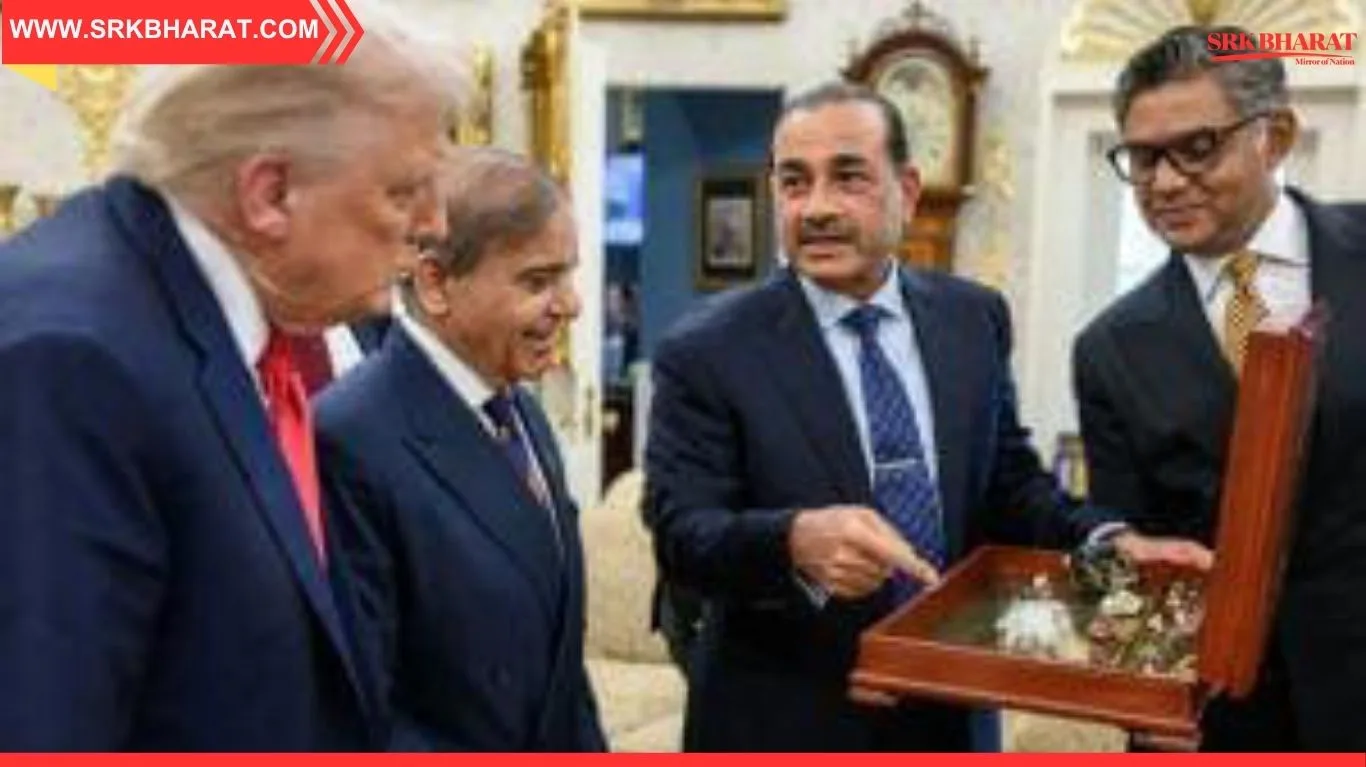
| Nov 2025 | Viral image of PM Sharif and Gen. Munir showcasing “rare earth samples” circulates |
| Nov 2025 | Global analysts question the credibility of the valuation |
| Nov 2025 | USGS and independent firms release counter-reports |
| Nov 2025 | Pakistani officials double down on claim without new data |
Political and Economic Context
Pakistan’s mineral wealth narrative comes at a time when the country is grappling with severe economic instability, including a depreciating currency, dwindling foreign reserves, and rising inflation. The government’s push to position itself as a mineral-rich nation appears to be a strategic move to attract foreign direct investment (FDI), particularly from countries seeking alternatives to Chinese mineral supply chains.
However, without credible data, the claim risks backfiring. Investors are wary of entering markets with opaque regulatory frameworks, limited infrastructure, and political volatility. The lack of transparency could deter rather than attract capital.
Comparative Analysis of Global Mineral Wealth Claims
| Country | Claimed Mineral Wealth | Verified Reserves | Global Ranking | Infrastructure Readiness |
|---|---|---|---|---|
| Pakistan | $6 trillion | Unverified | Not ranked | Underdeveloped |
| Australia | $5.7 trillion | Verified | Top 3 globally | Highly developed |
| Russia | $7 trillion | Verified | Top 5 globally | Advanced |
| China | $23 trillion | Verified | #1 globally | Fully integrated |
| India | $3 trillion | Partially verified | Top 10 | Developing |
The Role of Reko Diq and Other Projects
One of the few credible mineral projects in Pakistan is the Reko Diq copper-gold mine in Balochistan, operated by Barrick Gold. While the project holds promise, it is still in the early stages of development and cannot alone justify the $6 trillion valuation. Moreover, the region’s security challenges and legal disputes have historically hindered progress.
Other projects, such as Thar coal and Saindak copper-gold mines, have faced criticism for inefficiency, environmental degradation, and lack of scalability.
Infrastructure and Regulatory Gaps
Pakistan’s mining sector suffers from several structural weaknesses:
- Lack of certified geological surveys
- Absence of refining and separation facilities
- Weak environmental and labor regulations
- Limited access to international capital markets
- Inadequate transport and energy infrastructure
These gaps make it difficult for Pakistan to transition from a resource-rich to a resource-utilizing economy.
Public and Media Reaction
The mineral wealth claim has been met with mixed reactions domestically. While state media has hailed it as a turning point, independent journalists and economists have urged caution. Social media platforms have seen a surge in memes and critical commentary, with hashtags like #MineralMyth and #6TrillionBluff trending in Pakistan and India.
Conclusion
Pakistan’s $6 trillion mineral wealth claim appears to be more aspirational than factual. Without certified data, operational infrastructure, or transparent governance, the narrative lacks the credibility needed to influence global markets or attract serious investment. While the country does possess mineral potential, converting that into tangible economic value will require years of disciplined policy, international collaboration, and institutional reform.
Disclaimer: This article is based on publicly available information and expert analysis. The figures and claims discussed are subject to verification and may evolve with future geological assessments. Readers are advised to consult official sources for the most accurate updates.