



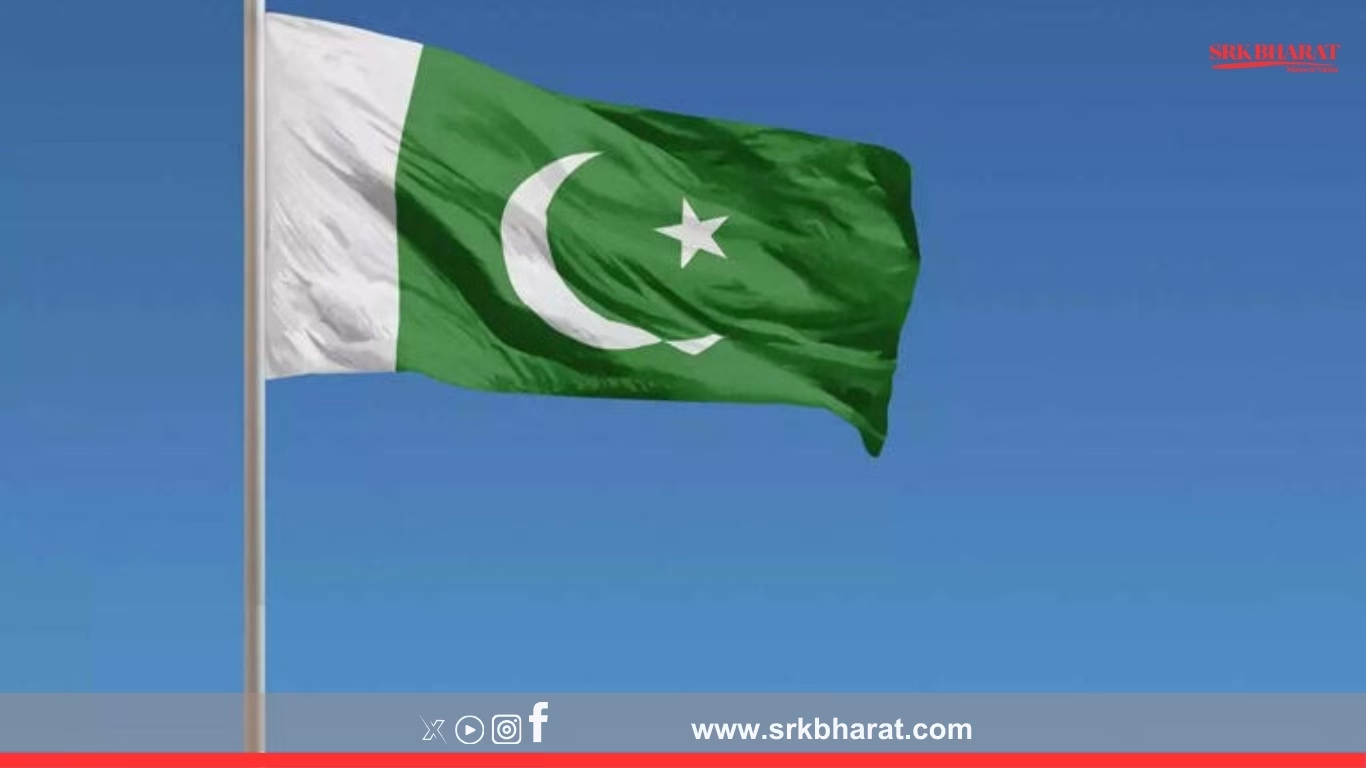
Pakistan’s first-ever economic census has unveiled a startling imbalance in the country’s structural landscape: the number of mosques and religious seminaries far exceeds the number of factories and industrial units. According to the report released by Planning Minister Ahsan Iqbal on August 22, 2025, Pakistan has over 6,04,000 mosques and 36,331 madrassas, compared to just 23,000 registered factories nationwide.
The census, conducted as part of the 2023 Population and Housing Census, aims to provide a comprehensive picture of Pakistan’s economic infrastructure, employment patterns, and institutional distribution. While the data offers valuable insights for policymakers, it has also ignited public discourse on the country’s development priorities, especially in the context of its ongoing economic crisis and negotiations with the International Monetary Fund (IMF) for a $7 billion bailout review.
🧭 Key Findings from Pakistan’s Economic Census
| Category | Number of Units Reported |
|---|---|
| Mosques | 6,04,000 |
| Madrassas | 36,331 |
| Factories | 23,000 |
| Small Production Units | 6,43,000 |
| Schools | 2,42,616 |
| Colleges | 11,568 |
| Universities | 214 |
| Hospitals | 1,19,789 |
| Retail Shops | 2.7 million |
| Wholesale Shops | 1,88,000 |
| Hotels | 2,56,000 |
| Banks | 19,645 |
| Public Offices | 29,836 |
| Semi-Government Offices | 10,452 |
The report also geo-tagged 7.2 million establishments and revealed that most businesses in Pakistan are small-scale, employing fewer than 50 people.
📊 Employment Landscape: Services Sector Dominates
| Sector | Workforce Share | Number of Workers (Millions) |
|---|---|---|
| Services | 45% | 11.3 |
| Social Sector | 30% | 7.6 |
| Production Sector | 22% | 5.6 |
Out of Pakistan’s total workforce of 25.4 million, the services sector employs nearly double the number of people compared to the production sector, challenging the long-held belief that industry is the country’s primary job creator.
🔍 Provincial Distribution of Economic Units
| Province/Region | Share of Total Establishments |
|---|---|
| Punjab | 58% |
| Sindh | 20% |
| Khyber Pakhtunkhwa | 15% |
| Balochistan | 6% |
| Islamabad Capital Region | 1% |
Punjab and Sindh, particularly the Karachi region, emerged as the economic powerhouses, while Balochistan and Khyber Pakhtunkhwa lagged behind in both infrastructure and employment density.
🧠 Implications for Economic Planning and Policy
The census data has sparked concerns over Pakistan’s skewed development priorities. While religious institutions play a vital role in society, the disproportionate number of mosques and madrassas compared to factories raises questions about the country’s focus on industrialization, job creation, and economic diversification.
Planning Minister Ahsan Iqbal emphasized the importance of credible data for sustainable development, stating, “Even artificial intelligence cannot function effectively without reliable data. In the digital economy, data is the true fuel driving growth”.
📉 Business Scale and Employment Capacity
| Business Size Category | Number of Units |
|---|---|
| Employing 1–50 people | 7.1 million |
| Employing 51–250 people | 35,351 |
| Employing >250 people | 7,086 |
The overwhelming majority of businesses in Pakistan are micro or small enterprises, highlighting the need for targeted support to scale operations and improve productivity.
🧠 Education and Health Infrastructure Snapshot
| Institution Type | Number of Units |
|---|---|
| Schools | 2,42,616 |
| Colleges | 11,568 |
| Universities | 214 |
| Hospitals | 1,19,789 |
While the education and health sectors show significant presence, the private sector dominates hospital infrastructure, and many schools remain under-resourced.
📌 Conclusion
Pakistan’s first economic census offers a sobering reflection of its structural priorities. With more mosques and madrassas than factories, the data underscores the urgent need for rebalancing development efforts toward industrial growth, employment generation, and economic modernization.
As the country grapples with inflation, debt, and IMF negotiations, the census provides a roadmap for evidence-based policymaking. Whether Pakistan can pivot from religious infrastructure expansion to economic revitalization remains a pressing question for its leadership and civil society.
—
Disclaimer: This article is based on publicly available government reports and media coverage as of August 23, 2025. It is intended for informational purposes only and does not constitute economic, political, or religious commentary.