




In a major electoral development, the Election Commission of India (ECI) is set to launch a nationwide Special Intensive Revision (SIR) of voter rolls starting next week. The exercise will begin with 10 to 15 states, primarily those scheduled to hold Assembly elections in 2026. The move follows the successful completion of a similar revision in Bihar and aims to streamline and sanitize electoral rolls across the country, ensuring accuracy, transparency, and inclusivity.
The first phase of the SIR will include states such as Assam, Tamil Nadu, Kerala, West Bengal, and Puducherry. These states are expected to undergo a thorough verification of voter details, including place of birth, age, and address, with a special focus on identifying and removing foreign illegal migrants and duplicate entries.
What Is Special Intensive Revision (SIR)?
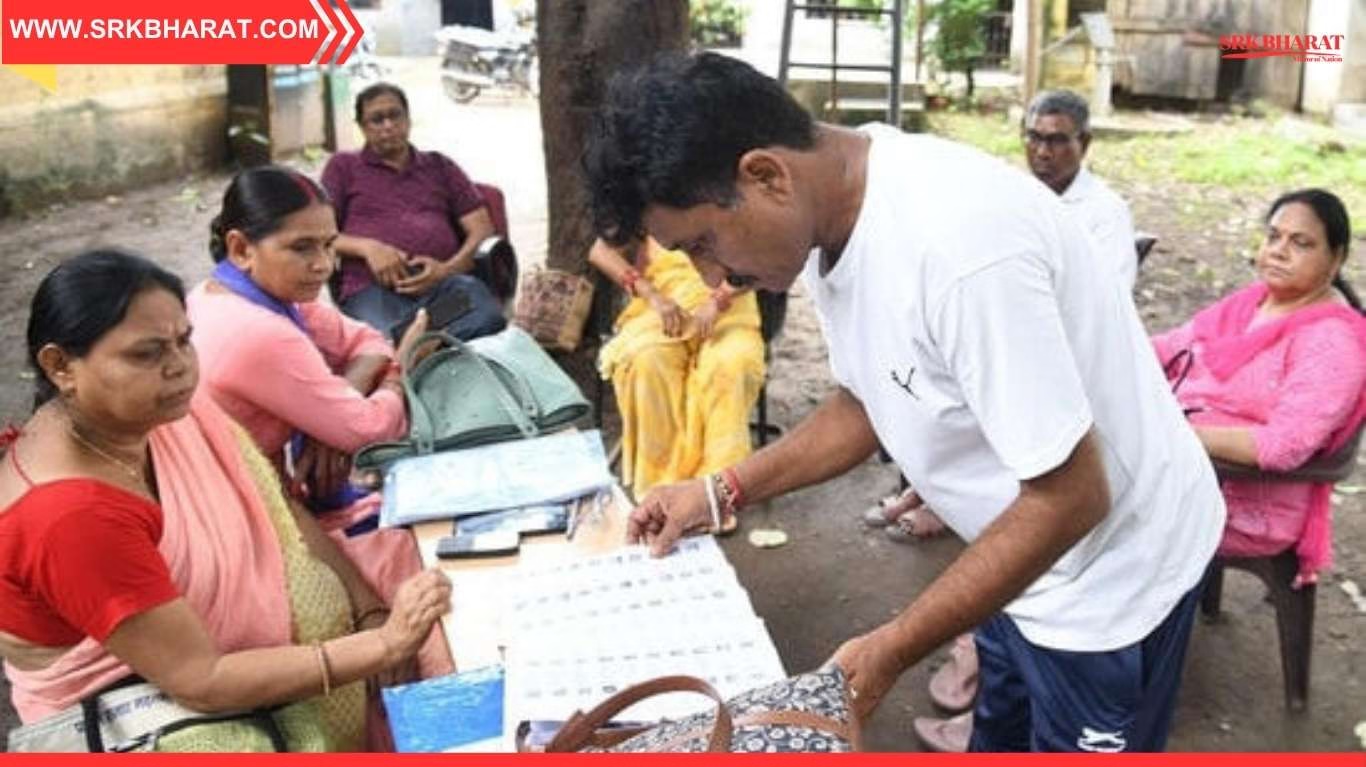
SIR is a targeted voter roll cleanup initiative undertaken by the ECI to ensure that electoral rolls are updated, accurate, and free from discrepancies. Unlike routine annual revisions, SIR involves door-to-door verification, biometric validation, and cross-checking with government databases.
| Feature of SIR | Description |
|---|---|
| Scope | Pan-India, phased rollout |
| Verification Method | Door-to-door, digital, document-based |
| Focus Areas | Place of birth, age, address, citizenship status |
| Objective | Remove illegal migrants, duplicates, deceased |
| Technology Used | Voter Helpline App, NVSP portal, Aadhaar linkage |
The initiative is part of the ECI’s broader strategy to enhance electoral integrity ahead of the 2026 Assembly elections and the 2029 General Elections.
States Likely in First Phase of SIR
According to officials, the first phase will prioritize states where Assembly elections are due next year. These include:
| State Name | Election Year | Reason for Inclusion in Phase One |
|---|---|---|
| Assam | 2026 | High migration, border sensitivity |
| Tamil Nadu | 2026 | Large voter base, urban migration |
| Kerala | 2026 | Dense population, high literacy |
| West Bengal | 2026 | Political volatility, urban-rural mix |
| Puducherry | 2026 | Small electorate, manageable scope |
States with ongoing or imminent local body elections will be excluded from the initial phase to avoid overburdening the grassroots poll machinery.
Timeline and Implementation Strategy
The ECI is expected to announce the detailed schedule for Phase One by mid-next week. The revision process will be conducted over a span of 45 to 60 days, with final voter lists likely to be published by January 2026.
| Milestone | Expected Date Range |
|---|---|
| Phase One Announcement | October 30–31, 2025 |
| Field Verification Begins | November 3–10, 2025 |
| Draft Roll Publication | December 15, 2025 |
| Claims and Objections Period | December 15–31, 2025 |
| Final Roll Publication | January 15, 2026 |
The process will be overseen by Chief Electoral Officers (CEOs) in each state, supported by Booth Level Officers (BLOs), district magistrates, and local administrative units.
Technology and Tools for Voter Verification
The ECI will deploy a suite of digital tools to facilitate the SIR process:
- Voter Helpline App: Allows citizens to check, update, and verify their voter details.
- National Voters’ Service Portal (NVSP): Centralized platform for voter registration and corrections.
- Aadhaar Linkage: Optional but encouraged for identity verification.
- GIS Mapping: Used to identify duplicate entries and ghost voters.
| Tool Name | Functionality | Accessibility |
|---|---|---|
| Voter Helpline App | Mobile-based verification and updates | Android/iOS |
| NVSP Portal | Online registration and corrections | Web-based |
| Aadhaar Integration | Identity validation | Voluntary |
| GIS Mapping | Spatial analysis of voter clusters | Internal use |
These tools aim to make the process citizen-friendly, efficient, and secure.
Challenges and Concerns
While the SIR initiative is ambitious, it faces several challenges:
- Manpower Shortage: BLOs and local officials may be stretched thin.
- Data Privacy: Concerns over Aadhaar linkage and biometric data.
- Political Sensitivities: Voter roll revisions can trigger allegations of bias.
- Migration and Mobility: Urban migration complicates address verification.
The ECI has assured that all data will be handled securely and that the process will be transparent and inclusive.
Impact on Upcoming Elections
The SIR is expected to have a significant impact on the 2026 Assembly elections and beyond. Clean and accurate voter rolls will:
- Reduce instances of bogus voting
- Improve voter turnout through targeted outreach
- Enhance trust in the electoral process
- Enable better resource allocation during polls
| Election Year | States Affected | Expected Benefits of SIR |
|---|---|---|
| 2026 | 5+ states | Cleaner rolls, higher turnout |
| 2027–2029 | All states | Improved electoral integrity |
Political parties are closely watching the process, as voter roll changes can influence constituency dynamics.
Public Participation and Awareness
The ECI will launch a nationwide awareness campaign to encourage citizens to verify and update their voter details. This will include:
- Social media outreach
- SMS alerts and IVR calls
- Collaboration with Resident Welfare Associations (RWAs)
- Campus drives in universities and colleges
| Awareness Channel | Target Audience | Message Focus |
|---|---|---|
| Social Media | Youth, urban voters | Update your voter details |
| SMS/IVR | Rural and semi-urban | Verify your voter ID |
| RWAs | Middle-class households | Community-level verification |
| Campus Drives | First-time voters | Registration and awareness |
Citizens are encouraged to participate actively to ensure their names are correctly listed and updated.
Lessons from Bihar’s SIR Experience
Bihar recently completed its own SIR exercise, publishing a final voter list with 7.42 crore entries. Despite controversies around alleged exclusions, the process was largely successful in identifying duplicates and deceased voters.
| Bihar SIR Outcome | Metric |
|---|---|
| Total Voters Listed | 7.42 crore |
| Duplicates Removed | 1.3 lakh |
| Deceased Voters Removed | 2.1 lakh |
| New Registrations | 4.5 lakh |
The ECI is using Bihar’s experience to refine its strategy for the pan-India rollout.
Conclusion
The launch of the pan-India Special Intensive Revision of voter rolls marks a pivotal moment in India’s electoral journey. With Phase One set to begin next week in key states like Assam, Tamil Nadu, Kerala, West Bengal, and Puducherry, the initiative promises to enhance the accuracy, transparency, and credibility of the voter database.
As India prepares for a series of crucial elections in the coming years, a clean and verified voter roll will be the foundation of democratic integrity. Citizens, officials, and political stakeholders must collaborate to ensure the success of this nationwide exercise.
Disclaimer: This article is based on publicly available information and official statements. It does not constitute legal or political advice. All views expressed are for informational purposes only.