

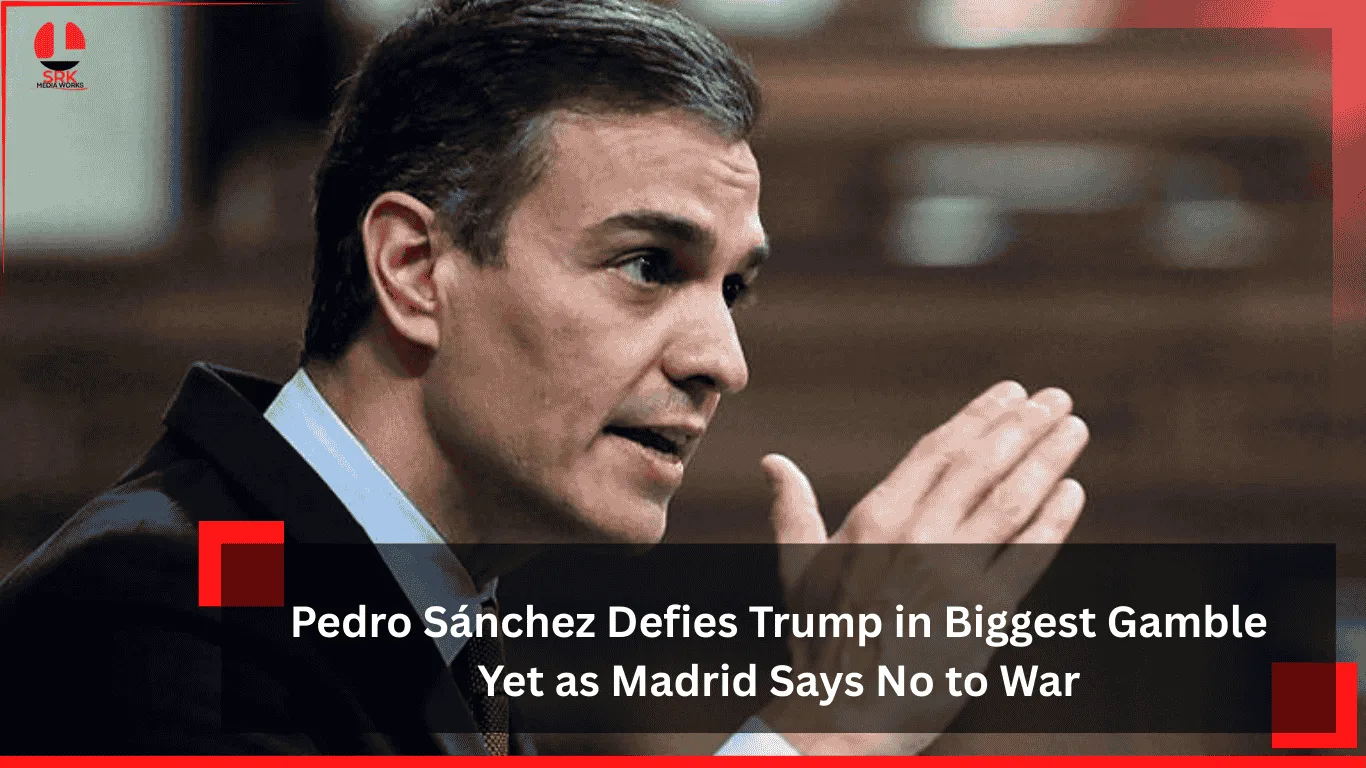
Spain’s Prime Minister Pedro Sánchez has taken one of his boldest political steps yet, openly defying U.S. President Donald Trump’s push for military involvement and declaring that Madrid will not participate in war efforts. This decision, framed as a principled stand for peace and sovereignty, underscores Spain’s independent foreign policy stance and positions Sánchez as a leader willing to challenge global pressure.
Strategic Importance of Spain’s Decision
- National Sovereignty: Sánchez emphasized that Spain’s foreign policy decisions will be guided by national interests, not external pressure.
- Peace Commitment: Madrid’s refusal to join war efforts highlights its commitment to diplomacy and peaceful resolution of conflicts.
- European Solidarity: Spain’s stance aligns with broader European calls for restraint, strengthening its role within the EU.
Market and Political Impact
- Domestic Politics: Sánchez’s move is expected to rally support among voters who favor peace and oppose foreign military entanglements.
- International Relations: While straining ties with Washington, the decision could bolster Spain’s standing among nations advocating non-intervention.
- Global Perception: Spain is seen as asserting independence, resisting alignment with U.S. military strategies.
Comparative Analysis of Global Responses
| Country/Leader | Position on War Efforts | Strategic Focus | Impact on Relations |
|---|---|---|---|
| Spain – Pedro Sánchez | Refused participation | Peace, sovereignty | Strained U.S. ties, stronger EU role |
| U.S. – Donald Trump | Advocated military action | Global dominance, deterrence | Pressure on allies |
| France – Emmanuel Macron | Cautious approach | Diplomacy, EU solidarity | Balanced relations |
| Germany – Olaf Scholz | Hesitant involvement | Economic stability, restraint | Preserving EU unity |
Business Impact Projection in Political Terms
| Factor | Short-Term Impact | Long-Term Impact |
|---|---|---|
| Spain’s Domestic Politics | Boost in public support | Strengthened leadership credibility |
| EU Relations | Enhanced solidarity | Greater influence in EU policymaking |
| U.S.-Spain Relations | Diplomatic strain | Potential recalibration of ties |
| Global Positioning | Seen as peace advocate | Long-term reputation as independent actor |
Pedro Sánchez’s Political Gamble
- Risk Factor: Defying Washington carries risks, including potential diplomatic and economic repercussions.
- Public Support: Many Spaniards view the decision as a courageous stand against unnecessary conflict.
- Leadership Image: Sánchez’s move reinforces his image as a leader willing to prioritize peace over pressure.
Expert Insights
Political analysts argue that Sánchez’s decision is both a gamble and a statement of principle. While it may complicate Spain’s relations with the U.S., it strengthens his domestic position and aligns Spain with European calls for restraint.
Future Outlook
- EU Alignment: Spain is expected to work closely with France and Germany to promote diplomatic solutions.
- U.S. Relations: While strained, ties may recalibrate around trade and non-military cooperation.
- Global Role: Spain could emerge as a leading voice for peace in international forums.
Conclusion
Pedro Sánchez’s refusal to align Spain with U.S. military efforts marks a defining moment in his leadership. By calling the push for war unacceptable and prioritizing peace, Sánchez has taken a calculated risk that could reshape Spain’s role in global politics. While the gamble may strain relations with Washington, it strengthens Spain’s standing as a sovereign nation committed to diplomacy and independence.
Disclaimer
This article is intended for informational purposes only and should not be construed as political endorsement or advice. Political decisions are subject to evolving circumstances, international relations, and domestic priorities. Readers are encouraged to follow official updates for the latest developments.