


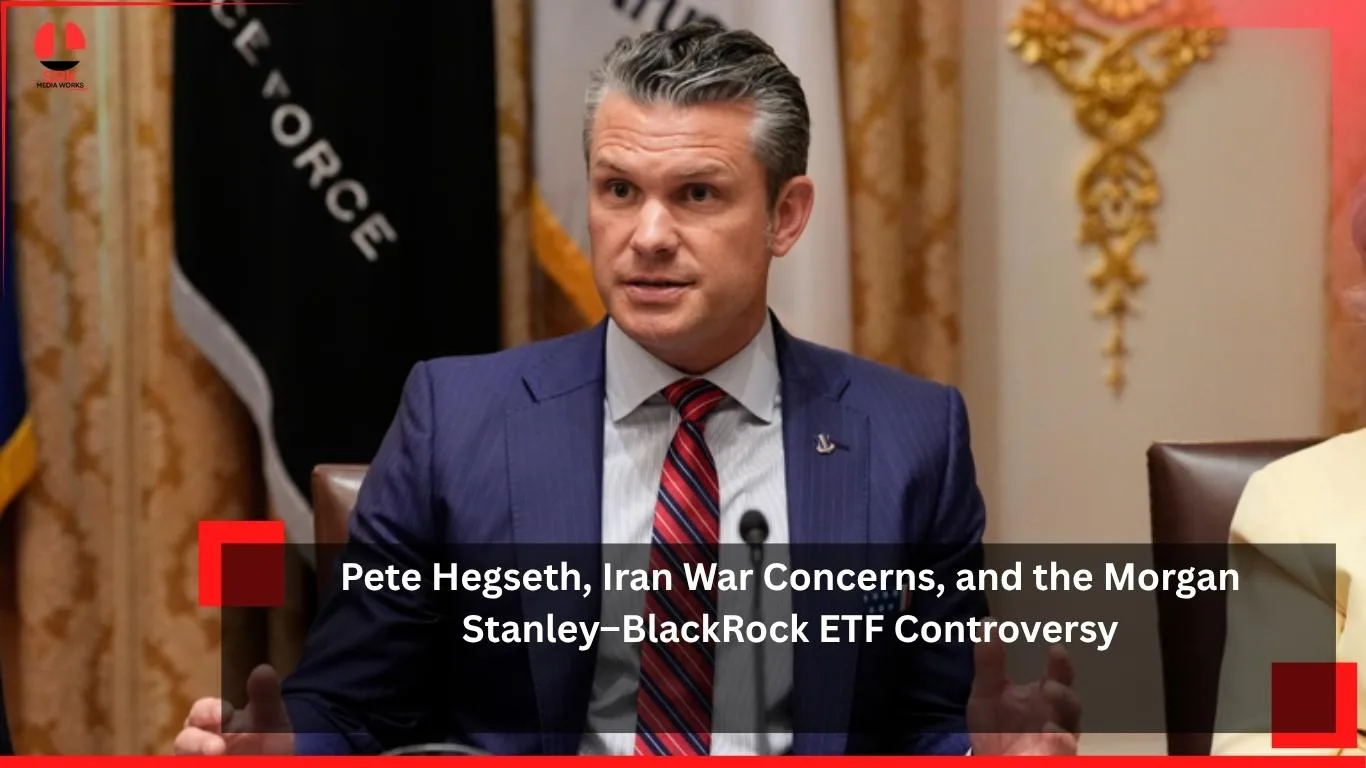
The intersection of politics, finance, and defense has always been a sensitive subject in the United States. Recently, questions have emerged around Pete Hegseth, a prominent conservative commentator and current U.S. Defense Secretary, regarding whether he sought to profit from escalating tensions with Iran. Reports suggest that Morgan Stanley brokers explored investments in a BlackRock defense-focused ETF just weeks before U.S. and Israeli strikes on Iranian targets. While the Pentagon has denied any wrongdoing, the timing of these financial moves has ignited a storm of controversy.
Background: Pete Hegseth’s Rise and Role
Pete Hegseth, a former Army officer and Fox News personality, has built his career on strong national security positions. His appointment as Defense Secretary was seen as a continuation of his hawkish stance on foreign policy. However, his close ties to Wall Street and defense contractors have raised eyebrows, especially in light of recent allegations.
The Allegations: Profit from War?
The controversy centers on whether Hegseth or his associates attempted to benefit financially from defense-related investments during a period of heightened military activity. According to reports, Morgan Stanley brokers considered channeling funds into a BlackRock ETF that tracks defense and aerospace companies. These firms often see stock surges during wartime due to increased demand for military equipment and services.
Critics argue that if Hegseth had knowledge of impending military action, any related investment could represent a conflict of interest. Supporters counter that defense ETFs are common investment vehicles and that no evidence directly links Hegseth to personal profit-making.
BlackRock Defense ETF: What It Is
BlackRock, one of the world’s largest asset managers, offers a range of ETFs, including those focused on defense and aerospace. These funds typically include companies such as Lockheed Martin, Northrop Grumman, and Raytheon Technologies. When geopolitical tensions rise, these stocks often climb, making defense ETFs attractive to investors seeking short-term gains.
Timeline of Events
| Date | Event | Market Impact |
|---|---|---|
| Early February 2026 | Reports of escalating tensions between U.S., Israel, and Iran | Defense stocks begin gradual rise |
| Mid-February 2026 | Morgan Stanley brokers explore BlackRock defense ETF | Increased trading activity noted |
| Late February 2026 | U.S.-Israeli strikes on Iranian targets | Defense ETF surges |
| March 2026 | Allegations surface regarding Hegseth’s involvement | Political backlash intensifies |
Political Fallout
The controversy has sparked debate in Washington. Lawmakers from both parties have called for transparency regarding defense officials’ financial holdings. Some have demanded stricter regulations to prevent conflicts of interest, while others argue that the allegations are politically motivated.
Ethical Questions
The ethical dilemma revolves around whether government officials should be allowed to hold or trade defense-related investments while in office. Critics argue that such investments create perverse incentives, potentially encouraging military action for financial gain. Proponents claim that banning these investments would unfairly restrict officials’ financial freedom.
Public Reaction
Public opinion has been sharply divided. Many Americans view the allegations as another example of the blurred lines between Wall Street and Washington. Others believe the controversy is exaggerated and that defense ETFs are simply part of normal investment strategies.
Comparative Analysis: Defense ETFs vs. Other Sectors
| Sector | Typical Performance During War | Risk Level | Public Perception |
|---|---|---|---|
| Defense & Aerospace | Strong growth due to military demand | Moderate | Controversial |
| Energy (Oil & Gas) | Often rises due to supply disruptions | High | Mixed |
| Technology | Variable, depending on cyber warfare | Moderate | Neutral |
| Consumer Goods | Often declines due to instability | Low | Neutral |
Implications for U.S. Foreign Policy
The controversy raises broader questions about how financial interests may influence foreign policy decisions. If defense officials are seen as profiting from war, public trust in government could erode. This could also impact America’s global standing, as allies and adversaries alike scrutinize U.S. motives.
Calls for Reform
Several proposals have emerged in response to the controversy:
- Mandatory divestment of defense-related holdings for Pentagon officials.
- Stricter disclosure requirements for financial assets.
- Independent oversight committees to monitor potential conflicts of interest.
Conclusion
The allegations against Pete Hegseth highlight the complex relationship between politics, finance, and defense. While no definitive evidence has proven wrongdoing, the controversy underscores the need for transparency and accountability. Whether or not Hegseth sought to profit from war, the debate has reignited calls for reform in how government officials manage their financial interests.
Disclaimer
This article is based on publicly available reports and analysis. It does not claim or confirm any wrongdoing by Pete Hegseth, Morgan Stanley, or BlackRock. The content is intended for informational purposes only, and readers should treat allegations as unverified until confirmed by official investigations.