


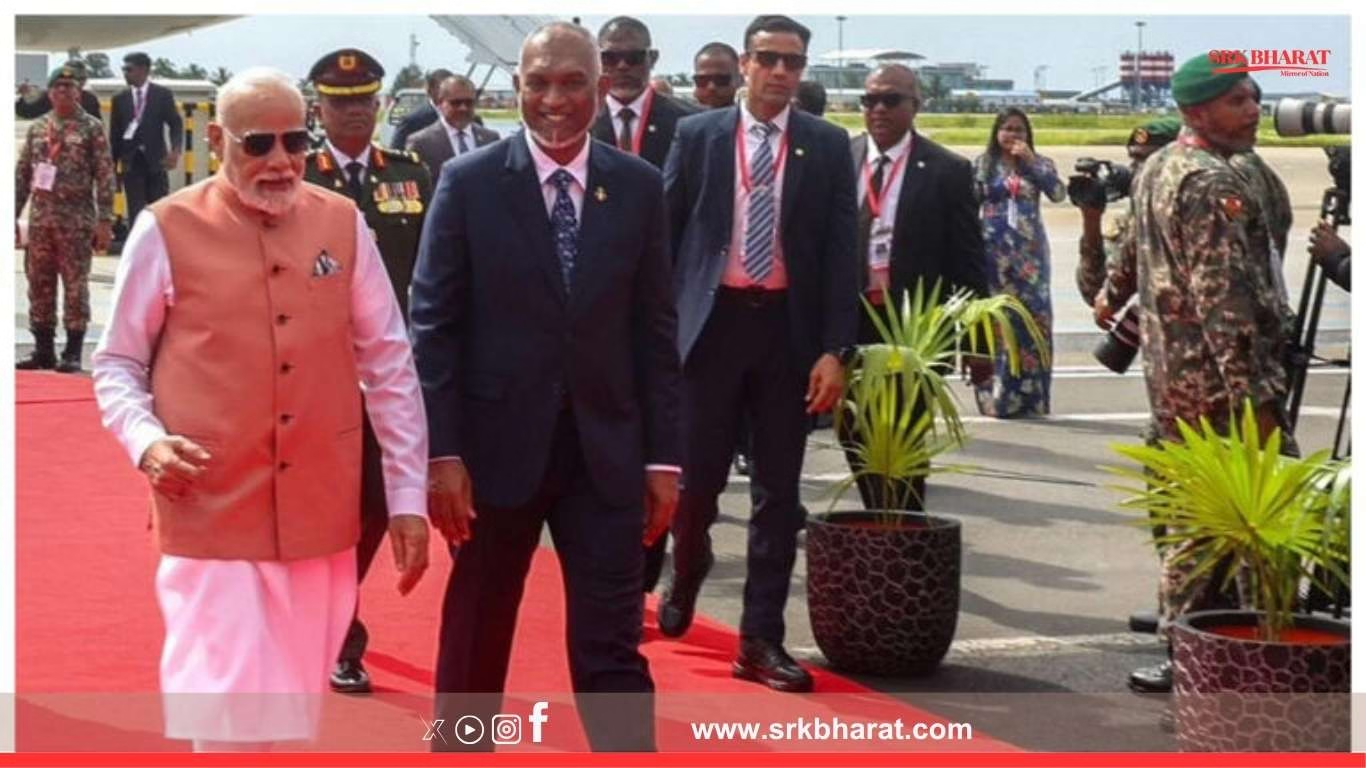
In a significant diplomatic development, Prime Minister Narendra Modi’s recent visit to the Maldives marked a new chapter in bilateral relations between India and the island nation, signaling a dramatic reversal in earlier tensions. Former Foreign Secretary Harsh Vardhan Shringla has now shed light on the behind-the-scenes efforts and strategic recalibrations that led to the shift in tone from Malé, following Maldivian President Mohamed Muizzu’s initially hostile, ‘India Out’ campaign.
PM Modi’s arrival in Malé — part of his broader neighbourhood-first diplomacy — was viewed as both symbolic and strategic. His high-profile welcome, state engagements, and agreements signed during the visit stood in stark contrast to the turbulent diplomatic phase witnessed during the early months of President Muizzu’s administration.
Shringla on the diplomatic shift: “Calm persistence paid off”
Speaking at a closed-door policy forum later quoted by insiders, Harsh Vardhan Shringla, who played a key role in shaping India’s regional policy, highlighted the blend of restraint and strategic patience employed by New Delhi to neutralize Muizzu’s early antagonism. “The initial rhetoric from the new administration was populist and largely driven by domestic political compulsions,” Shringla said. “India chose not to react publicly, but remained engaged quietly at multiple levels.”
Shringla attributed the successful turnaround to sustained diplomatic outreach, people-centric development projects, and regional pressure that made Malé reconsider its isolationist stance toward India.
Timeline of Events Leading to Improved India-Maldives Relations
| Key Event | Description | Impact |
|---|---|---|
| November 2023 | Mohamed Muizzu assumes office, launches ‘India Out’ rhetoric | India-Maldives ties strain, military cooperation questioned |
| December 2023 | India begins quiet diplomacy via backchannels | Tensions ease, military drawdown agreement signed |
| January 2024 | Maldives requests humanitarian and infrastructure aid | Signals softening stance |
| March 2024 | Maldives lauds Indian health and housing projects | Bilateral dialogue resumes |
| July 2025 | PM Modi visits Maldives | Full diplomatic reset achieved |
The ‘India Out’ campaign and Muizzu’s recalibration
Soon after coming to power in 2023, President Muizzu’s administration became associated with the ‘India Out’ campaign — a movement that accused India of interfering in Maldivian sovereignty, especially due to the presence of Indian military personnel involved in operating humanitarian flights and maritime security platforms.
However, the Muizzu government soon realized the strategic risks of alienating India — the region’s most powerful neighbor and its largest development partner. Multiple Maldivian government departments, including those handling economic affairs and infrastructure, reportedly urged the President to reconsider, citing the indispensability of Indian aid and tourism.
India’s calibrated diplomacy
Shringla emphasized that India didn’t opt for retaliation, despite the provocations. Instead, it pursued a strategy of “non-escalatory engagement”, focusing on:
- Accelerated completion of ongoing infrastructure projects, including the Greater Malé Connectivity Project
- Medical and educational outreach, expanding scholarships and healthcare collaborations
- Coastal surveillance support minus direct military deployment
- Empowering civil society linkages between Indian and Maldivian universities and NGOs
These moves were designed to reinforce India’s goodwill among Maldivian citizens while countering propaganda that portrayed India as a hegemonic neighbor.
Strategic Significance of Maldives for India
| Strategic Factor | Importance for India |
|---|---|
| Geographic Location | Close to vital shipping lanes in the Indian Ocean |
| Counter-China Balancing | Key to keeping Chinese influence in check in South Asia |
| Maritime Security | Supports India’s blue water naval capabilities |
| Diaspora and Cultural Ties | Shared civilizational and cultural heritage |
| Economic Interests | Investments in housing, health, infrastructure |
India’s interest in stabilizing relations with the Maldives is deeply rooted in both geopolitical and economic calculations. The Maldives’ proximity to major sea lanes, combined with China’s increasing presence in the Indian Ocean region, makes the island nation vital to India’s strategic calculus.
Major Outcomes of PM Modi’s Visit to Maldives
| Agreement/Initiative | Description | Value/Scope |
|---|---|---|
| MoU on Renewable Energy | Joint collaboration on solar and wind projects | $50 million initial investment |
| Expansion of Health Cooperation | Upgrading 3 hospitals with Indian support | N/A |
| Housing Project Phase III | Construction of 4,000 additional housing units | $225 million |
| Connectivity Infrastructure | Speeding up of GMCP bridge project | Expected completion in 2026 |
| Cultural Exchange Pact | Increase in student scholarships and tourism exchange | 1,000+ beneficiaries |
Public sentiment and political recalibration
According to regional analysts and internal Maldivian surveys, there has been a noticeable shift in public sentiment regarding India. The initial nationalist fervor of ‘India Out’ lost traction as citizens recognized the tangible benefits of Indian-funded infrastructure, healthcare, and job creation.
“Even Muizzu’s political base began questioning the wisdom of alienating the biggest development partner,” said a senior Maldivian journalist. “Eventually, economic pragmatism prevailed over political posturing.”
Opposition’s role and regional feedback
India also found allies in the Maldivian opposition and civil society groups who pushed back against the anti-India narrative. Former President Mohamed Solih and other moderate leaders continued to express their support for a balanced foreign policy.
Additionally, regional partners like Sri Lanka, Bhutan, and Bangladesh reportedly conveyed to Muizzu’s administration that good ties with India were essential for South Asian stability and cooperation.
Looking ahead: What’s next in India-Maldives ties?
PM Modi’s visit is being seen as a culmination of nearly 20 months of careful diplomatic management and relationship rebuilding. Experts believe this visit will pave the way for:
- Revitalized defense cooperation, albeit through civilian structures
- Joint oceanographic and climate research
- Expanding people-to-people programs, especially in education and tourism
- Strengthening India’s role as a first responder in regional crises
India is also expected to remain cautious about China’s continued interest in the Maldives and will likely increase its economic footprint to counter Beijing’s presence.
Final reflections from Shringla
Former Foreign Secretary Shringla concluded his remarks by highlighting that India’s diplomatic success in the Maldives is a textbook example of soft power projection. “We did not use coercion, nor did we politicize the issue. India’s strength lies in partnership, not dominance — and that message is now well understood by our neighbours.”
Disclaimer: This news article is based on statements from former diplomats, government records, and diplomatic engagements. The details reflect ongoing political developments and are subject to change based on evolving regional dynamics. Readers are encouraged to refer to official briefings for formal policy positions and announcements.