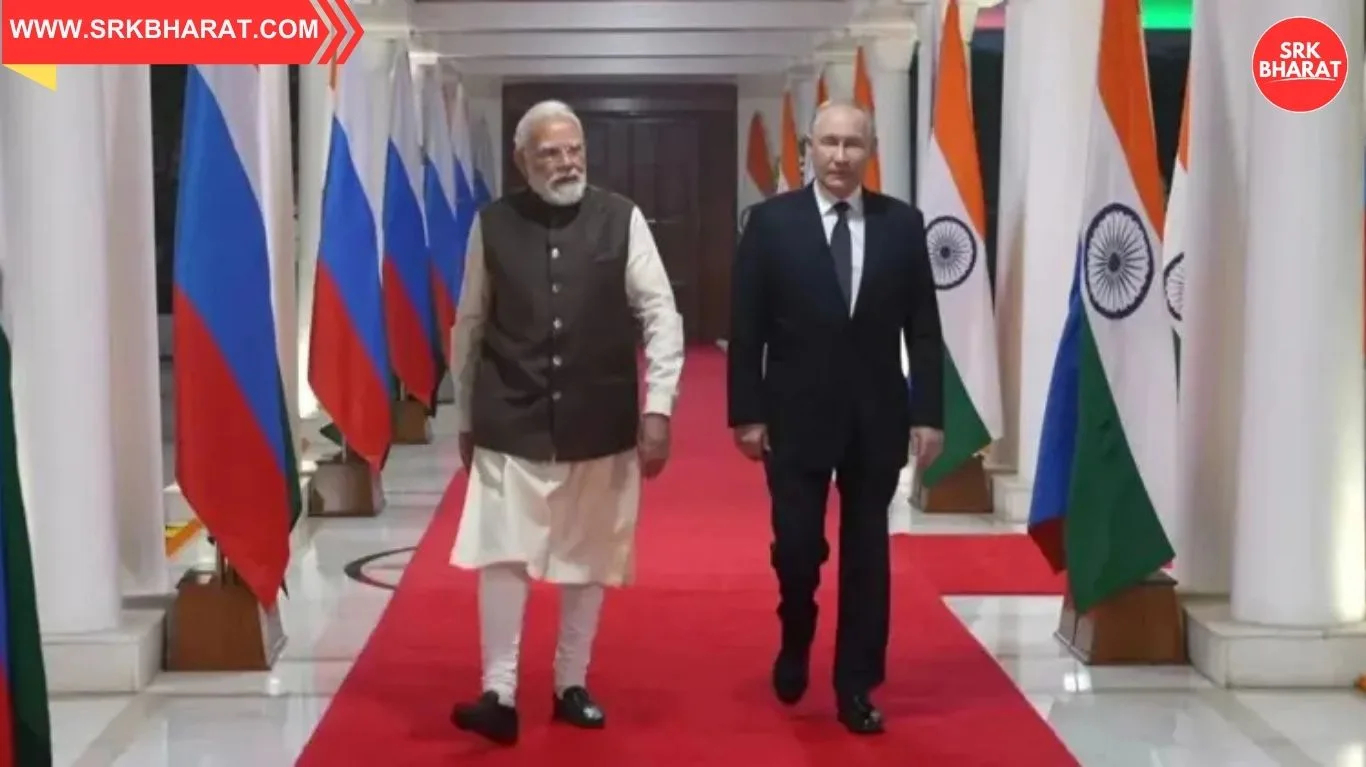

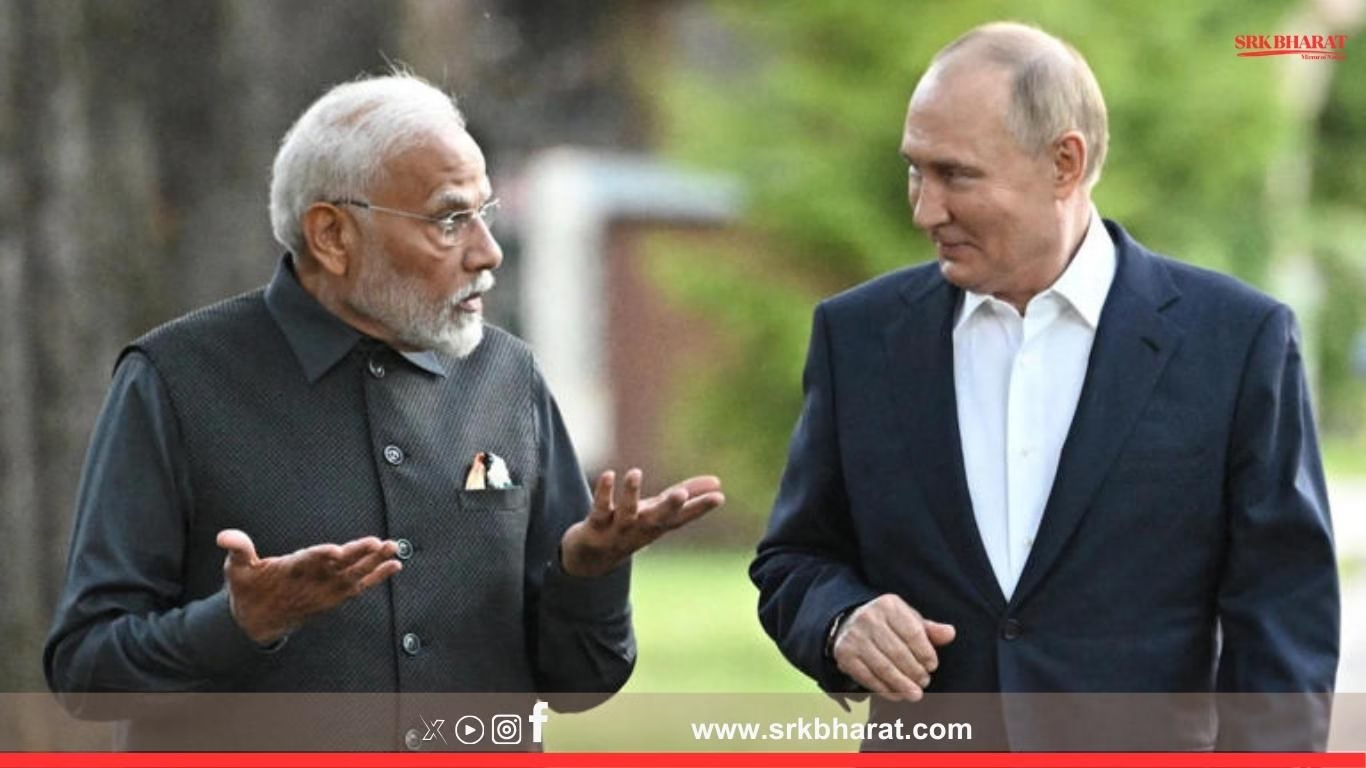
Russian President Vladimir Putin has strongly criticized the United States for its recent tariff escalation against India, calling Washington’s approach “outdated” and reminiscent of colonial-era coercion. Speaking at a press briefing following the Shanghai Cooperation Organisation (SCO) Summit in Beijing on September 3, 2025, Putin defended India’s sovereign right to pursue independent trade and energy policies, particularly in the context of its oil imports from Russia.
His remarks come days after the US administration under President Donald Trump doubled tariffs on Indian exports to 50%, citing India’s continued purchase of Russian oil and its growing strategic alignment with Moscow and Beijing. The move has triggered diplomatic tensions and drawn sharp reactions from global leaders, with Putin’s comments emerging as a powerful rebuke of Western economic pressure.
🧭 Key Highlights from Putin’s Statement on India–US Tariff Row
| Theme | Putin’s Remarks | Strategic Implication |
|---|---|---|
| Colonial Rhetoric | “The colonial era is now over.” | Rejects Western dominance in global affairs |
| Sovereign Rights | “India has its own laws and political mechanisms.” | Defends India’s autonomy in trade decisions |
| Leadership Pressure | “Punishing leaders weakens their political standing.” | Warns against destabilizing major powers |
| Global Balance | “You cannot talk to India or China like that.” | Calls for respectful multilateral engagement |
| Future Outlook | “Eventually, things will settle into normal dialogue.” | Signals hope for diplomatic resolution |
Putin’s comments were made at the Diaoyutai State Guesthouse in Beijing, where he addressed media following the SCO Summit and a military parade commemorating World War II.
🔍 Background: US Tariffs and India’s Energy Trade with Russia
On August 27, 2025, the Trump administration imposed a 25% tariff hike on Indian exports, raising the total to 50%. The move was aimed at penalizing India for continuing to import Russian crude oil despite Western sanctions. President Trump also hinted at “phase two” and “phase three” sanctions, warning that India’s trade decisions could have “big consequences.”
| US Action | Date | Targeted Sector | Justification |
|---|---|---|---|
| Tariff Hike to 50% | August 27, 2025 | Textiles, pharma, auto parts | India’s Russian oil imports |
| Secondary Sanctions | Proposed | Financial institutions | Alleged facilitation of Russian payments |
| Trade Deficit Complaints | Ongoing | General bilateral trade | “One-sided disaster” – Trump |
India has maintained that its energy purchases are based on national interest and market dynamics, and has refused to join Western sanctions against Moscow.
📉 India’s Response and Strategic Positioning
Prime Minister Narendra Modi, who met Putin on the sidelines of the SCO Summit, has not issued a direct response to the US tariff hike but emphasized India’s commitment to “balanced and independent foreign policy.” The Modi–Putin meeting was their first since the tariff escalation and was seen as a reaffirmation of India–Russia ties.
| India’s Position | Statement / Action Taken | Diplomatic Message |
|---|---|---|
| Energy Sovereignty | Continued Russian oil imports | Strategic autonomy |
| SCO Engagement | Bilateral with Putin, cordial with Xi | Multipolar diplomacy |
| Trade Diversification | Talks with EU, ASEAN, and BRICS | Reducing dependency on US markets |
| Domestic Impact | Industry consultations underway | Assessing tariff impact on exports |
India’s Ministry of External Affairs has reiterated that trade decisions are guided by national interest and global supply chain realities.
🔥 Global Reactions to Putin’s Defense of India
Putin’s remarks have drawn attention across diplomatic circles, with many viewing them as a direct challenge to US unilateralism. European leaders have taken a more cautious stance, with Germany’s Foreign Minister clarifying that Europe has “no plans to sanction India” over its energy trade.
| Country / Bloc | Reaction to US Tariffs on India | Position on India–Russia Trade |
|---|---|---|
| Russia | Strong defense of India | Strategic partner |
| China | Silent but supportive at SCO | Shared interests in multipolarity |
| European Union | No sanctions planned | Pragmatic engagement |
| United States | Doubling down on tariffs | Pressure campaign continues |
The SCO Summit also featured a widely circulated image of Modi, Putin, and Xi Jinping sharing a moment of camaraderie, which some Western commentators described as a “symbol of shifting global alliances.”
🧠 Expert Commentary and Strategic Analysis
| Expert Name | Role | Comment |
|---|---|---|
| Meera Iyer | Geopolitical Analyst | “Putin’s defense of India is a strategic signal to Washington.” |
| Rajiv Bansal | Trade Policy Consultant | “India’s energy independence is non-negotiable.” |
| Dr. Rakesh Sinha | Global Affairs Historian | “The colonial reference is a reminder of historical sensitivities.” |
Experts agree that the US must recalibrate its approach to emerging powers like India, which are increasingly asserting their strategic autonomy.
📦 Comparative Table: US Tariff Impact vs India’s Trade Diversification
| Indicator | Pre-Tariff Scenario (2024) | Post-Tariff Scenario (2025) | Strategic Adjustment |
|---|---|---|---|
| Export Volume to US | $85 billion | $72 billion (projected) | Shift to EU, ASEAN markets |
| Russian Oil Imports | 1.2 million bpd | 1.4 million bpd | Continued purchases |
| Trade Deficit with US | $35 billion | $30 billion (projected) | Reduced exposure |
| FDI from US | $12 billion | $9 billion (projected) | Diversified inflows |
India is expected to accelerate trade talks with the EU, UAE, and Australia to offset the impact of US tariffs.
📌 Conclusion
Russian President Vladimir Putin’s sharp rebuke of US tariff pressure on India has added a new dimension to the global trade and diplomatic landscape. By invoking the end of the colonial era and calling for respectful engagement, Putin has positioned India as a sovereign power that cannot be coerced through economic threats. As India navigates its strategic partnerships and trade realignments, the world watches closely to see whether diplomacy or confrontation will define the next chapter in global relations.
—
Disclaimer: This article is based on publicly available media reports, summit briefings, and expert commentary as of September 4, 2025. It is intended for informational purposes only and does not constitute diplomatic or trade policy advice.