
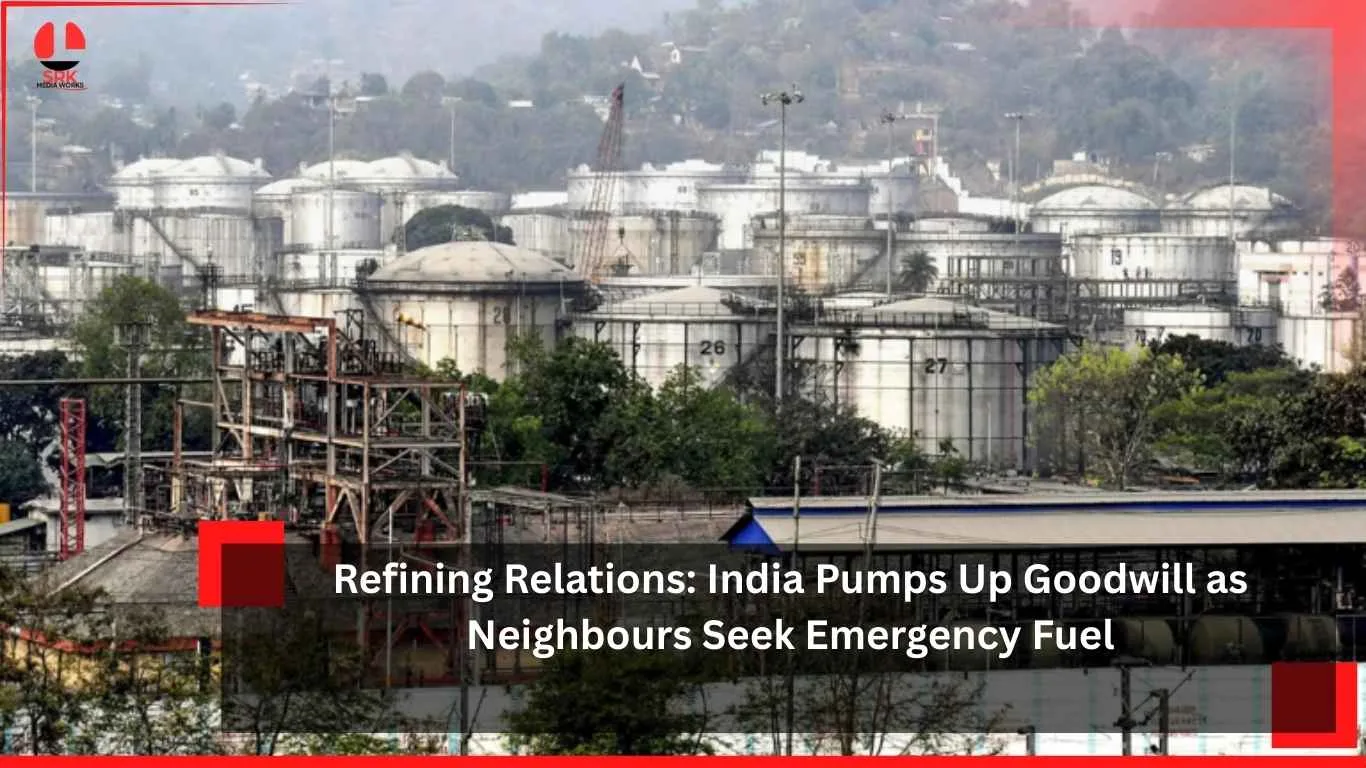
India has stepped up as a regional energy lifeline, supplying emergency fuel to its neighbours amid mounting shortages and geopolitical disruptions. With rising global oil volatility and supply chain challenges, India’s decision to extend goodwill through refined petroleum exports underscores its role as a stabilizing force in South Asia.
Background
South Asia’s energy needs have grown significantly, but many smaller economies in the region face acute shortages. Countries such as Nepal, Sri Lanka, Bangladesh, and Bhutan have struggled with rising fuel prices, limited reserves, and logistical hurdles. India, with its robust refining capacity and strategic reserves, has emerged as a reliable partner, offering emergency supplies to prevent economic paralysis in neighbouring nations.
India’s Role as a Refining Hub
India is among the world’s largest refiners of crude oil, with major facilities in Jamnagar, Vadodara, Chennai, and Paradip. These refineries not only meet domestic demand but also export refined products to global markets. In times of crisis, India’s refining strength allows it to redirect supplies toward neighbours in need.
Comparative Analysis of Fuel Assistance
| Country | Emergency Fuel Supplied by India | Key Reason for Shortage | Impact of Assistance |
|---|---|---|---|
| Nepal | Diesel and petrol consignments | Border logistics, rising demand | Stabilized transport sector |
| Sri Lanka | Petroleum and LPG shipments | Economic crisis, forex shortage | Prevented power outages |
| Bangladesh | Diesel for power plants | Rising consumption, import delays | Maintained electricity supply |
| Bhutan | Petrol and diesel | Limited refining capacity | Supported essential services |
Pivot Analysis of Themes
| Theme | Frequency in Coverage | Impact on Public Opinion |
|---|---|---|
| India’s goodwill | High | Positive regional sentiment |
| Neighbouring shortages | High | Concern and urgency |
| Energy diplomacy | Medium | Strategic recognition |
| Regional stability | Medium | Boosts India’s image |
Strategic Implications
- Regional Leadership: India strengthens its position as a dependable partner in South Asia.
- Economic Diplomacy: Fuel assistance enhances India’s trade and diplomatic leverage.
- Security Dimension: Stable energy supplies reduce risks of unrest in neighbouring countries.
- Global Standing: India’s proactive role highlights its importance in global energy networks.
Challenges Ahead
- Supply Pressure: Balancing domestic demand with regional assistance.
- Geopolitical Risks: Navigating global oil market volatility and sanctions.
- Infrastructure Strain: Ensuring ports and refineries can handle increased exports.
- Sustainability Concerns: Addressing environmental impacts of rising fossil fuel use.
Economic Impact
India’s goodwill gestures have both immediate and long-term economic implications:
- Boosts Regional Trade: Strengthens economic ties with neighbours.
- Supports Infrastructure Projects: Ensures continuity of transport and power projects.
- Enhances India’s Soft Power: Builds goodwill that translates into diplomatic capital.
- Stabilizes Regional Markets: Prevents fuel price spikes in neighbouring economies.
Conclusion
India’s decision to pump up goodwill by supplying emergency fuel to its neighbours highlights its role as a regional stabilizer. At a time when global energy markets are volatile, India’s refining capacity and willingness to assist reinforce its leadership in South Asia. This move not only addresses immediate shortages but also strengthens long-term diplomatic and economic ties, positioning India as a trusted partner in times of crisis.
Disclaimer
This article is a journalistic analysis of India’s role in supplying emergency fuel to neighbouring countries. It is intended for informational purposes only and does not endorse or oppose any political or economic stance. Readers are encouraged to consider multiple perspectives before forming conclusions.