

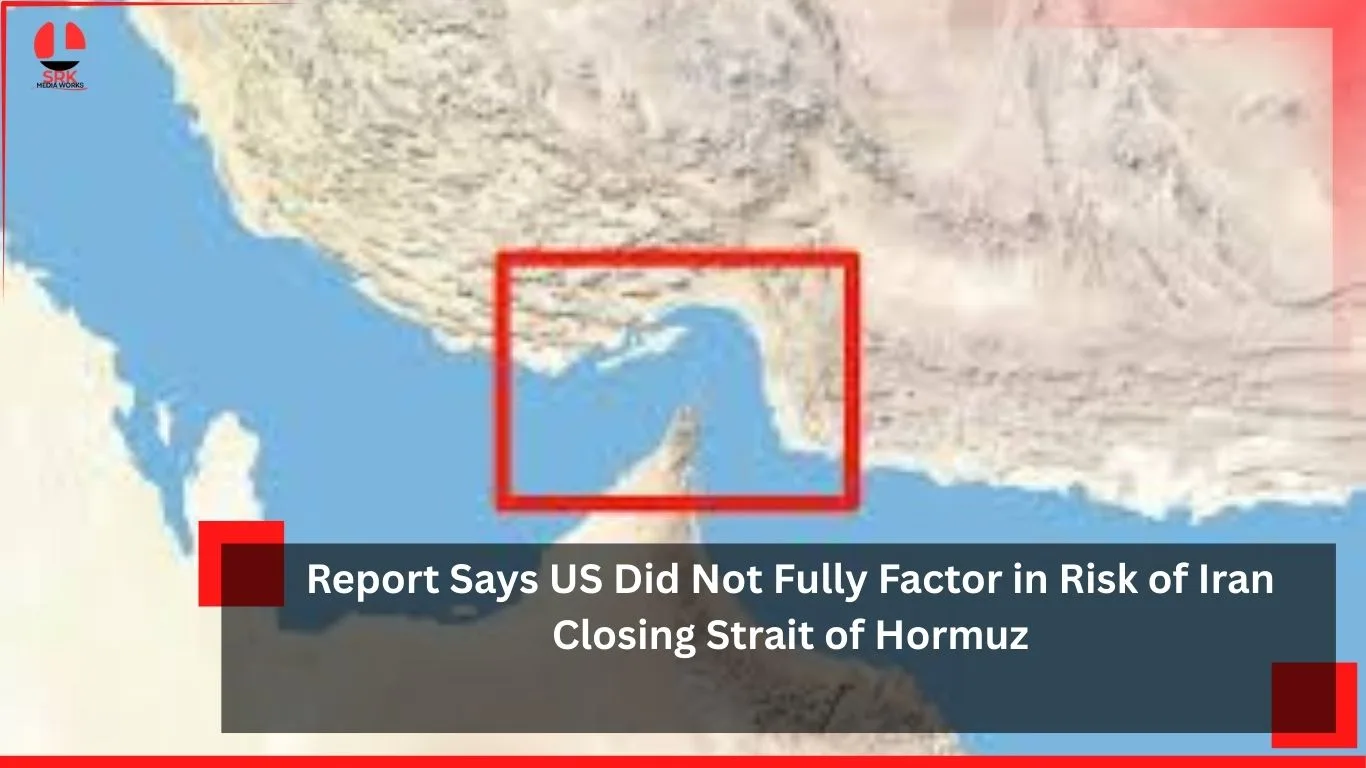
A new report has raised serious concerns about Washington’s strategic planning in the ongoing Iran war, claiming that the United States did not fully account for the risk of Tehran closing the Strait of Hormuz. This oversight, analysts argue, could have far-reaching consequences for global energy security, trade, and geopolitical stability.
Background
The Strait of Hormuz is one of the world’s most critical maritime chokepoints, with nearly 20% of global oil passing through its narrow waters. Any disruption in this corridor has immediate consequences for energy markets and global trade. Iran has repeatedly threatened to close the strait in response to U.S. military actions, and the report suggests that Washington underestimated the severity of this risk when planning its operations.
Key Highlights of the Report
- Strategic Oversight: The U.S. did not fully factor in the possibility of Iran closing the Strait of Hormuz.
- Global Energy Risk: Closure would disrupt oil and gas supplies to Asia, Europe, and beyond.
- Military Escalation: Iran’s naval capabilities, including mines and fast-attack boats, pose significant threats.
- Economic Fallout: Rising oil prices and shipping costs could destabilize global markets.
- Diplomatic Concerns: Allies worry about the lack of contingency planning.
Comparative Analysis of Strategic Risks
| Scenario | US Preparedness | Global Impact | Likely Outcome |
|---|---|---|---|
| Strait remains open | Moderate | Stable supply | Controlled escalation |
| Partial disruption | Limited | Rising prices | Regional instability |
| Full closure | Weak | Severe global shock | Prolonged conflict |
Pivot Analysis of Themes
| Theme | Frequency in Coverage | Impact on Public Opinion |
|---|---|---|
| Strait of Hormuz risk | High | Strong global concern |
| US strategic planning | Medium | Criticism of oversight |
| Energy security | High | Resonates in Asia, Europe |
| Iran’s naval threat | Medium | Heightens alarm |
Impact on Global Markets
- Oil Prices: Analysts warn crude could surge above $120 per barrel if the strait is closed.
- Shipping Costs: Insurance premiums for tankers crossing Hormuz have already spiked.
- Stock Markets: Asian and European indices show volatility amid fears of prolonged instability.
- Currency Pressure: Import-dependent economies face rising inflation risks.
Strategic Implications
- For the US: The report highlights gaps in military and economic planning.
- For Iran: Reinforces its leverage in the conflict, using the strait as a bargaining chip.
- For China and India: Both nations face heightened energy security risks due to dependence on Gulf oil.
- For Global Diplomacy: Raises questions about the effectiveness of military escalation versus negotiation.
Challenges Ahead
- Escalation Risks: Iran may attempt partial or full closure of the strait.
- Diplomatic Fallout: Allies may pressure Washington to adopt more cautious strategies.
- Economic Strain: Rising energy costs could slow global recovery.
- Public Perception: Criticism of U.S. oversight may weaken confidence in its leadership.
Conclusion
The report’s findings that the U.S. did not fully factor in the risk of Iran closing the Strait of Hormuz highlight the fragility of global energy security. As tensions escalate, the possibility of disruption looms large, with consequences for markets, diplomacy, and military strategy. The oversight underscores the need for comprehensive planning and international cooperation to prevent a crisis that could reverberate worldwide.
Disclaimer
This article is a journalistic analysis of a report highlighting U.S. strategic oversight regarding the Strait of Hormuz during the Iran war. It is intended for informational purposes only and does not endorse or oppose any political leader, party, or nation. Readers are encouraged to consider multiple perspectives before forming conclusions.