




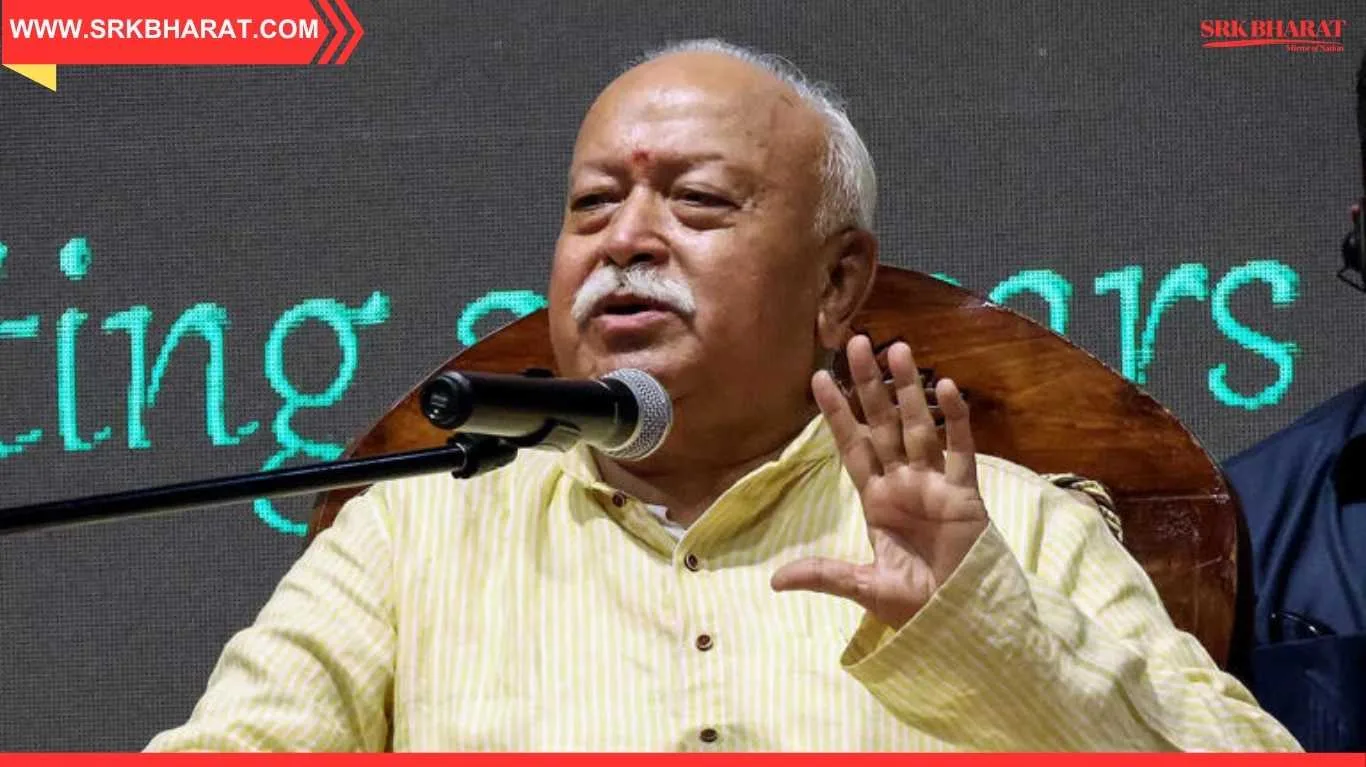
Rashtriya Swayamsevak Sangh (RSS) chief Mohan Bhagwat addressed long-standing questions about the organisation’s legal status, tax exemption, and political affiliations during the “100 Years of Sangh Journey: New Horizons” lecture series held in Bengaluru on November 9, 2025. Speaking to a packed audience, Bhagwat explained why the RSS remains unregistered, does not pay income tax, and is often seen as ideologically aligned with the Bharatiya Janata Party (BJP).
Bhagwat emphasized that the RSS is legally recognized as a “body of individuals,” which exempts it from mandatory registration and income tax under Indian law. He also drew parallels with Hindu dharma, stating, “Even Hindu dharma is not registered, yet it is universally acknowledged.” The RSS, founded in 1925, was never registered with the British government, and post-Independence laws do not require such organisations to register.
🧠 Key Highlights from Mohan Bhagwat’s Address
| Attribute | Details |
|---|---|
| Event | 100 Years of Sangh Journey: New Horizons |
| Location | Bengaluru |
| Date | November 9, 2025 |
| Speaker | Mohan Bhagwat, RSS Sarsanghchalak |
| Core Clarifications | Legal status, tax exemption, BJP alignment |
| Legal Status | Recognized as a “body of individuals” |
| Tax Exemption Basis | Income Tax Department and courts have upheld exemption |
| Political Alignment | Supports policies, not parties; BJP open to RSS members |
Bhagwat’s remarks were in response to recent criticism from opposition leaders questioning the RSS’s influence in public institutions.
📊 Timeline of RSS Legal and Political Milestones
| Year | Milestone Description | Impact |
|---|---|---|
| 1925 | RSS founded by K.B. Hedgewar | Emergence of Hindu nationalist movement |
| 1948 | First government ban after Gandhi’s assassination | Legal scrutiny and public debate |
| 1975 | Banned during Emergency | Strengthened underground network |
| 2002 | BJP-led NDA government | RSS influence in policy and education |
| 2025 | Bhagwat’s public clarification | Reaffirmation of legal and ideological stance |
The RSS has faced multiple bans but continues to operate as a legally recognized entity.
🗣️ Reactions from Political and Legal Circles
| Stakeholder | Commentary Summary |
|---|---|
| Congress Leaders | “RSS should be banned from government spaces.” |
| Legal Experts | “Unregistered bodies can be legally recognized.” |
| BJP Spokespersons | “RSS is a cultural organisation, not a political party.” |
| Civil Society Groups | “Transparency is needed in RSS-government links.” |
The debate around RSS’s role in governance and education remains politically charged.
📌 Legal and Tax Framework for RSS
| Legal Aspect | Explanation |
|---|---|
| Registration Status | Not mandatory under Indian law for bodies of individuals |
| Tax Exemption | Recognized by Income Tax Department and upheld by courts |
| Government Recognition | Past bans and legal scrutiny confirm existence and status |
| Operational Structure | Volunteer-based, decentralized shakhas across India |
Bhagwat argued that the RSS’s legal recognition stems from its historical and social presence.
📈 Comparative Snapshot – Registered vs Unregistered Organisations in India
| Organisation Type | Registration Required | Tax Exemption Eligibility | Example Entities |
|---|---|---|---|
| Trusts | Yes | Yes (under 12A, 80G) | Ramakrishna Mission |
| Societies | Yes | Yes | ISKCON |
| Bodies of Individuals | No | Case-by-case basis | RSS, informal collectives |
The RSS operates under the third category, which allows legal functioning without formal registration.
📊 RSS and BJP: Ideological and Operational Links
| Aspect | RSS Position | BJP Relationship |
|---|---|---|
| Political Activity | No direct participation | BJP includes many RSS members |
| Policy Support | Supports nationalist and cultural policies | BJP often aligns with RSS ideology |
| Electoral Role | No official campaigning | Volunteers may assist informally |
| Leadership Overlap | Shared cadre and mentorship | PM Modi began career in RSS |
Bhagwat reiterated that RSS supports policies, not political parties, but acknowledged ideological proximity.
📌 Conclusion
Mohan Bhagwat’s detailed explanation of the RSS’s legal status, tax exemption, and ideological alignment with the BJP offers clarity on an organisation that has shaped India’s socio-political landscape for a century. By positioning the RSS as a legally recognized body of individuals, Bhagwat defended its operational model and rejected calls for registration. His remarks also reaffirmed the Sangh’s cultural mission and its indirect influence on national policy through shared values with the BJP.
Disclaimer: This article is based on publicly available news reports, official statements, and verified media coverage. It is intended for informational and editorial purposes only and does not constitute legal or political advice.
Thanks for sharing. I read many of your blog posts, cool, your blog is very good. https://accounts.binance.info/cs/register-person?ref=OMM3XK51