


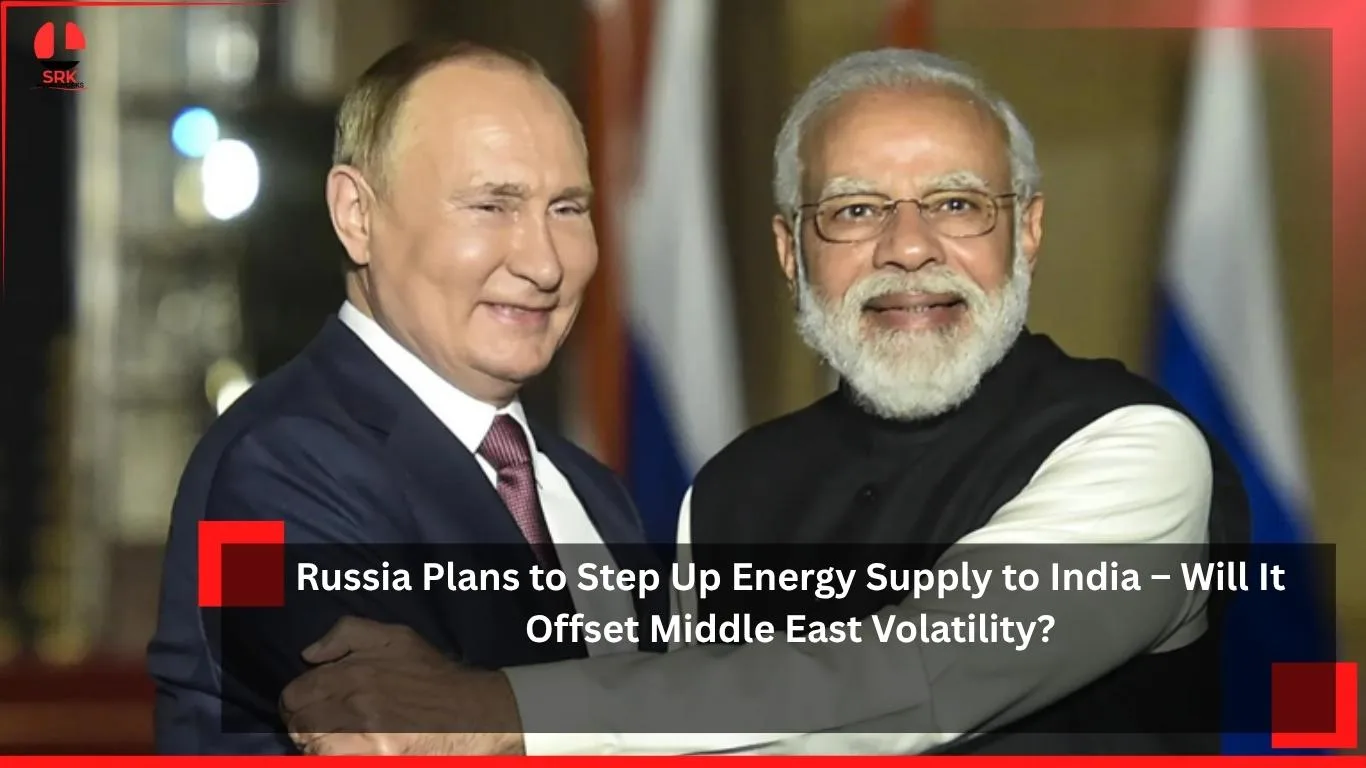
Russia has announced plans to significantly increase its energy exports to India, positioning itself as a reliable partner amid growing uncertainty in the Middle East. This strategic move comes at a time when global energy markets are grappling with volatility caused by geopolitical tensions, supply chain disruptions, and fluctuating oil prices. The question now is whether Russia’s expanded role can help India mitigate risks associated with its heavy dependence on Middle Eastern energy supplies.
India’s Energy Dependency
India is the world’s third-largest consumer of oil and a rapidly growing energy market. Traditionally, the country has relied heavily on Middle Eastern nations such as Saudi Arabia, Iraq, and the United Arab Emirates for crude oil imports. However, instability in the region, including conflicts and production cuts, has raised concerns about the sustainability of this dependency.
Russia’s Strategic Offer
Russia’s plan involves:
- Increasing crude oil exports to India at discounted rates.
- Expanding natural gas supplies, including liquefied natural gas (LNG).
- Strengthening long-term contracts to ensure stability in pricing and delivery.
- Collaborating on infrastructure projects, such as pipelines and refineries, to deepen bilateral energy ties.
Comparative Energy Supply Analysis
| Source Region | Current Share of India’s Imports (%) | Proposed Future Share (%) | Risk Level |
|---|---|---|---|
| Middle East | 65 | 50 | High |
| Russia | 15 | 30 | Moderate |
| Africa | 10 | 10 | Moderate |
| Others | 10 | 10 | Low |
This shift indicates India’s intent to diversify its energy basket, reducing reliance on the Middle East while strengthening ties with Russia.
Benefits for India
- Diversification of Supply: Reduces vulnerability to Middle Eastern volatility.
- Cost Advantage: Russian crude often comes at discounted rates compared to global benchmarks.
- Strategic Partnership: Enhances India-Russia relations beyond defense and technology.
- Energy Security: Long-term contracts ensure predictable supply.
Challenges Ahead
- Logistics: Transporting oil and gas from Russia to India requires complex shipping routes.
- Sanctions: Western sanctions on Russia could complicate financial transactions and insurance for shipments.
- Infrastructure Gaps: India must invest in refining and storage facilities to handle increased Russian imports.
- Market Volatility: Global price fluctuations may still impact India despite diversification.
Public and Industry Sentiment
| Stakeholder | Support for Russia’s Plan | Concerns |
|---|---|---|
| Indian Government | Strong | Sanctions Risk |
| Energy Companies | Positive | Logistics Costs |
| Consumers | Neutral | Price Fluctuations |
| Global Analysts | Mixed | Geopolitical Risks |
Middle East Volatility
The Middle East remains a critical energy hub, but ongoing conflicts, production cuts by OPEC+, and political instability continue to create uncertainty. India’s reliance on this region has often exposed it to sudden price hikes and supply disruptions.
Can Russia Offset Middle East Risks?
While Russia’s increased supply offers India a cushion, it may not fully offset Middle Eastern volatility. Diversification helps reduce risk, but global energy markets are interconnected. Any disruption in the Middle East still impacts global prices, which India cannot escape entirely.
Future Outlook
India is expected to pursue a balanced strategy:
- Strengthening ties with Russia for stable supplies.
- Maintaining Middle Eastern partnerships to avoid overdependence on one source.
- Investing in renewable energy to reduce reliance on imports altogether.
Conclusion
Russia’s plan to step up energy supply to India represents a significant geopolitical and economic development. It offers India an opportunity to diversify its energy imports and reduce exposure to Middle Eastern volatility. However, challenges such as sanctions, logistics, and global market dynamics mean that while Russia can help cushion risks, it cannot completely eliminate them. India’s long-term energy security will depend on a mix of diversification, infrastructure investment, and renewable energy adoption.
Disclaimer
This article is intended for informational purposes only. It provides an overview of geopolitical and energy market developments based on available analysis. It does not endorse or oppose any political stance. Readers should consult multiple perspectives and authoritative sources before forming conclusions about complex international issues.