



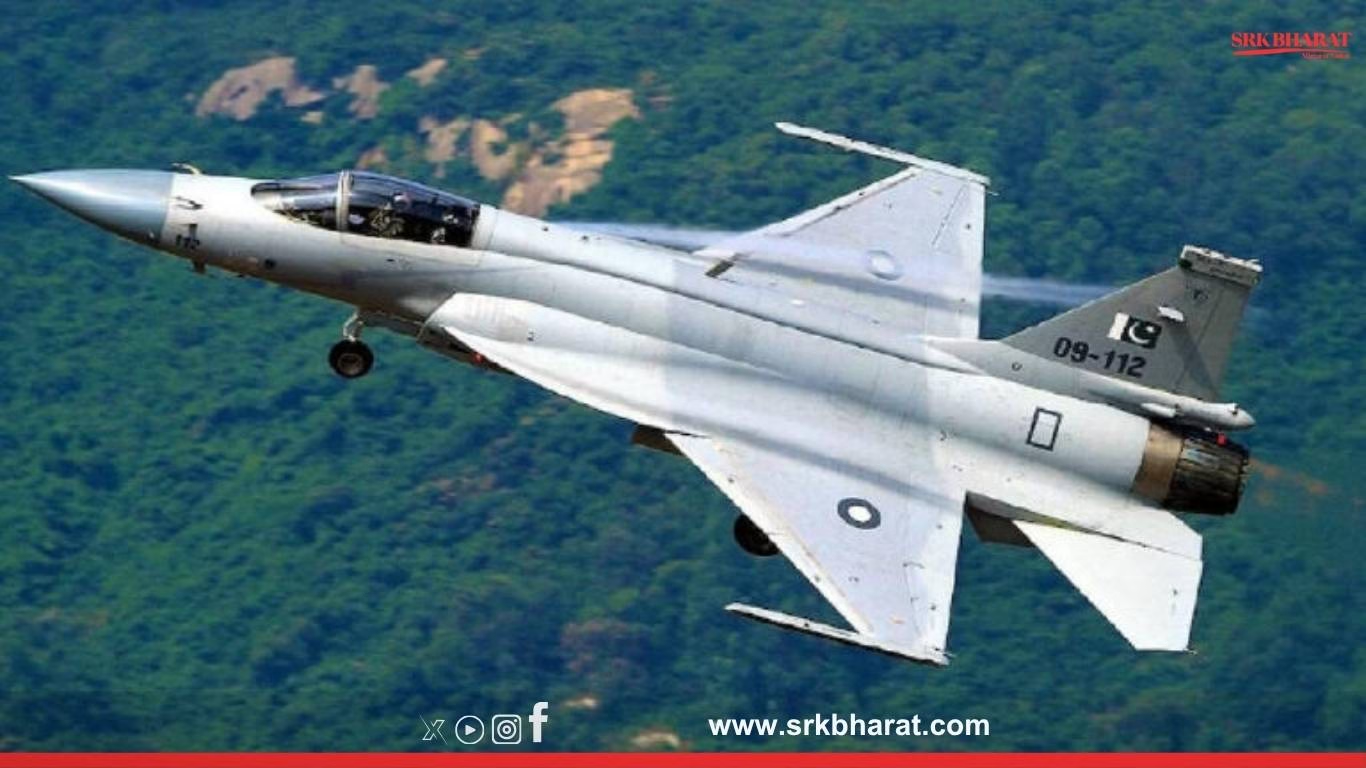
In a surprising geopolitical twist, Russian defence analysts have suggested that the reported sale of RD-93 jet engines to Pakistan for its JF-17 fighter fleet may inadvertently benefit India in the long run. The assessment comes amid renewed speculation that Moscow has agreed to supply an additional batch of RD-93 engines—originally developed for the MiG-29—to power Pakistan’s China-designed JF-17 Thunder aircraft.
The deal, reportedly finalized in September 2025, is expected to cover 100 engines over the next five years, aimed at upgrading Pakistan’s Block III JF-17s and replacing aging units in earlier variants. While the move has raised eyebrows in New Delhi, Russian experts argue that the sale could expose vulnerabilities in Pakistan’s air combat capabilities and deepen its dependence on foreign suppliers.
JF-17 Jet Engine Deal – Key Details and Timeline
| Component | Specification/Details | Commentary |
|---|---|---|
| Engine Model | RD-93 (Russian origin) | Modified version of RD-33 |
| Buyer | Pakistan Air Force | For JF-17 Block III and replacements |
| Supplier | United Engine Corporation (Russia) | Under state-backed export agreement |
| Quantity | 100 units (approx.) | Delivery over 5 years |
| Deal Finalized | September 2025 | Not officially confirmed by Kremlin |
Russian defence commentator Viktor Litovkin told local media that the sale is “purely commercial” and does not reflect a shift in Moscow’s strategic alignment. “Pakistan is not a military ally. These engines are not cutting-edge. India should not worry—they already operate superior platforms,” he said.
Other analysts believe the deal could help India better understand the operational limitations of the JF-17, which has faced criticism over engine reliability, radar performance, and payload capacity. “India’s Su-30 MKI and Rafale jets are far ahead. The RD-93 sale gives India a clearer picture of Pakistan’s dependence on external tech,” said Dr. Alexei Fedorov, a Moscow-based aerospace expert.
Comparative Analysis – India vs Pakistan Fighter Fleet
| Parameter | Indian Air Force (IAF) | Pakistan Air Force (PAF) | Commentary |
|---|---|---|---|
| Mainline Fighters | Su-30 MKI, Rafale, Tejas Mk1A | JF-17 Thunder, F-16, Mirage III | IAF fleet more diverse and modern |
| Engine Source | Russia, France, HAL | China, Russia, U.S. | PAF dependent on foreign suppliers |
| Radar Capability | AESA (Rafale, Tejas Mk1A) | KLJ-7A (JF-17 Block III) | India has edge in electronic warfare |
| Payload Capacity | Up to 9,500 kg (Su-30 MKI) | Up to 3,600 kg (JF-17) | IAF jets carry heavier armaments |
| Indigenous Support | HAL, DRDO, BEL | Limited domestic manufacturing | India has stronger defence ecosystem |
India’s defence establishment has not officially commented on the RD-93 deal, but sources within the Ministry of Defence say the move is being closely monitored. “We are aware of the developments. Our focus remains on indigenous capability and strategic deterrence,” said a senior official.
The RD-93 engine, while reliable in short missions, has faced criticism for overheating and maintenance challenges in tropical climates. Pakistan’s JF-17s, which rely heavily on this engine, have reportedly suffered from mid-air failures and reduced sortie rates in recent years.
RD-93 Engine Performance – Technical Overview
| Specification | RD-93 Jet Engine | Operational Notes |
|---|---|---|
| Thrust | 49.4 kN (dry), 83.1 kN (afterburner) | Moderate performance |
| Weight | 1,055 kg | Lightweight, compact |
| Service Life | 1,200–1,500 hours | Lower than Western counterparts |
| Known Issues | Overheating, vibration, fuel inefficiency | Reported in tropical deployments |
| Maintenance Cycle | Frequent overhaul required | Increases operational cost |
Russian experts also point out that the sale could deepen Pakistan’s reliance on Chinese airframes and Russian propulsion systems, creating logistical and integration challenges. “Pakistan is caught between two suppliers. This limits their ability to innovate or upgrade independently,” said Dr. Fedorov.
For India, the deal offers an opportunity to enhance its counter-strategy. Defence analysts suggest that the Indian Air Force could use the intelligence gathered from RD-93 performance data to refine its electronic warfare systems and develop targeted countermeasures.
Strategic Implications – How India Could Benefit
| Area of Advantage | Potential Benefit for India | Commentary |
|---|---|---|
| EW Systems | Better jamming algorithms | Based on RD-93 radar signature |
| Engine Intelligence | Performance benchmarking | Helps in Tejas Mk2 development |
| Tactical Planning | Mission simulation accuracy | Improved combat readiness |
| Defence Diplomacy | Leverage with Russia | Push for Su-57 or engine tech |
| Indigenous R&D | Comparative testing | Boosts GTRE and HAL programs |
The geopolitical angle is also being discussed. Russia’s decision to sell engines to Pakistan, despite its strong defence ties with India, reflects Moscow’s pragmatic approach to arms exports. Experts say India should not view the deal as a diplomatic setback but rather as a strategic opening.
“Russia is balancing its books. India remains a priority partner. This deal is not a threat—it’s a window into Pakistan’s limitations,” said Anatoly Antonov, a former Russian diplomat.
Social media platforms have seen a surge in reactions to the reported sale, with hashtags like #JF17EngineDeal, #IndiaRussiaDefence, and #PakistanAirForce trending across Twitter/X, Instagram, and YouTube.
Public Sentiment – Social Media Buzz on RD-93 Sale to Pakistan
| Platform | Engagement Level | Sentiment (%) | Top Hashtags |
|---|---|---|---|
| Twitter/X | 1.2M mentions | 70% analytical | #JF17EngineDeal #IndiaRussiaDefence |
| 1.1M interactions | 75% critical | #PakistanAirForce #JetEnginePolitics | |
| 950K views | 72% strategic | #RD93Sale #IndiaDefenceWatch | |
| YouTube | 870K views | 78% informative | #JF17Explained #EngineDealImpact |
In conclusion, the reported sale of RD-93 jet engines to Pakistan may appear provocative on the surface, but Russian experts believe it could ultimately benefit India by exposing operational gaps, reinforcing strategic planning, and enhancing indigenous defence capabilities. As the region’s air power dynamics evolve, India’s focus on self-reliance and technological superiority remains its strongest asset.
Disclaimer: This article is based on publicly available defence reports, expert commentary, and media analysis. It does not constitute military advice or confirmation of classified information. Readers are advised to follow updates from the Ministry of Defence and official Russian sources for accurate information.