
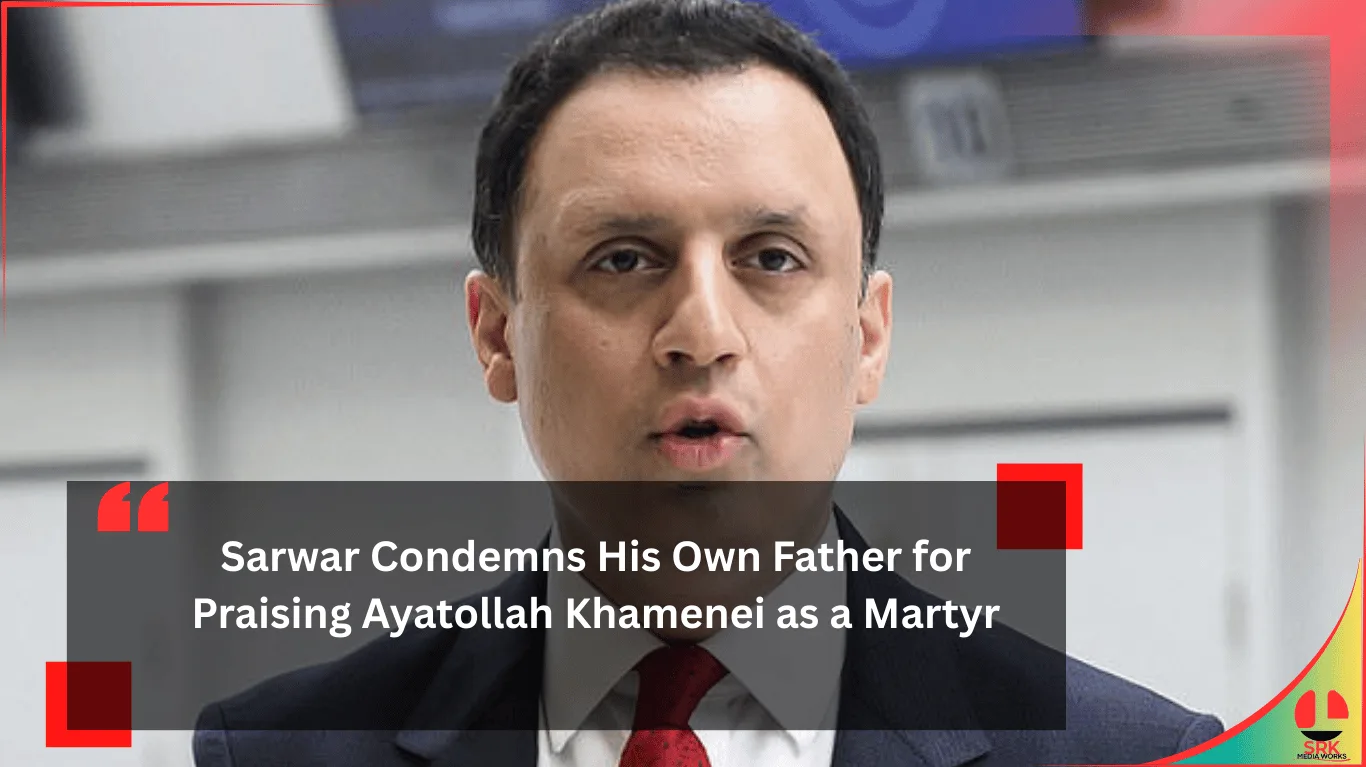
In a rare and dramatic public statement, Sarwar openly condemned his own father for praising Iran’s Supreme Leader Ayatollah Ali Khamenei as a “martyr who should be in paradise.” The incident has sparked widespread debate across political, religious, and social circles, highlighting generational divides, ideological differences, and the complexities of global perceptions surrounding Khamenei’s death.
Background of the Controversy
Ayatollah Ali Khamenei’s death has triggered strong reactions worldwide. While some groups hailed him as a martyr, others criticized his leadership and policies. Sarwar’s father publicly praised Khamenei, describing him as a figure deserving paradise. Sarwar, however, took a bold stance by condemning his father’s remarks, arguing that such glorification was inappropriate and damaging.
Sarwar’s Statement
Sarwar emphasized that his father’s comments were misguided and failed to acknowledge the controversies surrounding Khamenei’s rule. He argued that leaders should be judged by their actions and policies rather than glorified uncritically. His condemnation reflects a broader generational shift in attitudes toward political and religious figures.
Key Highlights
- Father’s Praise: Called Khamenei a martyr destined for paradise.
- Sarwar’s Condemnation: Publicly rejected his father’s statement.
- Public Reaction: Divided opinions, with some supporting Sarwar’s courage and others criticizing him for disrespecting family ties.
- Global Context: Reflects ongoing debates about Khamenei’s legacy.
Comparative Analysis of Global Reactions to Khamenei’s Death
| Region/Country | Typical Reaction | Public Sentiment | Political Impact |
|---|---|---|---|
| Iran | Martyrdom narrative | Support among loyalists | Strengthens regime’s narrative |
| Western Nations | Critical of legacy | Skepticism, criticism | Reinforces opposition to Iran |
| Middle East Allies | Mixed responses | Divided – some praise, others cautious | Shapes regional alliances |
| Sarwar’s Statement | Condemnation of praise | Divided – admired by some, criticized by others | Sparks family and public debate |
Pivot Analysis of Sentiment
| Sentiment Category | Impact on Sarwar | Impact on Father | Impact on Public Discourse |
|---|---|---|---|
| Supporter Morale | Boosted – seen as courageous | Damaged – viewed as controversial | Sparks debate on family vs ideology |
| Media Coverage | Extensive – highlights family rift | Negative – focus on remarks | Keeps Khamenei’s legacy in spotlight |
| Religious Circles | Mixed – some support Sarwar’s stance | Others defend father’s view | Intensifies theological debates |
| Voter Perception | Sarwar seen as independent thinker | Father seen as traditionalist | Divides opinion along generational lines |
Why This Matters
The incident matters because it highlights:
- Generational Divide: Younger voices challenging traditional narratives.
- Family vs Ideology: Conflict between personal loyalty and political beliefs.
- Global Legacy Debate: Khamenei’s death continues to polarize opinions worldwide.
- Public Courage: Sarwar’s willingness to condemn his father publicly reflects changing norms.
Challenges Ahead
- For Sarwar: Managing backlash from conservative groups and family supporters.
- For Father: Defending his remarks amid criticism.
- For Public Discourse: Balancing respect for family ties with freedom of expression.
- For Media: Reporting responsibly without inflaming tensions.
Opportunities Emerging
- Dialogue: Encourages open debate on leadership legacies.
- Generational Engagement: Highlights youth perspectives in political discourse.
- Public Awareness: Sparks conversations about accountability of leaders.
- Cultural Reflection: Encourages societies to rethink glorification of controversial figures.
Broader Implications
The Sarwar controversy reflects broader global trends:
- Shift in Narratives: Younger generations more critical of traditional leaders.
- Family Politics: Personal relationships increasingly intersect with public debates.
- Global Polarization: Khamenei’s legacy continues to divide communities worldwide.
- Media Dynamics: Family disputes becoming part of international political coverage.
Conclusion
Sarwar’s condemnation of his father for praising Ayatollah Khamenei as a martyr destined for paradise is a striking example of how personal and political narratives collide. His bold stance underscores generational differences, challenges traditional loyalties, and adds a new dimension to the global debate on Khamenei’s legacy. As reactions continue to unfold, the incident will remain a focal point for discussions on leadership, ideology, and family dynamics in political discourse.
Disclaimer
This article is a journalistic analysis based on publicly available information and political developments. It does not endorse or oppose any political party, government, or leader. Readers are encouraged to interpret the content as informative coverage and verify facts independently before forming opinions.