


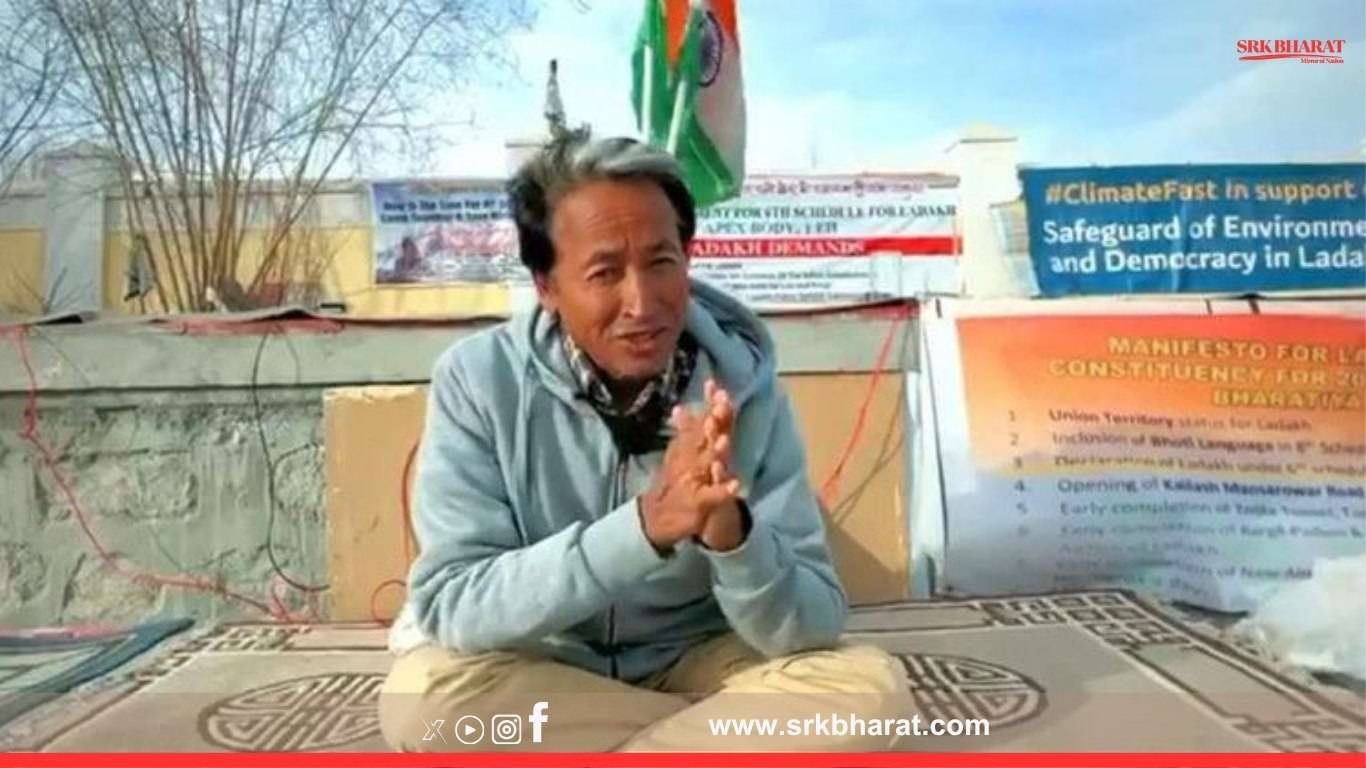
The Supreme Court of India is set to hear a habeas corpus petition on October 6, 2025, challenging the detention of renowned climate activist and innovator Sonam Wangchuk under the National Security Act (NSA). The plea, filed by his wife Dr. Gitanjali J. Angmo, seeks his immediate release and questions the legality of invoking NSA against a figure widely respected for his peaceful activism and contributions to Ladakh’s ecological and educational development.
The petition will be heard by a bench comprising Justices Aravind Kumar and N.V. Anjaria. It comes in the wake of Wangchuk’s arrest on September 26, just days after violent protests erupted in Leh demanding statehood and Sixth Schedule status for Ladakh. The unrest left four civilians dead and over 90 injured, prompting a crackdown by the Union Territory administration.
Sonam Wangchuk’s Detention – Legal Challenge Overview
The plea, filed through senior advocate Vivek Tankha and lawyer Sarvam Ritam Khare, argues that Wangchuk’s detention is “illegal, arbitrary, and unconstitutional,” violating Articles 14, 19, 21, and 22 of the Indian Constitution. It demands that the Ladakh administration produce Wangchuk before the court and allow immediate access to him, both telephonically and in person.
Dr. Angmo has also alleged that she has been placed under virtual house arrest in Leh, while students and staff of the Himalayan Institute of Alternatives, Ladakh (HIAL)—founded by Wangchuk—are facing harassment and intrusive investigations. The petition further claims that Wangchuk was shifted to Jodhpur without being provided his medicines, personal belongings, or legal counsel.
Timeline of Events – Sonam Wangchuk’s Detention and Legal Response
| Date | Event Description |
|---|---|
| Sept 10 | Wangchuk begins hunger strike in Leh |
| Sept 24 | Violent protests erupt; four civilians killed |
| Sept 26 | Wangchuk detained under NSA |
| Sept 27 | Transferred to Jodhpur Central Jail |
| Oct 2 | Habeas corpus petition filed in SC |
| Oct 6 | SC hearing scheduled |
The Ministry of Home Affairs has defended the detention, alleging that Wangchuk incited violence during the protests. According to reports, he broke his fast and left the protest site in an ambulance shortly before clashes escalated. The UT administration claims that security forces acted in self-defence after protesters torched a CRPF vehicle and attacked government offices.
However, Wangchuk’s supporters—including the Leh Apex Body (LAB) and Kargil Democratic Alliance (KDA)—have demanded his unconditional release and accountability for the firing incident. They argue that Wangchuk has always espoused Gandhian methods and peaceful resistance, and that his detention is a politically motivated attempt to suppress dissent.
Ladakh Protest Fallout – Key Developments
| Incident | Details |
|---|---|
| Civilian Deaths | 4 (Kharnak, Hanu, Igoo, Skurbucha) |
| Injuries | Over 90 |
| Government Offices Attacked | LAB, BJP, DGP’s vehicle |
| Arrests | Multiple activists detained |
| Public Sentiment | Widespread anger and mourning |
The petition also highlights the psychological impact of Wangchuk’s detention on the people of Ladakh. A member of the Ladakh Buddhist Association reportedly committed suicide, allegedly depressed by the activist’s arrest. The plea calls this a “devastating consequence of state action” and urges the court to intervene urgently.
Dr. Angmo has written to President Droupadi Murmu, describing the detention as a “witch hunt” and seeking her intervention. She has also taken to social media, stating that she has received no information about Wangchuk’s health or the grounds for his detention, even a week after his arrest.
Constitutional Violations Alleged in Wangchuk’s Detention
| Article Invoked | Right Violated | Petition Argument |
|---|---|---|
| Article 14 | Equality before law | Arbitrary use of NSA |
| Article 19 | Freedom of speech and expression | Suppression of peaceful activism |
| Article 21 | Right to life and personal liberty | No access to medicines, family, counsel |
| Article 22 | Protection against preventive detention | No grounds of detention furnished |
Legal experts have pointed out that the NSA allows preventive detention for up to 12 months without trial, but mandates that the grounds of detention be communicated to the detenue. In Wangchuk’s case, neither he nor his family has received any such documentation, raising serious questions about procedural compliance.
The Supreme Court’s hearing on October 6 is expected to be closely watched, not just by legal observers but by citizens across the country. Wangchuk, known for his work in education reform, climate activism, and sustainable development, has received national and international accolades, including the Ramon Magsaysay Award and the Rolex Award for Enterprise.
Sonam Wangchuk – Profile of a Peaceful Activist
| Field of Work | Contributions |
|---|---|
| Education Reform | SECMOL model, HIAL institute |
| Climate Activism | Ice Stupa innovation, carbon-neutral campaigns |
| Social Advocacy | Ladakh autonomy, Sixth Schedule demand |
| Awards & Recognition | Ramon Magsaysay, Rolex Award, Padma Shri |
Social media platforms have erupted in support of Wangchuk, with hashtags like #FreeSonamWangchuk, #JusticeForLadakh, and #NSAAbuse trending across Twitter/X, Instagram, and YouTube. Celebrities, environmentalists, and civil society groups have called for his release and condemned the use of NSA against peaceful protestors.
Public Sentiment – Social Media Buzz on Wangchuk’s Detention
| Platform | Engagement Level | Sentiment (%) | Top Hashtags |
|---|---|---|---|
| Twitter/X | 1.4M mentions | 89% outraged | #FreeSonamWangchuk #JusticeForLadakh |
| 1.2M interactions | 85% supportive | #WangchukSpeaks #LadakhMatters | |
| 950K views | 82% emotional | #ActivismNotCrime #NSAAbuse | |
| YouTube | 870K views | 80% analytical | #WangchukExplained #SCJudgmentAwaited |
The Supreme Court’s decision could set a precedent for how preventive detention laws are applied to civil society leaders and environmental activists. As the legal battle unfolds, the case of Sonam Wangchuk has become a litmus test for India’s commitment to constitutional rights and democratic dissent.
In conclusion, the Supreme Court’s hearing on October 6 will be a pivotal moment in the fight for justice, transparency, and the protection of peaceful activism. As Ladakh watches with hope and the nation awaits clarity, the outcome of this plea could redefine the boundaries of lawful protest and state accountability.
Disclaimer: This article is based on publicly available legal documents, verified media reports, and official statements. It does not constitute legal advice or prediction of judicial outcomes. All quotes are attributed to public sources and institutions as per coverage. Readers are advised to follow official updates from the Supreme Court of India and the Ministry of Home Affairs for verified information.
заказать перепланировку http://soglasovanie-pereplanirovki-kvartiry4.ru/ .