

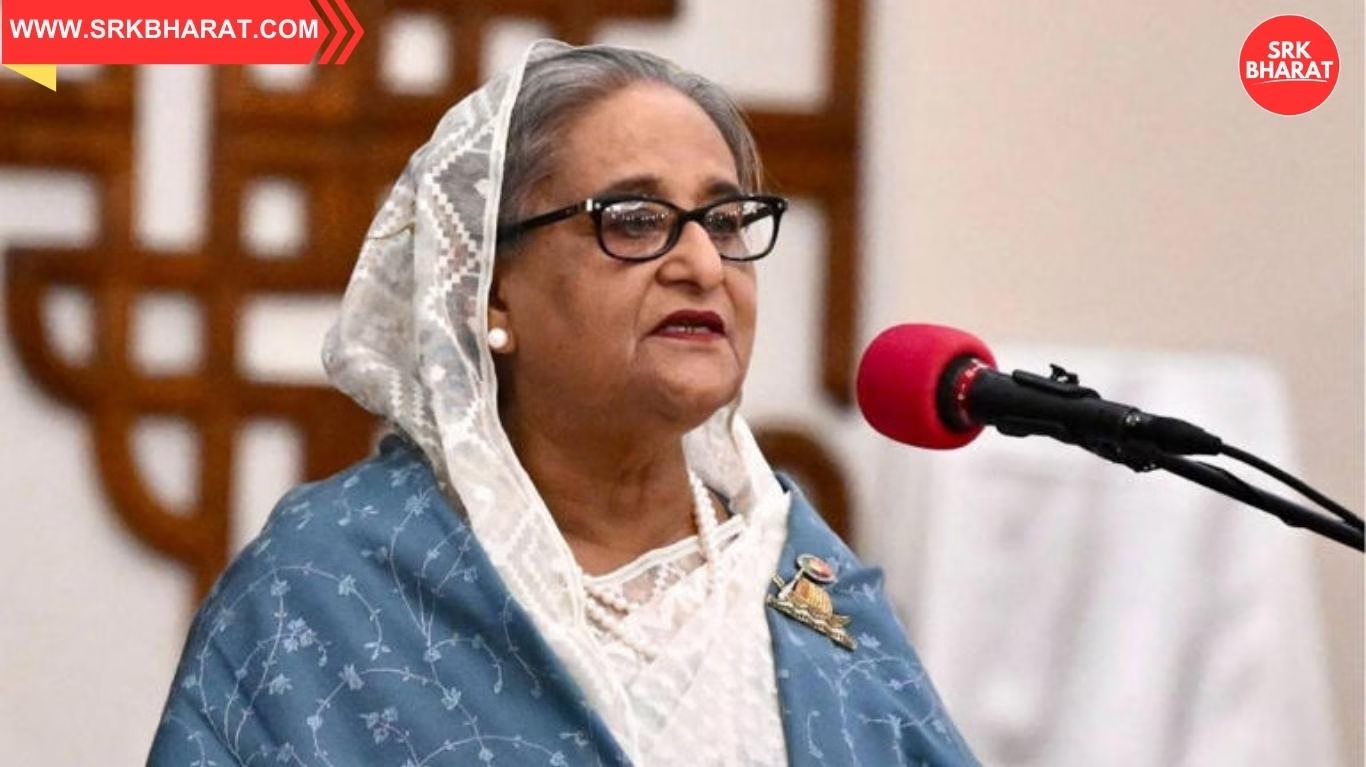
Bangladesh’s political scene has been thrown into turmoil after Prime Minister Sheikh Hasina denounced the recent election overseen by Nobel laureate Muhammad Yunus as a “sham” and a “fascist conspiracy.” The ruling Awami League has formally sought cancellation of the polls, alleging irregularities, manipulation, and attempts to undermine democratic institutions.
Background of the Controversy
- The election was conducted under Yunus’s leadership, drawing sharp criticism from Hasina and her party.
- Sheikh Hasina labeled the process as illegitimate, claiming it was designed to destabilize Bangladesh’s governance.
- The Awami League has petitioned for cancellation, citing widespread irregularities and lack of transparency.
- Opposition groups, however, argue that the election reflects public discontent with Hasina’s government.
Sheikh Hasina’s Allegations
- Fascist Conspiracy: Hasina accused Yunus of orchestrating a sham election to weaken democratic institutions.
- Irregularities: Reports of voter suppression and manipulation were highlighted.
- Foreign Influence: Allegations of external support for Yunus’s role in the election process.
- Call for Cancellation: The government has formally sought annulment of the results.
Opposition’s Response
- Support for Yunus: Opposition parties claim Yunus represents reform and transparency.
- Criticism of Hasina: They argue Hasina’s rejection of the polls reflects authoritarian tendencies.
- Public Sentiment: Opposition leaders insist the election captured genuine frustration among citizens.
Comparative Analysis of Election Disputes in South Asia
| Country | Election Year | Dispute Type | Outcome |
|---|---|---|---|
| Bangladesh | 2026 | Sham election allegations | Cancellation demand by ruling party |
| Pakistan | 2018 | Rigging claims | Protests, but results upheld |
| India | 1975 | Emergency declared | Suspension of democratic processes |
| Sri Lanka | 2020 | Alleged bias | Results accepted despite criticism |
This table shows how Bangladesh’s current dispute fits into a broader regional pattern of contested elections.
Implications for Bangladesh
- Political Stability: The row threatens to deepen divisions between ruling and opposition parties.
- International Image: Bangladesh’s democratic credibility may be questioned globally.
- Economic Impact: Political uncertainty could affect investor confidence.
- Future Governance: The outcome of this dispute will shape Bangladesh’s political trajectory.
Conclusion
Sheikh Hasina’s denunciation of the election as a “sham” orchestrated by Muhammad Yunus has sparked one of the most significant political crises in Bangladesh’s recent history. With the Awami League demanding cancellation and opposition parties defending the process, the country faces a period of heightened uncertainty. The resolution of this dispute will determine not only the legitimacy of the current election but also the future of Bangladesh’s democratic institutions.
Disclaimer
This article is based on publicly available information and journalistic analysis of Bangladesh’s ongoing political dispute. It is intended for informational purposes only and does not represent insider accounts or official government documents. Readers should view this as a balanced overview of the situation.