


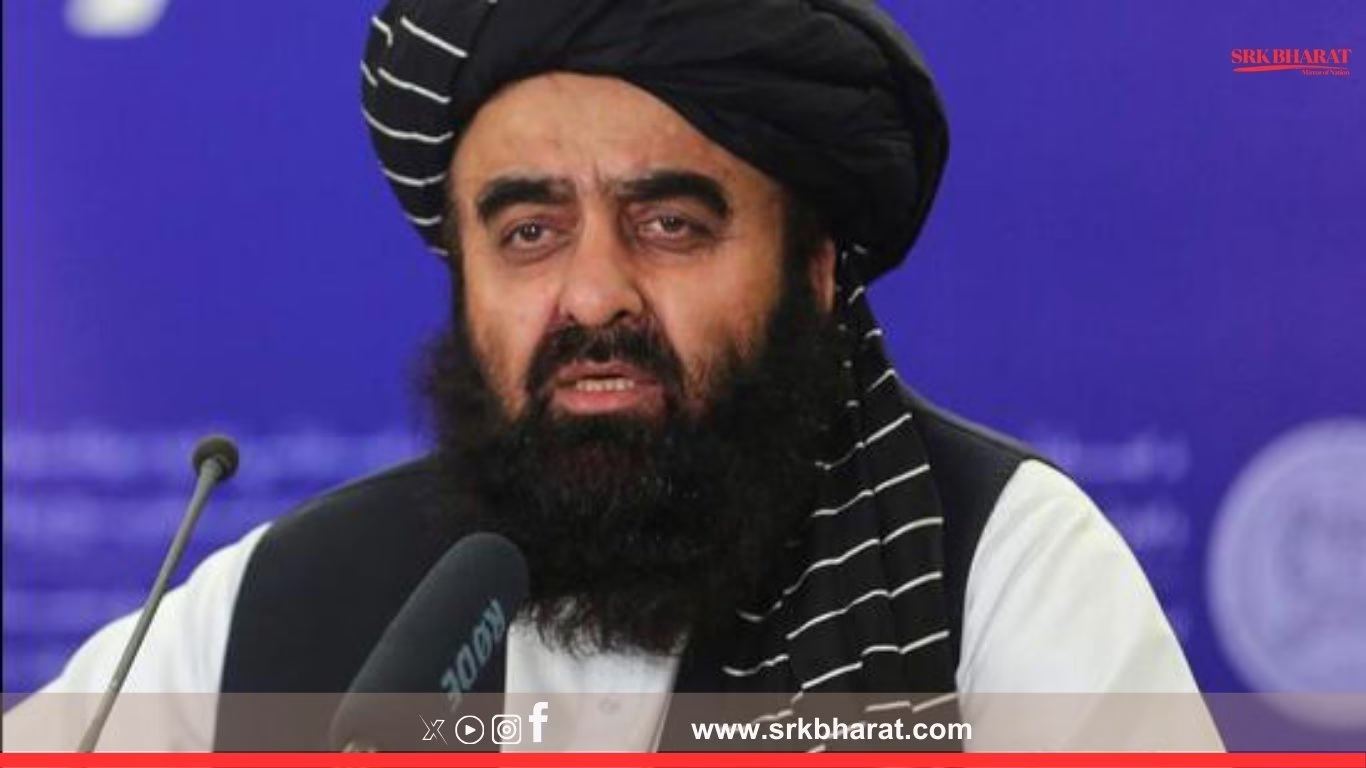
In a significant diplomatic development, the planned visit of Taliban Foreign Minister Amir Khan Muttaqi to India has been called off after the United Nations Security Council’s 1988 Sanctions Committee, currently chaired by Pakistan, rejected a travel ban waiver request. The visit, which would have marked the first official trip by a Taliban minister to India since the group’s return to power in Afghanistan in August 2021, was being seen as a potential turning point in India–Afghanistan relations.
The waiver denial comes amid heightened geopolitical tensions and reflects the complex dynamics within the UN Security Council, where any single member can block such requests. Pakistan, which heads the committee overseeing sanctions on Taliban leaders, is believed to have played a key role in obstructing the waiver, according to diplomatic sources familiar with the matter.
🧭 Timeline of Diplomatic Engagement and Waiver Rejection
| Date | Event Description | Outcome / Impact |
|---|---|---|
| January 2025 | Vikram Misri meets Muttaqi in Dubai | First formal contact between India and Taliban |
| May 2025 | Jaishankar–Muttaqi phone call | Builds momentum for diplomatic outreach |
| August 2025 | India dispatches earthquake relief to Kunar province | Humanitarian engagement deepens |
| September 1 | Jaishankar–Muttaqi second phone call | Visit planning initiated |
| September 5 | UN panel denies travel waiver | Visit postponed indefinitely |
The visit was expected to follow up on recent humanitarian cooperation and strategic discussions between the two governments.
🔍 UN Sanctions Committee and Travel Ban Dynamics
| Committee Name | Role and Composition | Current Chair |
|---|---|---|
| UNSC 1988 Sanctions Committee | Oversees travel bans, asset freezes, arms embargoes | Pakistan (2025 term) |
| Members | 15 Security Council nations | Waiver requires consensus |
| Waiver Mechanism | Any member can veto | US previously blocked Muttaqi’s Pakistan visit |
| Resolution Basis | UNSC Resolution 1988 | Targets Taliban-linked individuals |
The committee’s decision reflects both procedural rigidity and underlying political tensions between member states.
📉 India’s Strategic Outreach to Taliban Leadership
| Diplomatic Action | Description | Objective |
|---|---|---|
| Humanitarian Aid | Earthquake relief, medical supplies | Build goodwill and regional stability |
| Political Engagement | High-level meetings and calls | Protect Indian interests in Afghanistan |
| Security Coordination | Taliban condemnation of Pahalgam terror attack | Signal shared concerns over extremism |
| Development Dialogue | Readiness to support Afghan reconstruction | Counterbalance China’s growing influence |
India has maintained a pragmatic approach, engaging with Taliban authorities while avoiding formal recognition.
🔥 Pakistan’s Role in Blocking the Visit
| Action Taken | Description | Strategic Implication |
|---|---|---|
| Chairing UNSC Committee | Pakistan leads 1988 Sanctions Committee | Leverages position to influence waiver decisions |
| Vetoing Waiver | Believed to have blocked Muttaqi’s India visit | Undermines India–Afghanistan rapprochement |
| Diplomatic Messaging | Silent on waiver denial | Avoids direct confrontation with India |
| Previous Obstruction | US blocked Muttaqi’s Pakistan visit in August | Pattern of waiver denials emerges |
Pakistan’s move is seen as part of its broader strategy to limit India’s diplomatic footprint in Kabul.
🧠 Expert Commentary on India–Taliban Engagement
| Expert Name | Role | Comment |
|---|---|---|
| Meera Iyer | South Asia Policy Analyst | “India’s outreach to the Taliban is strategic, not ideological.” |
| Rajiv Bansal | Diplomatic Affairs Consultant | “The waiver denial reflects the politicization of UN mechanisms.” |
| Dr. Rakesh Sinha | Historian of India–Afghanistan Relations | “This episode shows how regional rivalries play out on global platforms.” |
Experts agree that India’s engagement with the Taliban is driven by regional security and strategic interests.
📦 Implications for India–Afghanistan Relations
| Area of Cooperation | Current Status | Impact of Visit Cancellation |
|---|---|---|
| Humanitarian Aid | Active | May continue through backchannel diplomacy |
| Political Dialogue | Informal | Slowed but not halted |
| Security Coordination | Emerging | Risk of reduced momentum |
| Development Projects | Limited | Potential for future expansion |
Despite the setback, India is expected to maintain its engagement with Afghan authorities through alternative channels.
📅 Upcoming Diplomatic Milestones
| Event | Date | Strategic Importance |
|---|---|---|
| UNGA General Debate | September 27 | India may raise concerns over waiver denial |
| SCO Summit | November 2025 | Afghanistan’s regional role under review |
| BRICS+ Dialogue | December 2025 | India’s multilateral diplomacy expands |
| SAARC Revival Talks | January 2026 | Afghanistan’s observer status in focus |
These events will shape the trajectory of India’s regional diplomacy and its evolving stance on Afghanistan.
📌 Conclusion
The cancellation of Taliban Foreign Minister Amir Khan Muttaqi’s visit to India, following the Pakistan-led UN panel’s rejection of a travel ban waiver, underscores the complexities of regional diplomacy and global governance. While India’s outreach to the Taliban reflects a pragmatic shift aimed at securing its strategic interests, the episode highlights how multilateral mechanisms can be influenced by geopolitical rivalries. As India continues to engage with Afghan authorities through humanitarian aid and informal dialogue, the road to formal diplomatic normalization remains fraught but navigable.
—
Disclaimer: This article is based on publicly available news reports, diplomatic sources, and expert commentary as of September 6, 2025. It is intended for informational purposes only and does not constitute diplomatic or legal advice.