
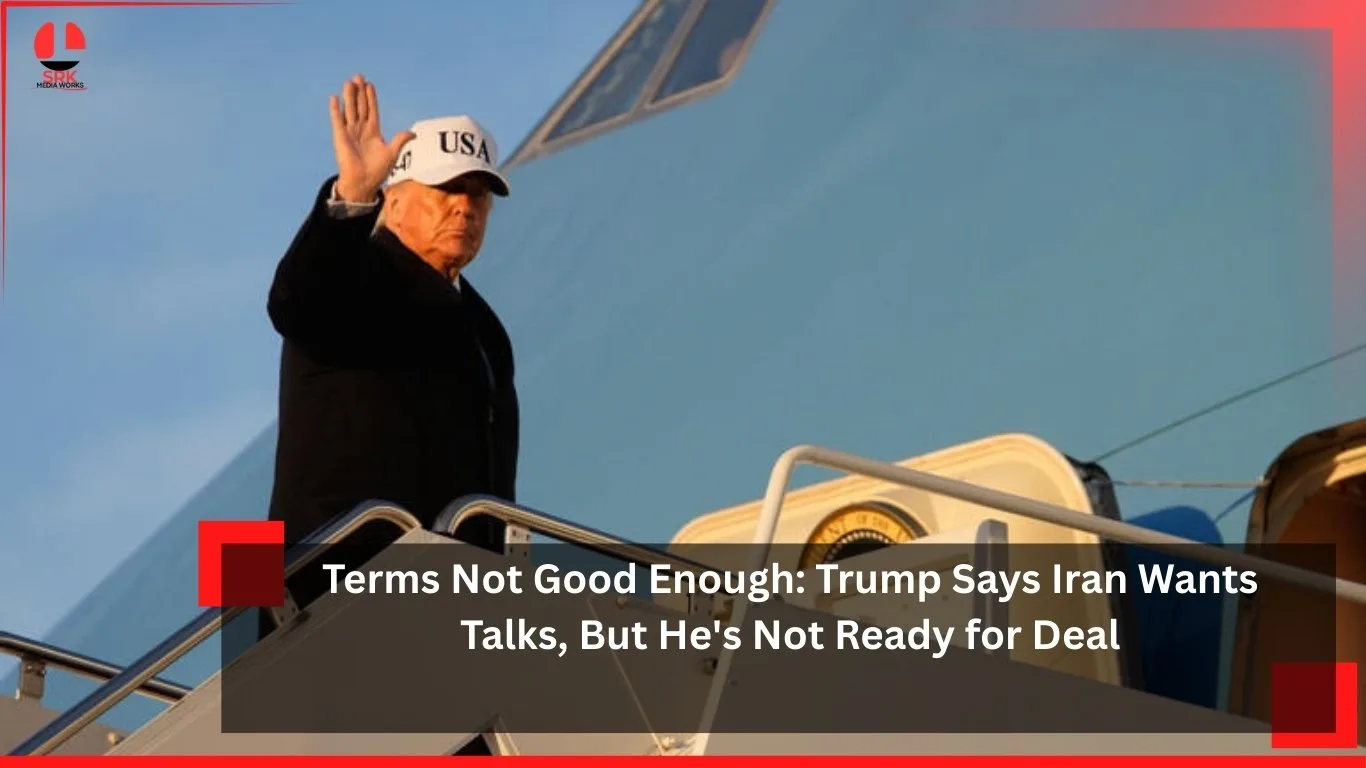
The ongoing tensions between the United States and Iran have taken another turn as US President Donald Trump declared that while Iran has expressed interest in talks, the terms offered are “not good enough.” Trump’s statement underscores the deep divisions between Washington and Tehran, highlighting the challenges of reaching a diplomatic resolution amid escalating conflict and sanctions.
Background of the Statement
Trump’s remarks came during a press briefing where he addressed questions about Iran’s willingness to engage in negotiations.
- Iran’s Position: Iranian officials have signaled openness to dialogue but insist on lifting sanctions first.
- US Position: Trump rejected Iran’s conditions, stating that the terms are unacceptable.
- Diplomatic Stalemate: Both sides remain entrenched, with little progress toward compromise.
What Trump’s Statement Means
Trump’s rejection of Iran’s terms reflects a broader strategy of maintaining pressure.
- Maximum Pressure Campaign: Continued sanctions aimed at weakening Iran’s economy.
- Negotiation Leverage: Trump insists Iran must make concessions before talks can begin.
- Global Message: Signals to allies and adversaries that the US will not compromise easily.
Comparative Analysis of Stakeholder Positions
| Stakeholder | Position on Talks | Key Concerns |
|---|---|---|
| United States | Terms not good enough | Security, nuclear program, regional influence |
| Iran | Willing to talk if sanctions lifted | Sovereignty, economic relief |
| European Union | Urges dialogue and compromise | Regional stability, trade interests |
| Middle East Allies | Support US stance | Security against Iranian influence |
| International Community | Calls for restraint | Prevent escalation, protect global markets |
Historical Context
The US-Iran relationship has been fraught with tension for decades.
- 1979 Revolution: Marked the beginning of hostility.
- Nuclear Deal (2015): Brief period of cooperation under the JCPOA.
- Withdrawal (2018): Trump pulled the US out of the deal, reigniting tensions.
- Sanctions Era: Severe economic restrictions imposed on Iran.
Pivot Analysis of Strategic Approaches
| Strategy Focus | US Approach | Iran’s Approach |
|---|---|---|
| Sanctions | Maintain maximum pressure | Demand lifting before talks |
| Diplomacy | Reject current terms | Signal willingness with conditions |
| Security | Prevent nuclear development | Assert sovereignty and deterrence |
| Regional Influence | Limit Iran’s reach | Expand alliances and partnerships |
Regional Security Implications
Trump’s statement has significant implications for Middle East stability.
- Gulf States: Support US stance, fearing Iranian expansion.
- Israel: Welcomes continued pressure on Iran.
- Afghanistan and Iraq: Risk of being caught in crossfire.
- Global Shipping: Strait of Hormuz remains vulnerable to disruption.
Economic Dimensions
The stalemate affects global markets and trade.
- Oil Prices: Fluctuate with every escalation in US-Iran tensions.
- Sanctions Impact: Iran’s economy struggles under restrictions.
- Global Trade: Companies face uncertainty in dealing with the region.
Public and Media Reaction
Trump’s statement has sparked debate across the world.
- US Media: Divided between support for strong stance and calls for diplomacy.
- Iranian Media: Criticizes US for refusing compromise.
- Global Media: Highlights risks of prolonged conflict.
- Public Opinion: Citizens express concern about potential war and economic fallout.
Conclusion
Trump’s declaration that Iran’s terms for talks are “not good enough” highlights the deep divide between Washington and Tehran. While Iran signals willingness to negotiate, its insistence on lifting sanctions clashes with the US strategy of maximum pressure.
The stalemate underscores the difficulty of achieving peace in a region fraught with historical grievances and geopolitical rivalries. The international community now faces the challenge of encouraging dialogue while preventing escalation into open conflict.
Disclaimer
This article is based on publicly available information and statements from political leaders. It does not endorse any position or confirm the accuracy of claims. Readers are encouraged to follow official government updates and independent reporting for verified details.