
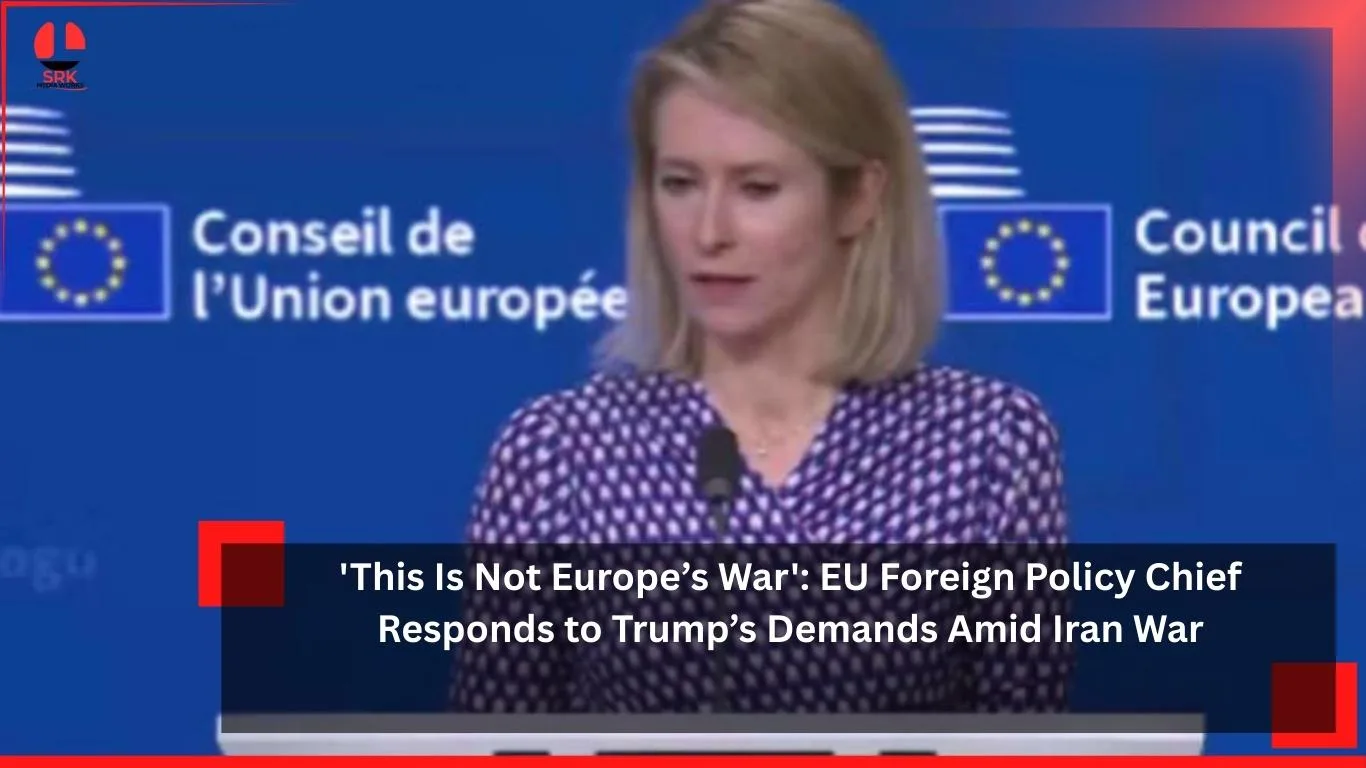
In a sharp response to US President Donald Trump’s demands for greater European involvement in the Iran war, the European Union’s foreign policy chief declared that “this is not Europe’s war.” The statement underscores the EU’s reluctance to be drawn into a conflict it views as primarily driven by US-Iran tensions, while also highlighting divisions between Washington and Brussels over Middle Eastern policy.
Background of Trump’s Demands
President Trump has repeatedly urged NATO allies and European nations to take a more active role in the Iran war, arguing that the conflict threatens global stability and energy security. He warned that failure to act could destabilize markets and embolden Iran’s military ambitions.
However, the EU foreign policy chief rejected the notion that Europe should shoulder responsibility for a war it did not initiate, stressing that the bloc’s priority is diplomacy, humanitarian aid, and de-escalation.
EU’s Position
The EU’s stance reflects several key priorities:
- Diplomatic Engagement: Europe continues to advocate for dialogue with Iran rather than military escalation.
- Humanitarian Concerns: The EU emphasizes the need to protect civilians and provide aid to conflict zones.
- Energy Security: While acknowledging risks to oil supplies, the EU prefers diversification and renewable strategies over military involvement.
- Alliance Balance: Europe seeks to maintain NATO unity without being drawn into US-led military campaigns.
Comparative Analysis of Positions
| Dimension | US Position | EU Position | Impact |
|---|---|---|---|
| Military Strategy | Push for European involvement | Rejects direct military role | Highlights alliance divisions |
| Diplomacy | Limited focus on negotiations | Strong emphasis on dialogue | Contrasting approaches |
| Energy Security | Warns of market collapse | Advocates diversification | Different economic strategies |
| Public Perception | Seen as assertive | Seen as cautious | Polarizes global opinion |
Pivot Analysis of Global Impact
| Factor | Positive for US | Positive for EU | Neutral/Global Impact |
|---|---|---|---|
| Security | Reinforces deterrence | Avoids escalation | Regional instability persists |
| Diplomacy | Strong US stance | Gains credibility for restraint | Global calls for peace |
| Economy | Protects US oil interests | Promotes diversification | Oil prices remain volatile |
| Alliance | Pushes NATO unity | Shows independence | Sparks debate on NATO’s role |
Historical Context
Europe has often resisted involvement in Middle Eastern wars, from the Iraq invasion in 2003 to more recent conflicts in Syria. The EU’s preference for diplomacy over military action reflects both public opinion and historical lessons. Trump’s demands recall past tensions between Washington and Brussels, where US calls for military support were met with European caution.
Possible Scenarios
- Continued EU Neutrality: Europe maintains its stance, focusing on diplomacy and aid.
- Partial Involvement: Some EU states may provide logistical support without direct combat.
- Alliance Strain: NATO faces internal divisions over Middle Eastern engagement.
- Diplomatic Breakthrough: EU-led negotiations could ease tensions between Iran and the US.
Public and Political Reactions
- European Citizens: Broadly support the EU’s refusal to join the war.
- US Officials: Express frustration at Europe’s reluctance.
- Global Analysts: Note that divisions weaken Western leverage against Iran.
- Markets: React cautiously, with oil prices fluctuating amid uncertainty.
Conclusion
The EU foreign policy chief’s declaration that “this is not Europe’s war” marks a defining moment in transatlantic relations. While the US pushes for greater European involvement, the EU remains committed to diplomacy and humanitarian priorities. The divergence highlights broader questions about NATO’s role, global security, and the future of Western alliances in managing Middle Eastern conflicts.
Disclaimer
This article is based on political statements and speculative analysis regarding the EU’s response to US demands amid the Iran war. The details of military actions and diplomatic strategies remain subject to official confirmation. The content is intended for informational and analytical purposes only.