


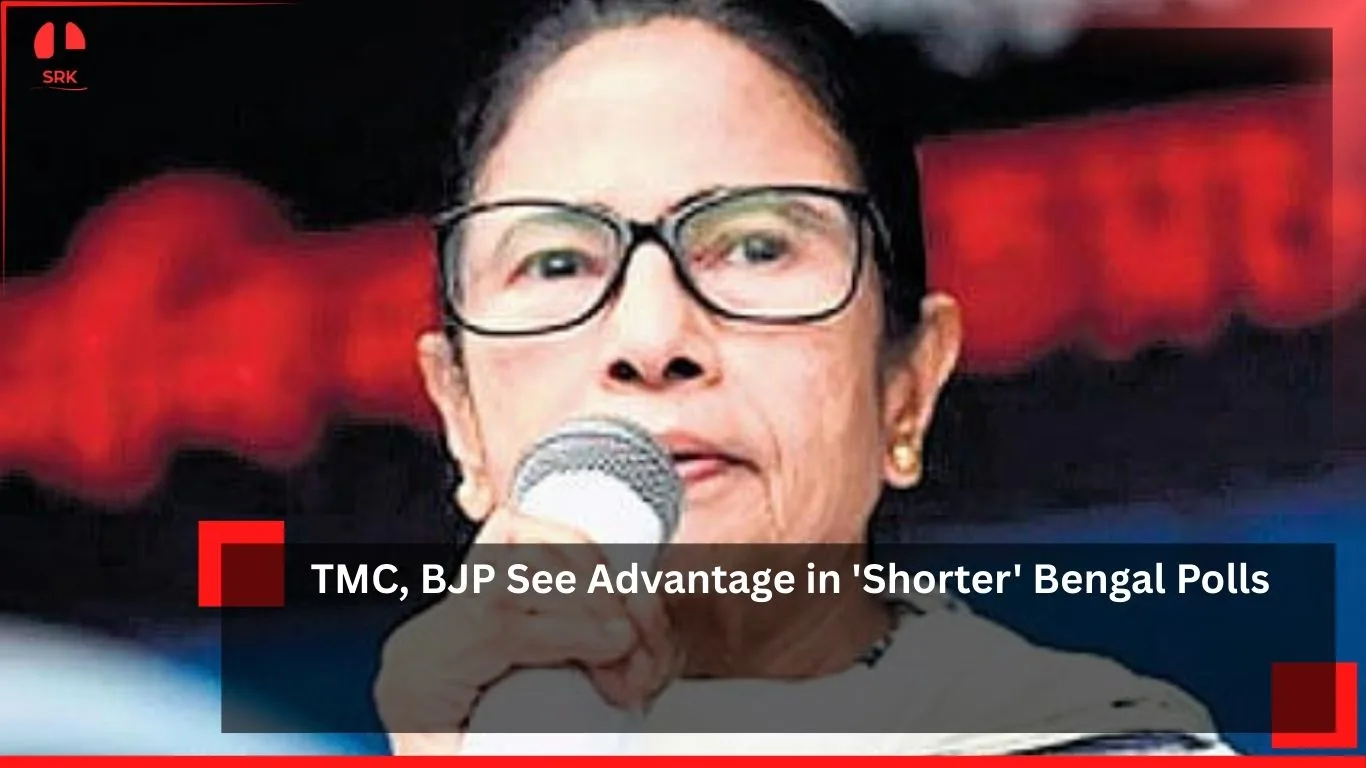
The political battleground of West Bengal is once again heating up as discussions around a “shorter” election schedule gain momentum. Both the Trinamool Congress (TMC) and the Bharatiya Janata Party (BJP) see potential advantages in a condensed polling process, with each party calculating how fewer phases could impact voter turnout, campaign strategies, and overall momentum.
Background of Bengal Polls
West Bengal elections have traditionally been conducted in multiple phases due to the state’s size, population density, and security concerns. The 2021 assembly elections, for instance, were spread across eight phases, sparking debates about whether such a prolonged schedule benefits or disadvantages certain parties.
- TMC’s Position: The ruling party believes shorter polls reduce fatigue among voters and prevent prolonged exposure to opposition campaigns.
- BJP’s Position: The opposition argues that condensed polls allow them to sustain momentum and minimize logistical challenges.
- Election Commission’s Role: The final decision rests with the Election Commission, which balances security, logistics, and fairness.
Why Shorter Polls Matter
Shorter polls can significantly alter the dynamics of an election:
- Voter Turnout: Condensed schedules may encourage higher turnout by reducing fatigue.
- Campaign Strategy: Parties must adapt to shorter timelines, focusing resources more efficiently.
- Security Management: Fewer phases reduce the burden on security forces.
- Momentum: Political narratives remain fresh, preventing prolonged shifts in public sentiment.
TMC’s Advantage in Shorter Polls
The TMC, led by Mamata Banerjee, sees shorter polls as beneficial for several reasons:
- Incumbency Factor: Reduces the time opposition parties have to highlight anti-incumbency issues.
- Organizational Strength: TMC’s grassroots network can mobilize voters quickly.
- Narrative Control: Shorter polls allow the ruling party to maintain a consistent narrative without prolonged challenges.
BJP’s Advantage in Shorter Polls
The BJP, aiming to expand its influence in Bengal, also sees benefits:
- Momentum Maintenance: Shorter polls prevent loss of enthusiasm among cadres.
- Resource Efficiency: Campaign resources can be concentrated more effectively.
- Reduced Fatigue: Leaders and workers can sustain energy levels across fewer phases.
Comparative Analysis of Poll Durations
| Election Year | Number of Phases | Key Observations |
|---|---|---|
| 2011 | 6 | TMC swept to power, ending Left rule |
| 2016 | 6 | TMC retained power with strong majority |
| 2021 | 8 | BJP gained ground, but TMC held majority |
| 2026 (Proposed) | 4-5 (shorter) | Both TMC and BJP see strategic advantage |
This comparison shows how the number of phases has historically influenced campaign dynamics and outcomes.
Political Reactions
The debate over shorter polls has triggered varied reactions:
| Stakeholder Group | Reaction Type | Key Observations |
|---|---|---|
| TMC Leaders | Supportive | Argue shorter polls reduce voter fatigue |
| BJP Leaders | Supportive | Believe condensed polls sustain momentum |
| Opposition Parties | Critical | Fear reduced time to campaign effectively |
| Election Analysts | Neutral | Highlight logistical and security benefits |
This table illustrates how both major parties see advantages, while smaller opposition groups express concern.
Social and Economic Implications
Beyond politics, shorter polls have broader implications:
- Economic Activity: Prolonged elections often disrupt business and daily life; shorter polls minimize disruption.
- Social Stability: Reduced phases mean fewer days of heightened tension.
- Administrative Efficiency: Government machinery can return to normal functioning sooner.
Historical Parallels in Other States
Other Indian states have experimented with shorter polls:
| State | Year | Phases | Outcome |
|---|---|---|---|
| Uttar Pradesh | 2022 | 7 | BJP retained power, prolonged campaign |
| Bihar | 2020 | 3 | Shorter polls, smoother process |
| Kerala | 2021 | 1 | Single-phase election, high turnout |
| West Bengal | 2026 | 4-5 | Proposed shorter polls, strategic debate |
This comparison shows that shorter polls often lead to smoother processes and higher voter engagement.
Public Sentiment
Public opinion on shorter polls is largely positive. Citizens often express frustration with prolonged election schedules, citing disruptions to daily life and extended political tension. A shorter schedule is seen as more efficient and less intrusive.
Future Outlook
The final decision on poll duration will rest with the Election Commission. Possible scenarios include:
| Scenario | Description | Potential Impact |
|---|---|---|
| Shorter Polls | 4-5 phases | Both TMC and BJP see advantages |
| Status Quo | 6-8 phases | Prolonged campaigns, higher fatigue |
| Hybrid Approach | Mix of shorter and longer phases in select areas | Balanced security and efficiency |
The outcome will shape campaign strategies and potentially influence the final results.
Conclusion
The debate over shorter Bengal polls highlights how election scheduling can significantly impact political strategies. Both TMC and BJP see advantages in a condensed schedule, albeit for different reasons. While the ruling party hopes to minimize anti-incumbency exposure, the opposition aims to sustain momentum. Ultimately, the Election Commission’s decision will determine how the battle for Bengal unfolds in 2026.
Disclaimer
This article is based on political analysis and available information. It does not confirm or deny official election commission decisions and should not be interpreted as a prediction of outcomes. Readers are encouraged to follow verified government notifications for authoritative updates.