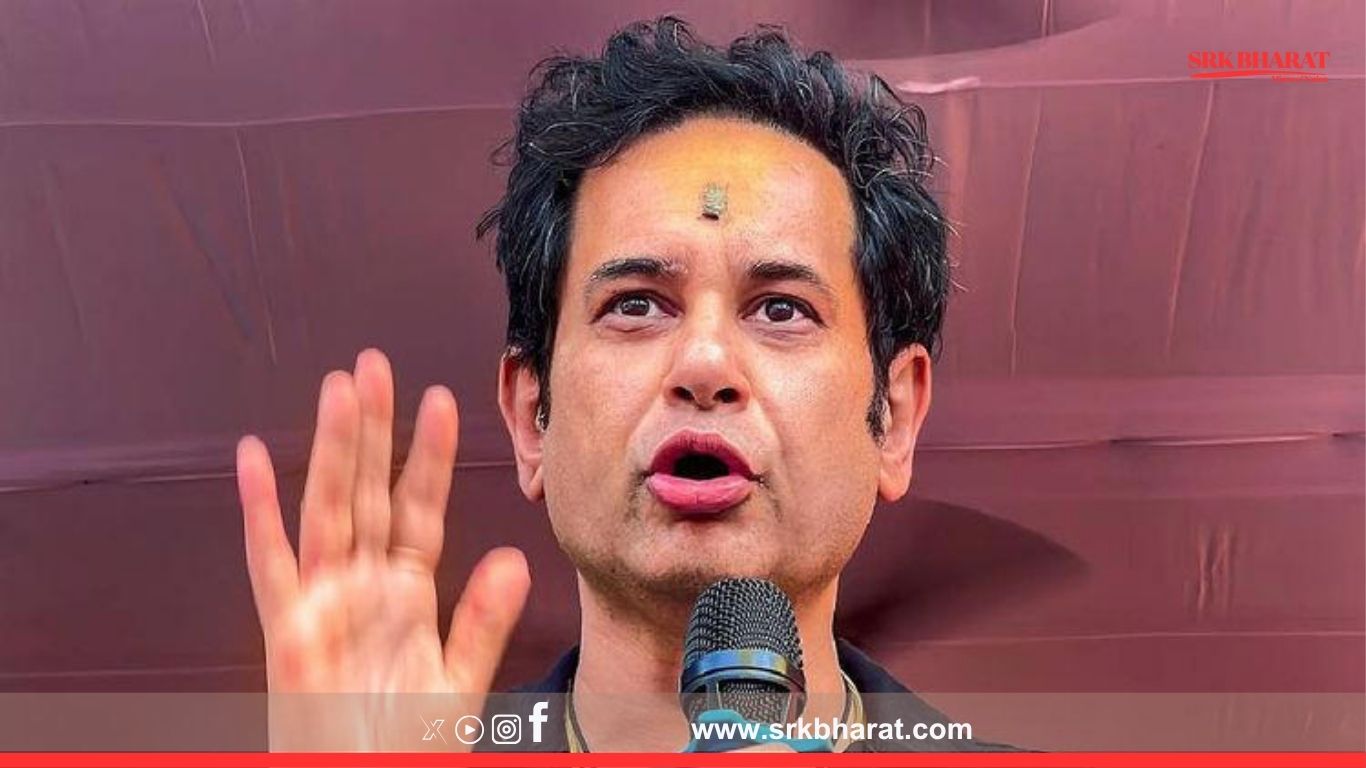
In a significant political development, Tipra Motha founder and royal scion Pradyot Kishore Manikya Debbarma has called upon all political parties in Tripura to set aside differences and unite against the growing threat of illegal immigration, which he warned is eroding the state’s demographic balance and indigenous rights.
Addressing party workers and local leaders at a rally in Agartala on Sunday, Pradyot said:
“This is not about Tipra Motha, BJP, CPI(M), or Congress. Illegal infiltration is an issue that affects every indigenous community, every son and daughter of Tripura. Unless we come together, we risk losing our identity forever.”
Rising infiltration and Tripura’s demographic anxiety
Tripura shares an 856-km porous border with Bangladesh, of which approximately 67 km remains unfenced, including riverine and forested stretches.
According to BSF data, apprehensions of illegal immigrants have steadily risen over the last five years:
| Year | Illegal immigrants apprehended (Jan-Jun) |
|---|---|
| 2021 | 165 |
| 2022 | 198 |
| 2023 | 242 |
| 2024 | 310 |
| 2025 | 368 |
Security officials say organised human trafficking networks, economic distress in Bangladesh, and gaps in border fencing are major causes of the spike.
Pradyot Manikya stressed that infiltration has altered Tripura’s demographic composition, reducing the indigenous Tripuri share from over 80% pre-independence to less than 30% today, leading to socio-economic, political, and cultural anxieties.
Call for an all-party resolution
Pradyot urged all political parties to adopt a common resolution in the Tripura Legislative Assembly and collectively petition the Centre to:
- Complete fencing of the remaining border stretches with advanced surveillance radars
- Strengthen BSF deployment and infrastructure along vulnerable infiltration routes
- Implement strict legal measures against organised human trafficking syndicates
- Institute population verification measures in border villages
- Initiate diplomatic talks with Bangladesh to prevent illegal migration
He warned:
“If we keep playing politics on infiltration, we will wake up one day to realise we no longer own our land. It is time for unity above party lines.”
Political reactions to Pradyot’s appeal
Tripura Chief Minister Manik Saha welcomed Pradyot’s call, stating:
“Infiltration is a national security issue. The state government is committed to fencing all unfenced stretches and enhancing border vigil. We are open to an all-party discussion.”
CPI(M) state secretary Jitendra Choudhury supported the sentiment but added:
“While infiltration is a reality, we must ensure genuine citizens are not harassed in the name of verification. Any policy must balance security with human rights.”
Congress state president Asish Kumar Saha stated:
“Pradyot’s concerns are valid. Congress has always raised infiltration as a threat to indigenous rights and national security. We support an all-party resolution if it benefits Tripura’s future.”
Tipra Motha’s position on infiltration and Greater Tipraland
Pradyot reaffirmed that while Greater Tipraland remains Tipra Motha’s constitutional demand, infiltration is an issue beyond party ideology. He called upon the BJP-led Centre to address both:
- Constitutional guarantees for indigenous Tripuris under Articles 2 and 3
- Strong national security measures to stop illegal crossings
Party insiders say Tipra Motha plans to intensify its outreach in border villages to raise awareness and mobilise people for fencing and population verification demands.
Expert analysis
Professor Ratan Debbarma of Tripura University commented:
“Pradyot’s approach to combine Greater Tipraland with infiltration concerns is strategic. It appeals to indigenous anxieties while building a wider consensus. If managed carefully, it can strengthen his position as a pan-Tripura indigenous leader.”
Political analyst Nani Debbarma added:
“An all-party resolution will send a strong message to Delhi. However, practical implementation depends on Centre-State coordination, BSF capabilities, and diplomatic engagement with Bangladesh.”
Public reactions
Tribal youth organisations hailed Pradyot’s call as timely:
- “This is about our future. Glad he is thinking beyond politics.”
- “Infiltration has made us refugees in our own state. Parties must unite to stop it.”
- “Hope this unity does not remain only in speeches.”
However, minority community leaders urged caution against communalising infiltration:
- “All parties must ensure that anti-immigrant actions do not target Indian citizens wrongfully.”
Centre’s fencing update
The Home Ministry has sanctioned Phase-II fencing of 52 km out of the remaining 67 km, targeting completion by December 2025. Additional funds have been allocated for smart fencing and riverine surveillance radars.
| Tripura Border Fencing Status (2025) |
|—|—|
| Total border length | 856 km |
| Fenced | 789 km |
| Unfenced | 67 km |
| Phase-II sanctioned | 52 km |
Despite this, BSF officials say terrain challenges and monsoon floods often delay work, requiring advanced engineering solutions.
Greater Tipraland: Current status
Pradyot’s party continues to demand:
- Expansion of TTAADC to include tribal-dominated villages outside its current jurisdiction
- Direct administrative linkage with the Centre for tribal affairs
- Constitutional safeguards for tribal land, jobs, and culture
While political observers say the demand has mass support among tribals, they note it will require constitutional amendments and extensive Centre-State negotiations to become reality.
Final thoughts
Pradyot Manikya’s appeal for political unity against illegal immigration reflects an attempt to position himself above partisan divides, leveraging an issue that affects every community in Tripura. Whether this converts into an effective policy shift depends on:
- The Centre’s responsiveness to Tripura’s border vulnerabilities
- The ability of political parties to adopt a non-partisan resolution
- Effective implementation without communal or humanitarian fallout
As infiltration remains a sensitive socio-political issue in Tripura, Pradyot’s call could redefine inter-party dynamics and influence upcoming local elections and constitutional negotiations in the state.
Disclaimer: This news article is for informational purposes only. It includes political statements, public data, and expert analyses based on field reports. Final outcomes and policy decisions remain subject to official confirmation by government authorities.