

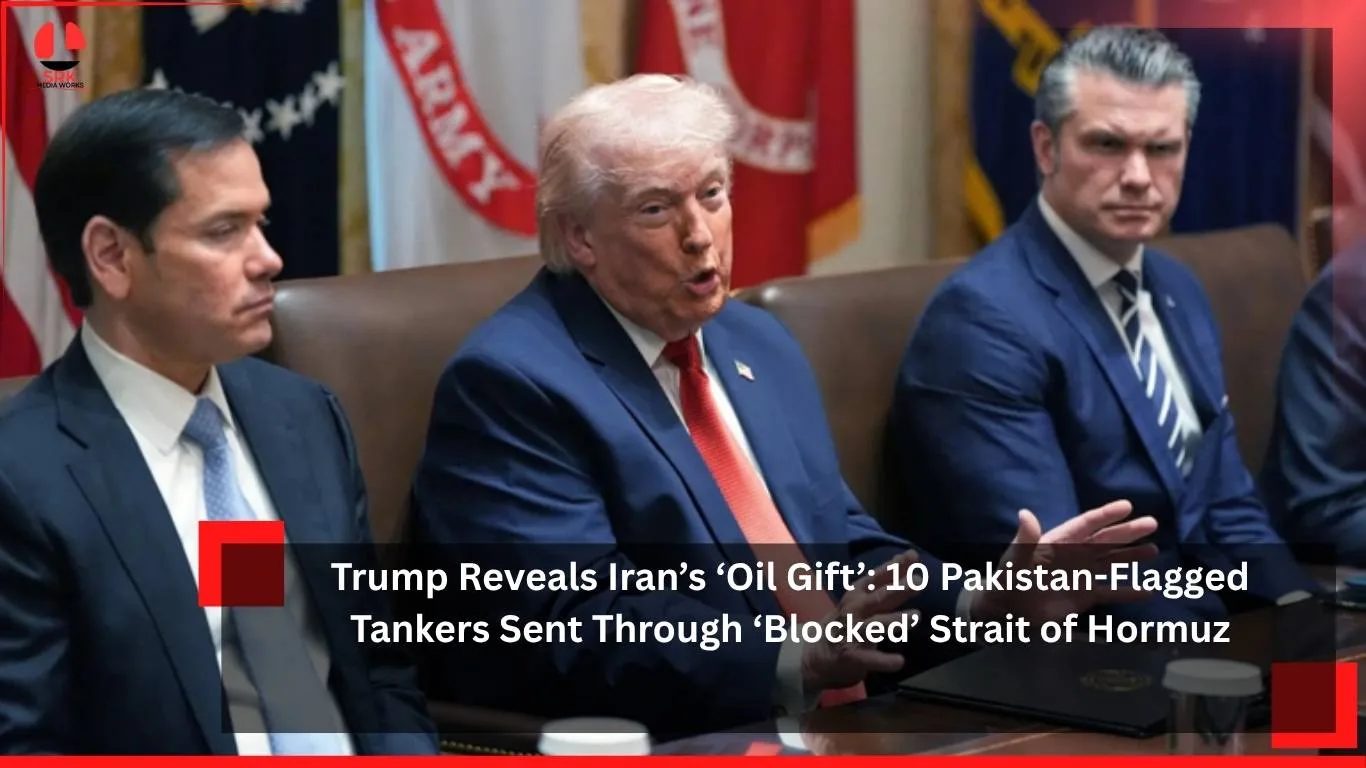
In a dramatic revelation, U.S. President Donald Trump announced that Iran had dispatched 10 Pakistan-flagged oil tankers through the Strait of Hormuz, despite the waterway being described as “blocked” due to heightened military tensions. The disclosure has sparked intense debate over regional geopolitics, maritime security, and the shifting alliances that define energy trade in the Gulf.
Background of the Revelation
The Strait of Hormuz, one of the world’s most critical maritime chokepoints, has long been at the center of geopolitical disputes. With nearly 20% of global oil passing through its narrow waters, any disruption has immediate consequences for global markets. Trump’s revelation suggests that Iran, despite sanctions and military pressure, managed to send oil shipments under Pakistan’s flag, raising questions about enforcement and accountability.
Key Details
- Number of Tankers: 10 vessels reportedly flagged under Pakistan.
- Cargo: Crude oil shipments described as Iran’s “gift.”
- Route: Passage through the Strait of Hormuz, despite claims of blockade.
- Political Context: Comes amid escalating U.S.-Iran tensions and Pakistan’s balancing act in regional diplomacy.
Strategic Implications
- Iran’s Defiance: Demonstrates Tehran’s ability to bypass restrictions and maintain oil exports.
- Pakistan’s Role: Raises questions about Islamabad’s involvement or complicity in facilitating shipments.
- U.S. Enforcement Challenges: Highlights difficulties in maintaining maritime blockades in contested waters.
- Global Energy Security: Signals potential instability in oil supply chains.
Comparative Analysis of Maritime Dynamics
| Aspect | Iran’s Strategy | U.S. Position | Pakistan’s Role |
|---|---|---|---|
| Oil Exports | Using Pakistan-flagged tankers | Attempting to enforce sanctions | Flagging vessels, diplomatic balancing |
| Strait of Hormuz Status | Claimed passage despite blockade | Declared “blocked” due to tensions | Facilitating navigation |
| Global Energy Impact | Maintains limited exports | Seeks to restrict flows | Adds complexity to enforcement |
| Political Messaging | Defiance against sanctions | Assertion of control | Mediator or enabler role |
Pivot Analysis: Energy Trade vs Geopolitical Tensions
| Energy Trade Factor | Geopolitical Tension | Expected Outcome |
|---|---|---|
| Oil shipments continue | U.S. claims of blockade | Increased scrutiny of maritime routes |
| Pakistan’s involvement | U.S.-Iran rivalry | Diplomatic balancing act |
| Iran’s resilience | Sanctions enforcement | Partial success, ongoing defiance |
| Strait of Hormuz passage | Military presence in Gulf | Risk of confrontation |
Global Reactions
- United States: Trump’s revelation underscores Washington’s frustration with Iran’s ability to maneuver around sanctions.
- Iran: Frames the shipments as proof of resilience and defiance against U.S. pressure.
- Pakistan: Faces scrutiny over its role, with speculation about whether it actively facilitated or passively allowed the flagging of tankers.
- Global Markets: Oil prices reacted with volatility, reflecting uncertainty over Gulf stability.
Historical Context
The Strait of Hormuz has been a flashpoint for decades, with past confrontations involving Iran, the U.S., and Gulf states. Iran’s use of alternative strategies, such as reflagging vessels, mirrors tactics employed during previous sanction regimes. Pakistan’s involvement adds a new dimension, reflecting its delicate position between regional powers.
Challenges Ahead
- Enforcement of Sanctions: Ensuring compliance remains difficult when nations reflag vessels.
- Maritime Security: Maintaining control over the Strait of Hormuz requires constant vigilance.
- Diplomatic Fallout: Pakistan may face pressure from both Washington and Tehran.
- Energy Stability: Global markets remain vulnerable to disruptions in Gulf shipping lanes.
Conclusion
Trump’s revelation that Iran sent 10 Pakistan-flagged oil tankers through the “blocked” Strait of Hormuz highlights the complexity of modern geopolitics. It underscores Iran’s determination to maintain oil exports, Pakistan’s delicate balancing act, and the U.S.’s struggle to enforce maritime restrictions. As tensions escalate, the incident serves as a reminder of the fragile balance between energy trade and geopolitical rivalry in one of the world’s most critical waterways.
Disclaimer
This article is based on publicly available reports and expert commentary. It does not represent official government statements or classified intelligence. Readers should interpret the content as journalistic analysis, recognizing that geopolitical developments are fluid and subject to change.