



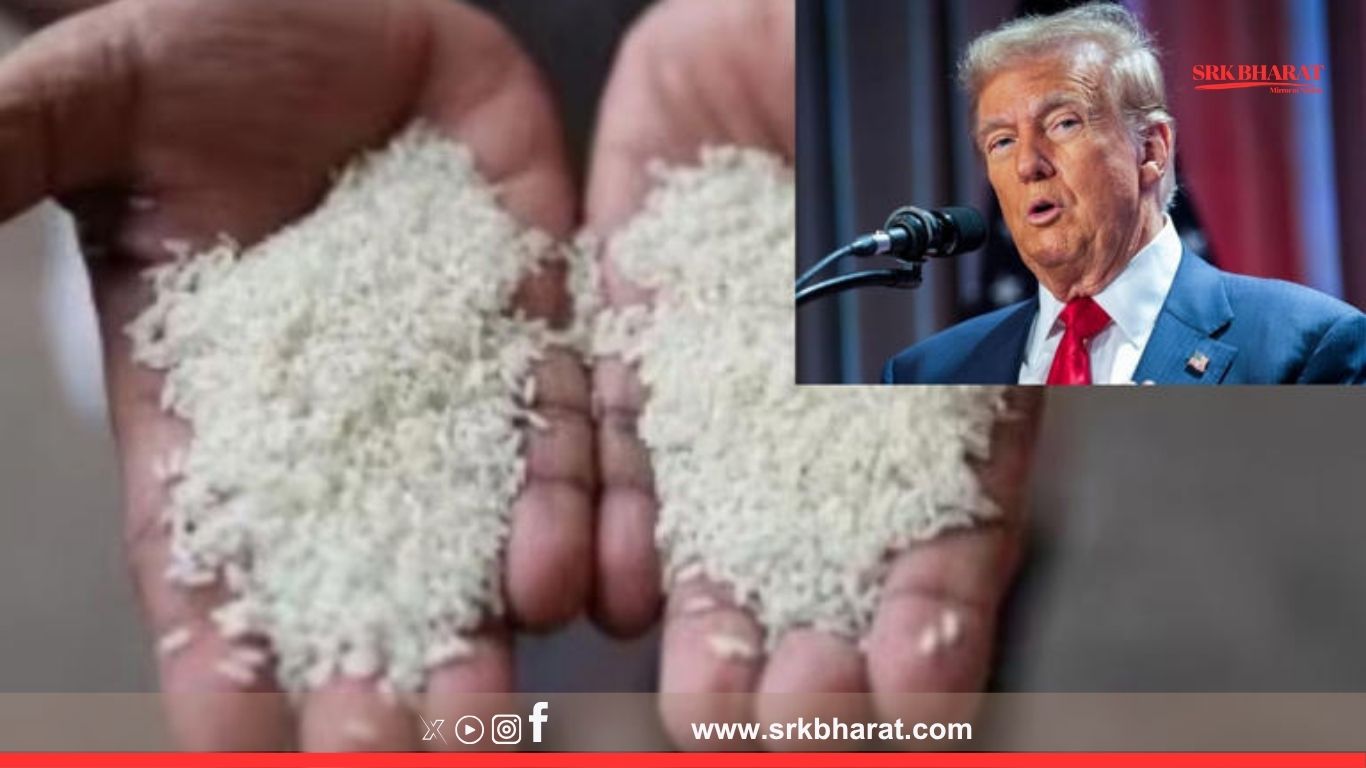
Former US President Donald Trump has sparked fresh trade tensions with Japan, threatening to impose new tariffs over what he called Tokyo’s “refusal” to import American rice despite existing bilateral trade agreements. Speaking at a campaign rally in Iowa on Monday, Trump accused Japan of protecting its farmers through “unfair barriers,” reigniting debates on agricultural diplomacy between the world’s largest and third-largest economies.
Key Highlights Of Trump’s Statement
| Point | Details |
|---|---|
| Accusation | Japan “refuses to buy American rice” |
| Threat | New tariffs on Japanese auto and steel exports if issue persists |
| Context | Campaign rally speech ahead of Republican primaries |
| Past trade deals | US-Japan 2019 trade agreement covers limited agricultural quotas |
Trump’s Full Remark
During his speech, Trump stated:
“Japan treats us terribly on trade. They refuse to buy our rice. We grow the best rice in the world but they don’t buy it. We’re going to put tariffs on their cars and steel unless they open up their markets.”
Background: US-Japan Rice Trade
Under the 1994 Uruguay Round Agreement on Agriculture, Japan agreed to import minimum market access (MMA) quotas of rice from the US and other countries, amounting to around 770,000 metric tonnes annually. However, most of this rice is not sold for direct human consumption but used for processing, feed, or held in stocks, frustrating American rice growers.
The 2019 US-Japan Trade Agreement, signed during Trump’s first term, further reduced tariffs on beef, pork, wheat, and wine, but did not expand direct market access for American table rice, a longstanding demand of the US rice industry.
Japan’s Rice Market Dynamics
| Parameter | Details |
|---|---|
| Domestic production | ~7.4 million tonnes annually |
| Consumption | ~7.2 million tonnes |
| Import quota | 770,000 tonnes (MMA commitment) |
| US share | ~50-60% of import quota |
| Direct consumption imports | Negligible; most imported rice used for processing or feed |
| Tariffs on table rice | High protective tariffs, around 778% on outside-quota imports |
Why Japan Resists American Table Rice
- Consumer Preference: Japanese consumers strongly prefer domestic Japonica varieties for taste, texture, and cultural reasons.
- Farmer Protection: Rice farmers remain a politically influential bloc; any threat to their income invites political backlash.
- Quota System Design: Imports are often used to stabilise prices or for industrial use rather than compete with domestic rice on supermarket shelves.
US Rice Industry Reaction
The USA Rice Federation welcomed Trump’s strong stance. Its President, Betsy Ward, said:
“For decades, Japan has denied American rice growers fair access to their market. Despite paying for quota allocations, the rice is never allowed onto retail shelves. This must change under any future trade framework.”
Japan’s Response To Trump’s Threats
Japanese Chief Cabinet Secretary Hirokazu Matsuno, when asked about Trump’s remarks, responded diplomatically:
“Japan honours all its WTO and bilateral commitments on rice imports. We will continue to engage with all US stakeholders to maintain stable trade relations.”
Trade Analysts’ Perspective
| Analyst | Comment |
|---|---|
| Dr. Mireya Solis, Brookings Institution | “Trump’s threats are part of his broader protectionist rhetoric. However, targeting autos over rice could revive 1980s-style trade frictions.” |
| Prof. Shiro Armstrong, ANU Japan Centre | “Japan cannot politically open table rice markets easily. Tariff threats could undermine wider US-Japan security and trade cooperation.” |
Potential Economic Impact Of New Tariffs
If Trump imposes tariffs on Japanese cars or steel exports, it could:
- Increase prices for Toyota, Honda, and Nissan vehicles in the US, affecting American consumers.
- Lead to Japanese retaliation on US agricultural or industrial exports.
- Undermine ongoing Indo-Pacific Economic Framework (IPEF) trade discussions.
- Benefit South Korean or European automakers in the US market.
Japan’s Auto Exports To US
| Year | Export Volume (vehicles) | Export Value (US$ billion) |
|---|---|---|
| 2020 | 1.5 million | 38.6 |
| 2022 | 1.8 million | 43.2 |
| 2024 | 1.9 million | 45.1 |
(Source: Japan Automobile Manufacturers Association data)
Broader Political Context
Trump’s statement comes as he ramps up campaign rhetoric ahead of Republican primaries, projecting himself as a champion of American farmers and factory workers. Agricultural analysts note that Iowa, where he spoke, is a major rice producer along with Arkansas, Louisiana, California, Mississippi, and Texas, making rice market access a politically resonant issue.
Past Precedents Of Trump’s Tariff Policies
During his presidency (2017-2021), Trump:
- Imposed Section 232 tariffs on steel and aluminum imports from allies including Japan, later partially relaxed.
- Initiated trade wars with China, imposing over $360 billion worth of tariffs.
- Pressured Japan into a partial trade agreement in 2019 without addressing rice market demands.
US-Japan Rice Trade Under Existing Agreements
| Agreement | Commitment | Outcome |
|---|---|---|
| WTO (Uruguay Round) | 770,000 tonnes import quota | Majority used for feed, not table sales |
| US-Japan 2019 deal | Reduced tariffs on beef, pork, wheat | No additional rice market access gained |
Key Takeaways
- Donald Trump threatened new tariffs on Japanese auto and steel exports, accusing Tokyo of refusing to buy American rice.
- Japan imports US rice under WTO quotas but rarely sells it for direct consumption due to domestic protection and consumer preferences.
- The threat revives trade tensions reminiscent of the 1980s-90s US-Japan trade frictions, potentially impacting global supply chains.
- Japan maintains it honours all trade commitments and is unlikely to open its table rice market without domestic political fallout.
- Trump’s remarks are aimed at consolidating farm state votes ahead of upcoming Republican primaries.
What’s Next?
Japanese trade diplomats are expected to engage with US trade representatives to defuse tensions and clarify compliance with existing agreements. Meanwhile, the Biden-DeSantis administration has refrained from endorsing Trump’s tariff threats, focusing instead on broader Indo-Pacific trade and security cooperation to counter China’s growing regional influence.
Disclaimer
This article is for editorial and informational purposes only. Data are sourced from US Department of Agriculture, Japanese Ministry of Agriculture, and trade analyst reports. Readers are advised to refer to official government releases for final policy decisions and negotiations.


1xbet 1xbet .