


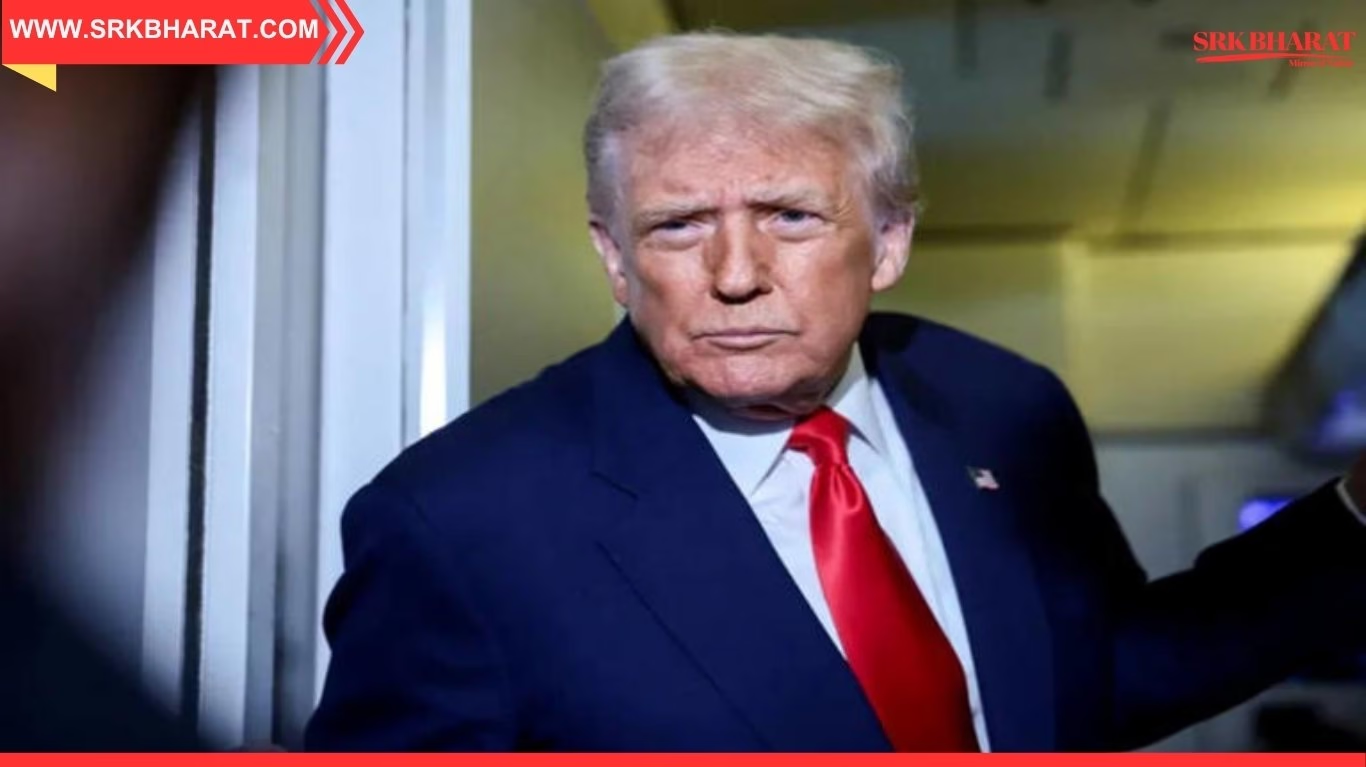
In a dramatic escalation of rhetoric, U.S. President Donald Trump has threatened military intervention in Nigeria if the government fails to halt the ongoing killings of Christians by Islamist militants and tribal factions. The warning, issued via Truth Social on November 1, 2025, included a chilling declaration: “If we attack, it will be fast, vicious, and sweet.” Trump’s remarks followed his designation of Nigeria as a “country of particular concern” under the U.S. watchlist for religious persecution.
The statement has sparked global debate, drawing reactions from international human rights organizations, Nigerian officials, and religious advocacy groups. Trump’s threat comes amid mounting reports of violence against Christian communities in Nigeria’s Middle Belt and northeastern regions, where groups like Boko Haram and Fulani extremists have been accused of systematic attacks.
📊 Timeline of Trump’s Nigeria Threat and Related Developments
| Date | Event Description | Outcome |
|---|---|---|
| Oct 30, 2025 | U.S. designates Nigeria as “country of particular concern” | Heightened diplomatic scrutiny |
| Nov 1, 2025 | Trump issues military threat via Truth Social | Global media coverage explodes |
| Nov 2, 2025 | Nigerian government responds, pledging protection for all citizens | Tensions rise |
The situation has intensified diplomatic pressure on Nigeria to address religious violence.
🧠 Key Quotes from Trump’s Statement
| Quote | Context |
|---|---|
| “If the Nigerian Government continues to allow the killing of Christians…” | Opening threat to halt aid and consider action |
| “…the U.S.A. will immediately stop all aid and assistance to Nigeria…” | Economic leverage warning |
| “…may very well go into that now disgraced country, ‘guns-a-blazing’…” | Military intervention threat |
| “If we attack, it will be fast, vicious, and sweet…” | Final warning to Nigerian leadership |
Trump’s language has been described as unusually aggressive for diplomatic discourse.
📈 Nigeria’s Religious Violence Crisis: A Snapshot
| Region | Perpetrators | Targeted Communities | Recent Incidents |
|---|---|---|---|
| Northeast Nigeria | Boko Haram, ISWAP | Christians, moderate Muslims | 12 killed in Borno (Oct 2025) |
| Middle Belt | Fulani herdsmen | Christian farmers | 18 killed in Benue (Sep 2025) |
| Northwest Nigeria | Bandits, tribal militias | Mixed ethnic groups | 9 abducted in Kaduna (Oct 2025) |
The violence is rooted in a complex mix of religious, ethnic, and land disputes.
🗣️ Global Reactions to Trump’s Threat
| Stakeholder | Response Summary |
|---|---|
| Nigerian Government | “We will protect all citizens regardless of faith.” |
| UN Human Rights Council | Urged restraint and multilateral engagement |
| Christian Advocacy Groups | Welcomed Trump’s stance, called for global action |
| African Union | Warned against unilateral military threats |
The international community remains divided on the appropriateness of Trump’s approach.
🧭 U.S. Aid to Nigeria: What’s at Stake
| Aid Category | Annual Value (USD) | Purpose |
|---|---|---|
| Military Assistance | $150 million | Counter-terrorism, training |
| Humanitarian Aid | $300 million | Refugee support, food security |
| Health Programs | $200 million | HIV/AIDS, malaria, maternal health |
| Education & Development | $100 million | Youth programs, infrastructure |
A suspension of aid would severely impact Nigeria’s development and security efforts.
🧠 Strategic Implications of U.S. Military Action
| Scenario | Potential Outcome |
|---|---|
| Limited Airstrikes | Targeted elimination of terror camps |
| Ground Troop Deployment | Risk of escalation and regional backlash |
| Joint Operations with Allies | Requires UN or NATO coordination |
| Cyber and Intelligence Ops | Disruption of extremist networks |
Experts warn that unilateral action could destabilize West Africa further.
📌 Conclusion
President Donald Trump’s threat of military action in Nigeria over Christian killings marks a significant shift in U.S. foreign policy rhetoric. While his statement has galvanized attention to religious persecution, it also raises concerns about the consequences of unilateral intervention. As Nigeria grapples with internal violence and international scrutiny, the path forward will require careful diplomacy, strategic engagement, and a renewed commitment to protecting vulnerable communities.
Disclaimer: This article is based on publicly available news reports, official statements, and geopolitical analysis. It is intended for informational and editorial purposes only and does not constitute diplomatic or military advice.