





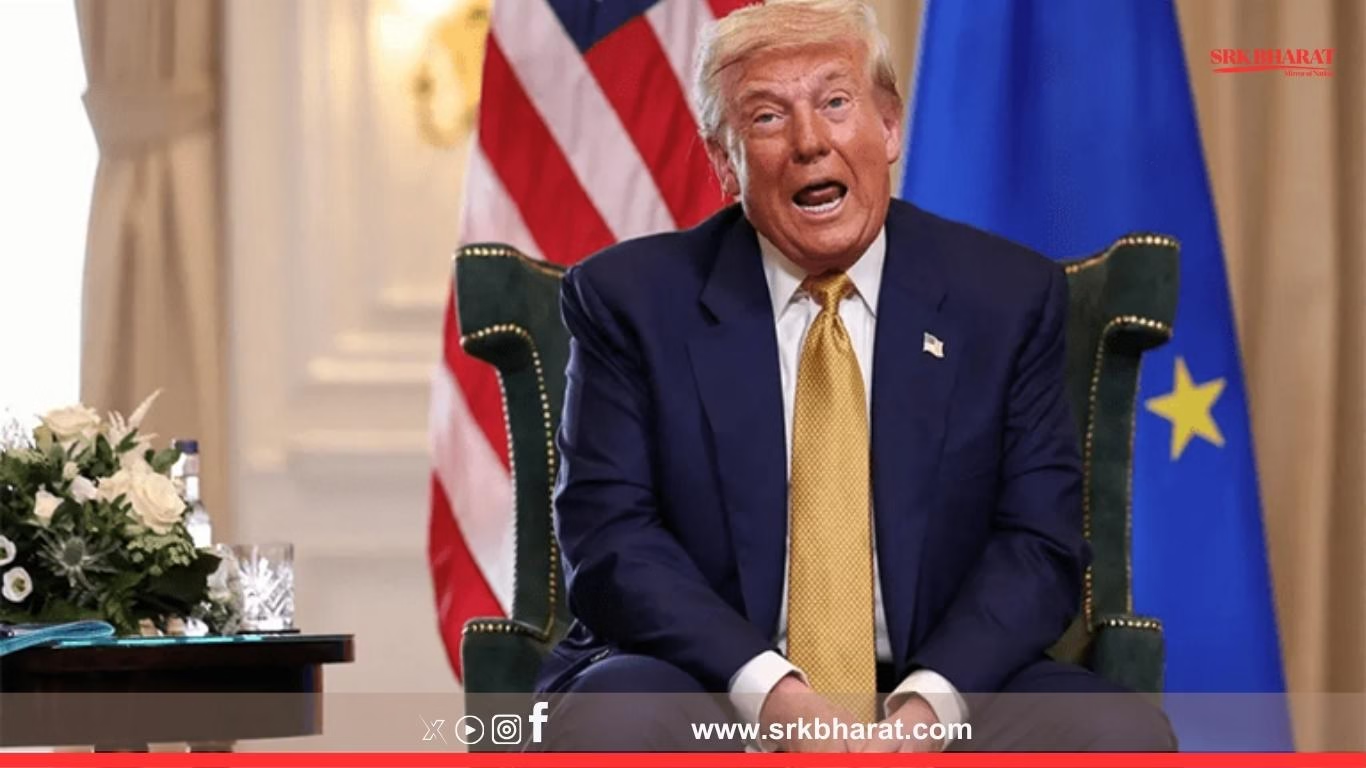
A major controversy has erupted over President Donald Trump’s claim that the European Union agreed to invest $600 billion in the United States under a new trade deal. The assertion, made during a public address on August 5, 2025, is now being challenged by economists and policy experts, who say the final agreement contains no such commitment. University of Michigan economist Justin Wolfers has called the discrepancy “a $600 billion fail,” predicting internal investigations and possible resignations within the Trump administration.
The fallout stems from the difference between the language used in the initial handshake announcement and the final text of the EU-US trade deal published on August 21. While the earlier version promised firm investments and energy purchases, the final document uses softer language such as “expected to invest,” raising questions about the credibility of Trump’s claims and the competence of his negotiating team.
🧭 Timeline of the $600 Billion Controversy
| Date | Event Description | Outcome |
|---|---|---|
| July 28, 2025 | EU-US trade deal draft released | Promises $600B investment, $750B energy buy |
| August 5, 2025 | Trump claims “They gave me $600 billion, it’s a gift” | Public praise, media coverage |
| August 21, 2025 | Final deal text published | Language softened, no firm commitment |
| August 21, 2025 | Economist Justin Wolfers critiques deal | Predicts investigation, resignations |
Wolfers noted that the final deal delivers $5,000 less to the average American household than the handshake agreement Trump boasted of. “Bottom line: He didn’t get a penny,” Wolfers wrote on X (formerly Twitter).
📉 What the Final Deal Actually Says
The final version of the EU-US trade agreement replaces definitive terms like “will invest” with conditional phrases such as “expected to invest.” The $600 billion figure now appears as a projection rather than a contractual obligation.
| Original Language (July 28) | Final Language (August 21) | Implication |
|---|---|---|
| “EU will invest $600 billion…” | “EU companies are expected to invest…” | No binding commitment |
| “EU will purchase $750 billion in energy” | “EU is projected to purchase…” | Subject to market conditions |
| “All by 2028” | “Through 2028, contingent on strategic sectors” | Timeline softened |
The shift in language has led critics to accuse the Trump administration of misrepresenting the deal’s benefits and overstating its economic impact.
🧠 Economist’s Warning: Investigation and Resignations Likely
Justin Wolfers, a respected voice in economic policy, has warned that the discrepancy could trigger internal reviews and shake-ups within the White House. “I expect there will be soul-searching, an investigation, and recriminations,” he wrote. “Resignations seem likely, and a re-think of the entire deal-making apparatus”.
| Predicted Outcome | Rationale |
|---|---|
| Internal Investigation | To assess how negotiators missed key details |
| Staff Resignations | Accountability for failed expectations |
| Policy Reassessment | Pressure to improve trade negotiation strategy |
Wolfers’ comments have sparked debate among economists, with some defending the administration’s broader trade goals while others question the transparency of the negotiation process.
🔍 Political Reactions and Media Fallout
The controversy has drawn sharp reactions across the political spectrum. While Trump loyalists maintain that the deal reflects long-term strategic alignment, critics argue that the administration misled the public.
| Political Group | Reaction Summary |
|---|---|
| Republican Allies | Downplay discrepancy, focus on energy purchases |
| Democratic Leaders | Demand accountability and transparency |
| Media Analysts | Highlight inconsistencies in deal language |
| EU Officials | Emphasize voluntary nature of investments |
The European Union has clarified that investment decisions are made by private companies and are subject to market conditions, not political agreements.
📊 Economic Impact Assessment
Despite the controversy, the deal includes provisions that could benefit sectors like energy, manufacturing, and technology. However, the lack of binding commitments makes it difficult to quantify the actual economic impact.
| Sector | Projected Benefit | Risk Level | Comments |
|---|---|---|---|
| Energy Exports | $750 billion | Moderate | Dependent on EU demand |
| Manufacturing | $200 billion | High | No firm investment guarantees |
| Technology Transfer | $100 billion | Low | Subject to regulatory alignment |
| Job Creation | 1.2 million | Moderate | Based on optimistic projections |
Economists caution that without enforceable clauses, the deal’s benefits may remain aspirational.
🧠 Expert Commentary: Transparency and Trade Diplomacy
Trade experts have weighed in on the controversy, calling for greater transparency in international negotiations. Dr. Radhika Menon, a trade policy analyst, said:
“Deals of this magnitude must be backed by clear documentation. Vague language undermines trust and accountability.”
International economist Rakesh Sharma added:
“The EU’s investment decisions are market-driven. Political claims must reflect economic realities.”
These insights underscore the importance of precision and clarity in trade diplomacy.
📌 Conclusion
President Trump’s claim of securing a $600 billion investment from the European Union has come under intense scrutiny following the release of the final trade deal text. With economists like Justin Wolfers predicting investigations and possible resignations, the episode highlights the risks of overpromising in high-stakes diplomacy.
As the administration faces mounting pressure to explain the discrepancy, the focus now shifts to restoring credibility and ensuring that future trade deals are communicated with transparency and accountability.
—
Disclaimer: This article is based on publicly available economic commentary and trade documents as of August 21, 2025. It is intended for informational purposes only and does not constitute financial or political advice.


1xbet lite [url=https://www.1xbet-14.com]https://www.1xbet-14.com[/url] .