


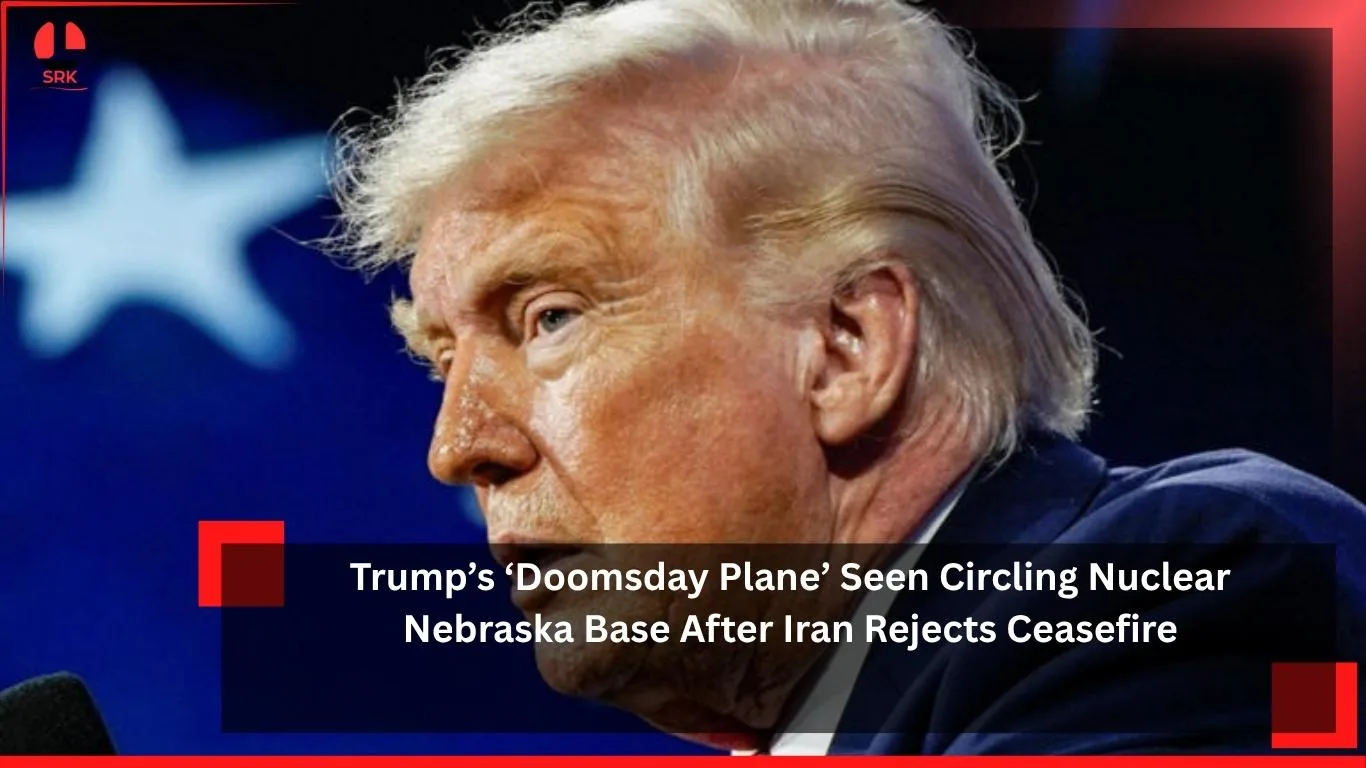
Tensions between the United States and Iran have escalated further after reports confirmed that Donald Trump’s “doomsday plane” was seen circling a nuclear base in Nebraska. The sighting comes just hours after Iran rejected a proposed ceasefire, fueling speculation about Washington’s next military steps and the readiness of America’s nuclear command infrastructure.
Background of the “Doomsday Plane”
The aircraft spotted is widely referred to as the E-4B Nightwatch, nicknamed the “doomsday plane.” It is designed to serve as a flying command center for the US President and senior military officials in the event of nuclear war or catastrophic attacks. Equipped with advanced communication systems, the plane ensures continuity of government and military command even if ground-based facilities are destroyed.
The circling of the Nebraska nuclear base, home to US Strategic Command, is seen as a symbolic show of strength and preparedness.
Iran’s Rejection of Ceasefire
Iran’s refusal to accept a ceasefire proposal has heightened fears of escalation. Tehran’s leadership declared that it would continue its military operations and missile threats, framing the ceasefire as “unacceptable” under current conditions.
This rejection has prompted Washington to signal readiness for a stronger response, with the deployment of the “doomsday plane” interpreted as a warning to Iran and reassurance to US allies.
Comparative Analysis of Strategic Postures
| Attribute | United States (E-4B Deployment) | Iran (Ceasefire Rejection) | Global Allies (NATO, Israel) |
|---|---|---|---|
| Military Readiness | Heightened, symbolic show | Defiant, aggressive stance | Supportive of US deterrence |
| Diplomatic Strategy | Pressure through strength | Resistance, sovereignty | Calls for restraint |
| Public Messaging | Deterrence, preparedness | Defiance, resilience | Concern, cautious optimism |
| Global Perception | Credible, powerful | Aggressive, destabilizing | Defensive, stabilizing |
Pivot Analysis of Escalation
| Factor | Before Plane Deployment | After Plane Deployment |
|---|---|---|
| Regional Stability | Fragile | Highly volatile |
| Global Attention | Moderate | Intensified |
| Military Readiness | Controlled | Heightened |
| Diplomatic Options | Limited | Further reduced |
| Public Sentiment | Concerned | Alarmed |
Reactions from Global Stakeholders
- United States: Officials emphasized that the deployment was precautionary, reinforcing deterrence against Iran.
- Iran: Dismissed the move as “psychological warfare,” vowing to continue its military operations.
- Israel: Welcomed the show of strength, citing increased threats from Iranian proxies.
- European Union: Urged restraint, warning that escalation could destabilize global energy markets.
- Global Analysts: Noted that the sighting of the “doomsday plane” signals Washington’s readiness for worst-case scenarios.
Challenges Ahead
The situation presents challenges for multiple parties:
- For the US: Balancing deterrence with the risk of triggering open conflict.
- For Iran: Managing domestic pressures while facing sanctions and military threats.
- For Regional Stability: Preventing escalation from spilling into neighboring countries.
- For Global Economy: Ensuring energy markets remain stable amid rising tensions.
Broader Implications
This incident highlights broader geopolitical themes:
- Deterrence vs. Diplomacy: Military shows of strength risk undermining diplomatic efforts.
- Symbolism of Power: The “doomsday plane” represents ultimate preparedness for nuclear conflict.
- Regional Instability: Escalation could destabilize the Middle East further.
- Global Security: Rising tensions affect international trade, energy supplies, and public confidence.
Conclusion
The sighting of Trump’s “doomsday plane” circling a nuclear base in Nebraska after Iran’s rejection of a ceasefire marks a dangerous escalation in US-Iran tensions. While the deployment may strengthen deterrence, it also risks provoking retaliation and deepening instability in the Middle East.
The coming days will be critical in determining whether diplomacy can prevail or whether the region moves closer to open conflict.
Disclaimer
This article is intended for informational purposes only. It is based on publicly available developments and does not represent official statements from the governments of the United States, Iran, or any other nation. Readers should rely on official announcements for verified updates.