




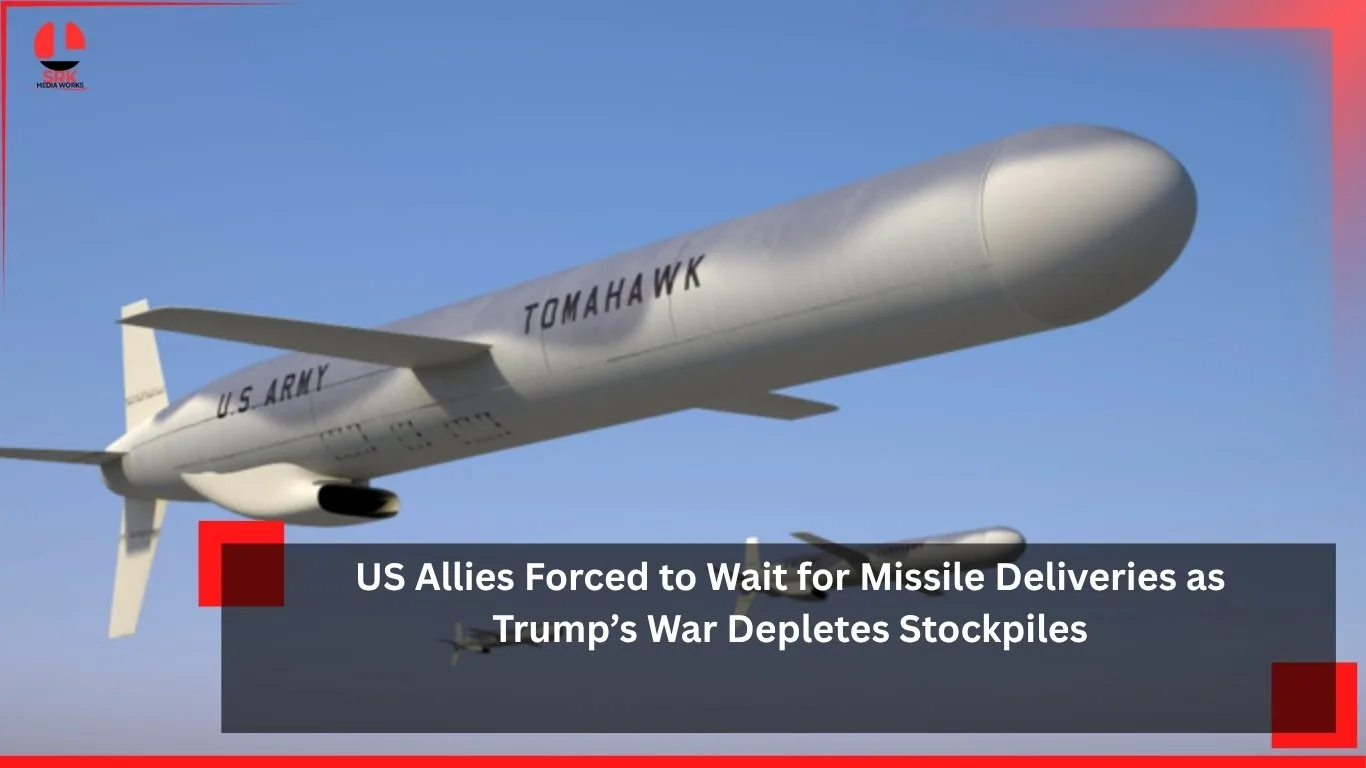
The intensifying conflict involving the United States under President Donald Trump has begun to strain global military supply chains, leaving US allies waiting for missile deliveries as stockpiles dwindle. This development underscores the challenges of sustaining prolonged military engagements while maintaining commitments to allied nations. The depletion of missile reserves has sparked concerns about readiness, alliance credibility, and the balance of power in volatile regions.
The Strain on US Missile Stockpiles
The United States has relied heavily on precision-guided missiles in its ongoing operations. These weapons are critical for:
- Targeted strikes against enemy infrastructure.
- Deterrence against adversaries like Iran.
- Support for allies in NATO and the Middle East.
However, the sheer volume of usage has led to shortages, forcing delays in deliveries to allied nations that depend on US defense contracts.
Impact on US Allies
Countries across Europe, the Middle East, and Asia are affected by the delays. Many of these nations rely on US missile systems for their defense strategies. The delays have:
- Reduced operational readiness for NATO members.
- Complicated defense planning for Middle Eastern allies like Saudi Arabia and Israel.
- Created uncertainty for Asian partners such as Japan and South Korea.
Comparative Analysis of Missile Supply
| Country/Region | Dependency on US Missiles | Current Status | Strategic Risk |
|---|---|---|---|
| NATO Allies | High | Facing delays | Reduced deterrence |
| Middle East | Very High | Critical shortages | Vulnerability to Iran |
| Asia-Pacific | Moderate to High | Delays reported | Regional instability |
| United States | Own stockpile depleted | Prioritizing domestic use | Strained alliances |
Pivot Analysis: War Effort vs. Alliance Commitments
| Dimension | War Effort Priority | Alliance Commitment Priority |
|---|---|---|
| Missile Usage | High consumption | Limited supply for allies |
| Political Impact | Domestic support for strong action | Risk of losing allied trust |
| Military Impact | Immediate battlefield advantage | Long-term alliance strain |
| Global Impact | Escalation of conflict | Weakening of collective security |
This analysis highlights the tension between sustaining war efforts and fulfilling obligations to allies.
NATO’s Concerns
NATO members have expressed unease over the delays. For countries like Poland and the Baltic states, missile systems are essential for deterring Russian aggression. The delays could:
- Undermine NATO’s credibility.
- Encourage adversaries to exploit perceived weaknesses.
- Force allies to seek alternative suppliers.
Middle Eastern Dynamics
In the Middle East, the shortage is particularly alarming. Saudi Arabia and Israel, both heavily reliant on US missile systems, face heightened threats from Iran and its proxies. Delays in deliveries could:
- Limit their ability to respond to attacks.
- Increase reliance on domestic defense industries.
- Push them toward alternative partnerships with countries like France or the UK.
Asian Allies and Regional Security
Japan and South Korea, key US allies in Asia, are also affected. With North Korea’s missile program advancing, delays in US deliveries raise serious concerns. These nations may:
- Accelerate domestic missile production.
- Strengthen regional defense cooperation.
- Pressure Washington to prioritize their security needs.
Domestic Debate in the US
The depletion of missile stockpiles has sparked debate within the United States:
- Supporters of Trump’s strategy argue that prioritizing US military needs is essential.
- Critics warn that neglecting allies undermines long-term security.
- Military analysts caution that production capacity must be expanded to meet both domestic and allied demands.
Industrial Challenges
The US defense industry faces challenges in ramping up production:
- Supply Chain Issues: Limited availability of critical components.
- Production Bottlenecks: Factories operating at maximum capacity.
- Time Constraints: Missile systems require complex manufacturing processes.
Global Reactions
- Europe: Calls for greater independence in defense production.
- Middle East: Concerns about vulnerability to Iranian attacks.
- Asia: Pressure on Washington to prioritize missile deliveries.
- Russia and China: Viewing delays as opportunities to expand influence.
Future Outlook
The missile shortage highlights the need for strategic recalibration. Possible solutions include:
- Expanding production capacity to meet rising demand.
- Diversifying supply chains to reduce dependency on single sources.
- Strengthening alliances through transparency and shared defense initiatives.
Conclusion
The revelation that US allies are forced to wait for missile deliveries as Trump’s war depletes stockpiles underscores the complex balance between domestic military needs and international commitments. While the United States continues to project power, the strain on missile supplies risks weakening alliances and destabilizing regions. The coming months will determine whether Washington can restore confidence among its allies while sustaining its war efforts.
Disclaimer
This article is an analytical overview based on geopolitical assessments and publicly available information. It does not endorse or criticize any nation or political leader. The content is intended for informational and educational purposes only, and readers should consider multiple perspectives before forming conclusions.