


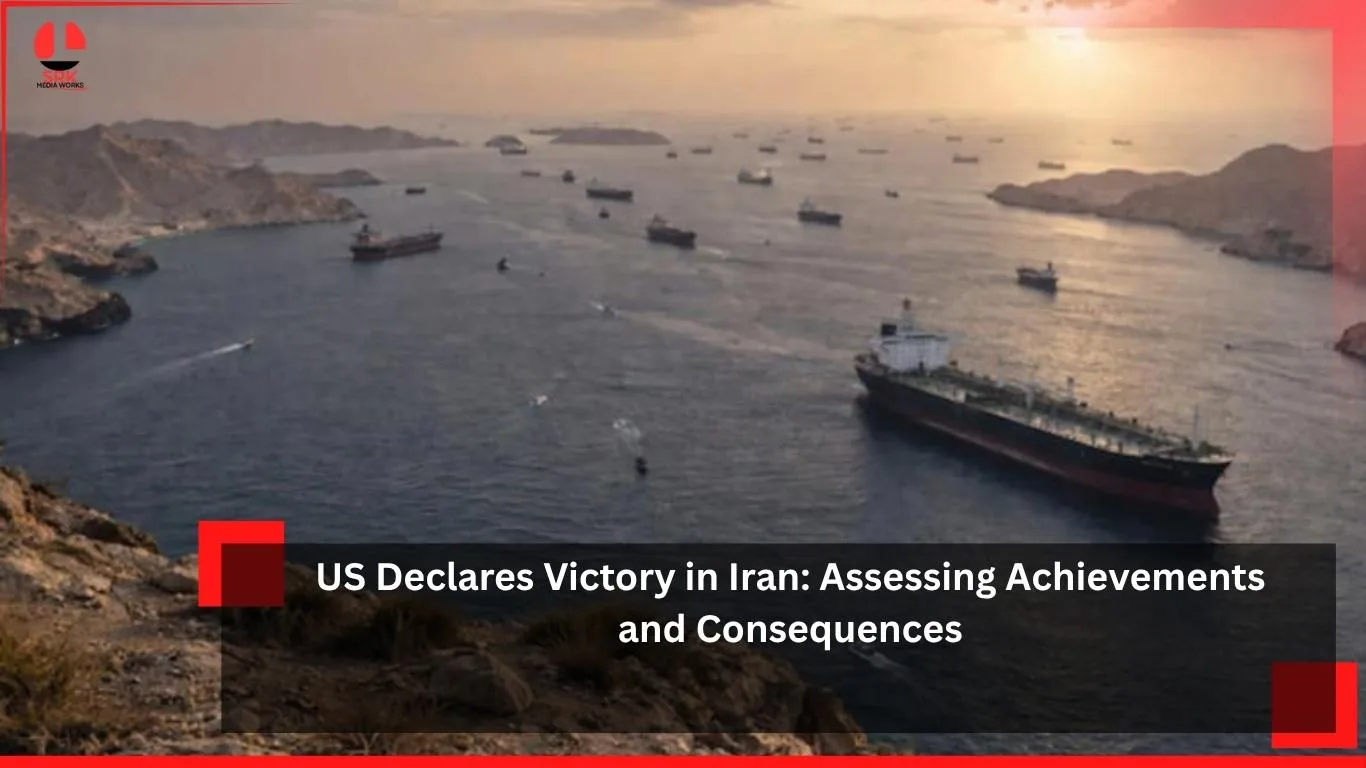
The announcement of victory by the United States in Iran has stirred global attention, but the central question remains: what has truly been accomplished? Beyond the symbolic declaration, the outcomes must be analyzed across military, political, economic, and social dimensions to understand the real impact of this development.
Military Dimension
The US military campaign in Iran was aimed at weakening strategic capabilities and reducing regional threats.
- Neutralization of Strategic Assets: Several Iranian military installations and command centers were dismantled.
- Reduction of Regional Influence: Iran’s capacity to project power into neighboring territories has been curtailed.
- Demonstration of Power Projection: The US showcased its ability to mobilize forces rapidly and effectively.
Military Impact Overview
| Objective | US Achievement | Long-Term Effect |
|---|---|---|
| Neutralize military bases | Achieved | Reduced Iranian defense capacity |
| Limit regional influence | Partial | Iran still retains proxy networks |
| Showcase US dominance | Achieved | Reinforced global military image |
Political Outcomes
The political landscape in Iran has shifted, though not entirely in favor of US interests.
- Government Pressure: The Iranian leadership faces internal and external pressure.
- Diplomatic Isolation: Iran’s ties with certain allies have weakened.
- US Leverage: Washington has gained bargaining power in future negotiations.
Political Influence Matrix
| Factor | US Outcome | Iranian Response |
|---|---|---|
| Diplomatic leverage | Increased | Resistance through alternative alliances |
| Internal pressure | Heightened | Nationalist rhetoric strengthened |
| Global positioning | Improved | Iran seeks new partners |
Economic Consequences
Economic sanctions and military actions have reshaped Iran’s economy.
- Sanctions Enforcement: US sanctions have tightened, limiting Iran’s access to global markets.
- Energy Sector Impact: Oil exports have been disrupted, affecting revenue streams.
- Currency Devaluation: The Iranian rial has faced significant depreciation.
Economic Impact Analysis
| Sector | US Action | Result |
|---|---|---|
| Oil exports | Restricted | Decline in revenue |
| Banking system | Sanctions | Limited international transactions |
| Currency value | Pressure | Rial weakened |
Social Consequences
The declaration of victory has social repercussions within Iran.
- Public Sentiment: Many Iranians view the US actions as aggression, fueling nationalism.
- Humanitarian Concerns: Sanctions and instability have affected healthcare and food supplies.
- Youth Discontent: Younger generations express frustration over limited opportunities.
Regional Implications
The US victory declaration has ripple effects across the Middle East.
- Shift in Alliances: Neighboring countries reassess their ties with Iran.
- Security Dynamics: Proxy conflicts in Iraq, Syria, and Lebanon are influenced.
- Global Energy Markets: Oil prices fluctuate due to uncertainty in supply.
Strategic Assessment
While the US has declared victory, the accomplishments are mixed. Military dominance is evident, but political and social challenges remain unresolved. Iran continues to resist through alternative alliances and proxy networks, ensuring that the situation remains complex.
Comparative Pivot Analysis
| Dimension | US Gains | Iranian Losses | Global Impact |
|---|---|---|---|
| Military | Strong | Bases weakened | US dominance reinforced |
| Political | Moderate | Diplomatic strain | Regional instability |
| Economic | Significant | Currency decline | Oil market volatility |
| Social | Limited | Public hardship | Humanitarian concerns |
Conclusion
The US declaration of victory in Iran is more symbolic than absolute. While military and economic objectives have been achieved to a degree, political and social challenges persist. Iran’s resilience and ability to adapt through alternative alliances ensure that the long-term consequences remain uncertain. The declaration may mark a milestone, but it does not signify the end of tensions in the region.
Disclaimer
This article is an analytical overview based on geopolitical developments and does not represent official government positions. The content is intended for informational purposes only. Readers should consider multiple perspectives and consult authoritative sources before drawing conclusions about complex international events.