


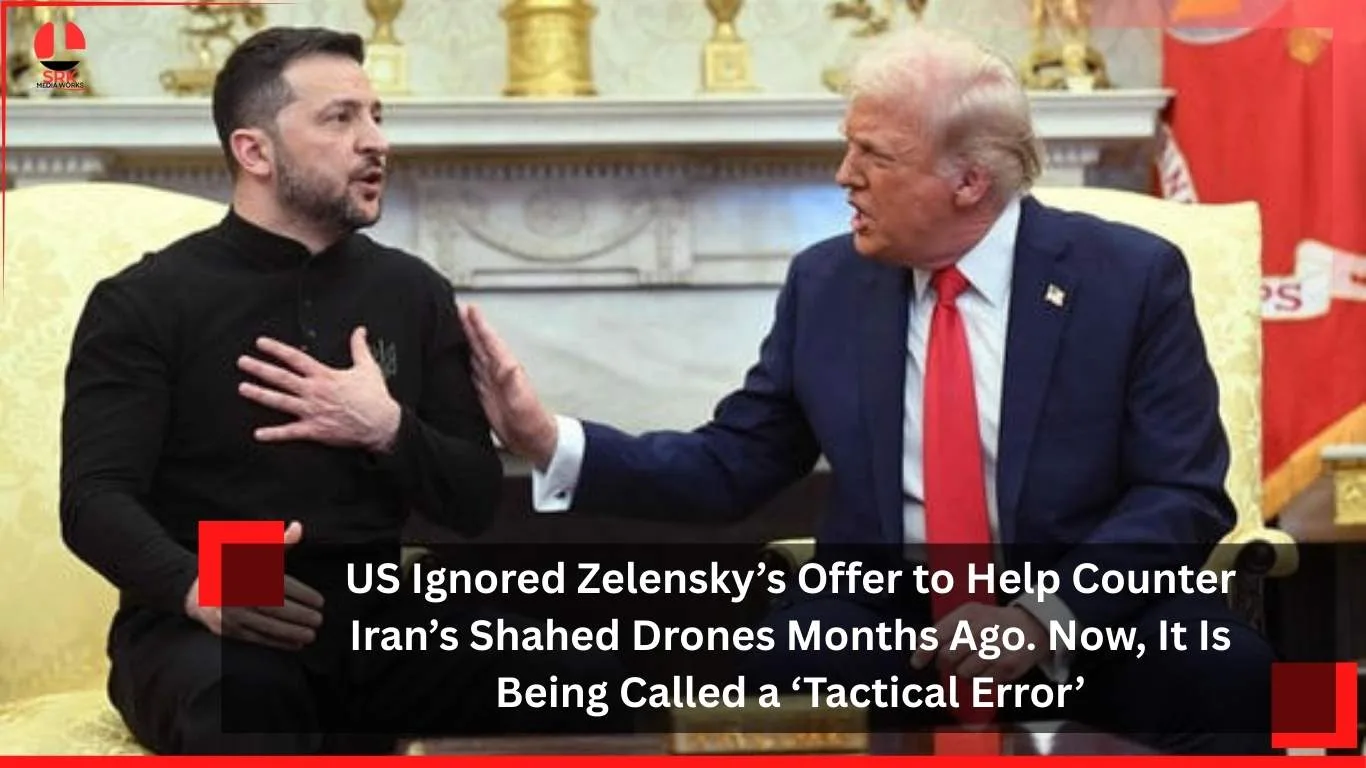
Fresh revelations have emerged that the United States overlooked an offer from Ukrainian President Volodymyr Zelensky months ago to assist in countering Iran’s Shahed drones, which have increasingly been deployed in Middle Eastern conflicts. Analysts and policymakers are now labeling this decision a “tactical error,” as the drones continue to pose significant challenges to US allies and global security.
Background of the Shahed Drone Threat
Iran’s Shahed series of drones, particularly the Shahed-136, have become infamous for their cost-effectiveness and destructive capacity. They are widely used in asymmetric warfare, targeting infrastructure and military assets. Their deployment in conflicts across the Middle East has raised alarms about the growing influence of Iranian military technology.
Zelensky’s Offer and US Response
Months ago, Zelensky reportedly offered Ukraine’s expertise in countering Shahed drones, gained through battlefield experience against Russian forces that have used Iranian drones extensively. Ukraine has developed innovative countermeasures, including:
- Electronic Warfare Systems – Disrupting drone navigation.
- Rapid Response Air Defense – Deploying mobile units to intercept drones.
- Intelligence Sharing – Providing data on drone flight patterns and vulnerabilities.
Despite the offer, US officials did not pursue the proposal, focusing instead on other defense priorities.
Comparative Analysis of Drone Countermeasures
| Country/Actor | Countermeasure Strategy | Effectiveness Against Shahed Drones | Challenges Faced |
|---|---|---|---|
| Ukraine | Electronic warfare, mobile air defense | High (battle-tested) | Resource-intensive |
| US | Traditional air defense systems | Moderate | Costly, limited coverage |
| Israel | Iron Dome, laser systems | High | Expensive, limited availability |
| Gulf States | Imported defense systems | Moderate | Dependence on foreign suppliers |
This table highlights how Ukraine’s battlefield experience could have provided the US with valuable insights.
Why Analysts Call It a Tactical Error
- Missed Opportunity: Ukraine’s expertise could have strengthened US and allied defenses.
- Escalating Threat: Shahed drones are now more widely deployed, complicating defense strategies.
- Alliance Building: Cooperation with Ukraine could have deepened strategic ties.
- Cost Efficiency: Ukrainian methods are often cheaper and more adaptable than traditional systems.
Analytical Perspective
From an analytical standpoint, the US decision reflects a strategic blind spot. By not leveraging Ukraine’s experience, Washington may have underestimated the urgency of the drone threat. The situation underscores the importance of adaptive strategies in modern warfare, where low-cost technologies can disrupt traditional defense systems.
Key Themes Emerging
| Theme | Explanation |
|---|---|
| Tactical Error | Ignoring Zelensky’s offer weakened US preparedness. |
| Drone Warfare Evolution | Shahed drones highlight the shift toward low-cost, high-impact weapons. |
| Alliance Dynamics | Missed chance to strengthen US–Ukraine cooperation beyond Europe. |
| Strategic Adaptability | Modern conflicts demand flexible, innovative defense approaches. |
Public and Political Reactions
- US Analysts: Many now argue that ignoring Zelensky’s offer was a mistake that weakened defense readiness.
- Ukrainian Officials: Expressed disappointment but reiterated willingness to cooperate.
- Middle Eastern Allies: Urged the US to adopt more effective counter-drone strategies.
- Citizens and Media: Public discourse reflects growing concern about the vulnerability of critical infrastructure.
Broader Implications
The controversy has broader implications for global security:
- Defense Innovation: Highlights the need for cost-effective counter-drone technologies.
- Geopolitical Strategy: Reinforces the importance of leveraging allies’ battlefield experience.
- Future Cooperation: May push the US to reconsider partnerships with Ukraine beyond the European theater.
- Global Security: Demonstrates how regional conflicts can have ripple effects on international defense strategies.
Conclusion
The revelation that the US ignored Zelensky’s offer to help counter Iran’s Shahed drones months ago is now being widely regarded as a tactical error. As the drone threat escalates, the missed opportunity underscores the importance of adaptive strategies, alliance building, and leveraging battlefield experience. Moving forward, Washington may need to reassess its approach to drone warfare and deepen cooperation with allies like Ukraine to ensure global security.
Disclaimer
This article is a journalistic analysis based on publicly available information and expert commentary. It is intended for informational purposes only and does not represent endorsement of any government or policy. Readers should interpret the content as part of ongoing global security discourse rather than a definitive judgment.