




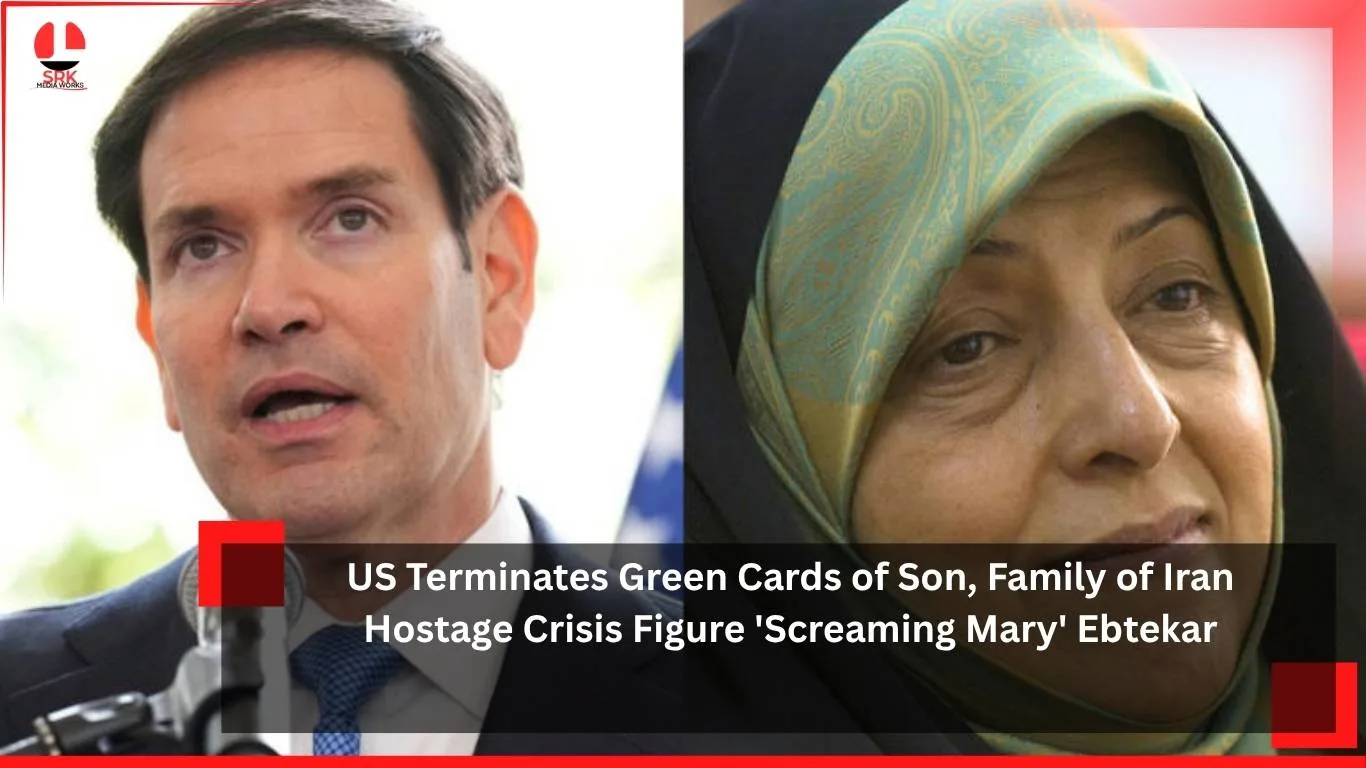
In a move that has stirred diplomatic and political discussions, the United States has reportedly terminated the green cards of the son and family members of Masoumeh “Mary” Ebtekar, widely known as Screaming Mary during the 1979 Iran hostage crisis. The decision underscores the lingering impact of historical events on contemporary immigration policies and highlights the intersection of geopolitics with personal lives.
Background: Who is ‘Screaming Mary’?
Masoumeh Ebtekar earned the nickname Screaming Mary during the Iran hostage crisis for her role as a spokesperson for the student militants who seized the U.S. Embassy in Tehran. Fluent in English, she became the recognizable voice of the hostage-takers, often delivering fiery statements against the United States.
Over the years, Ebtekar transitioned into mainstream Iranian politics, serving in various government roles, including Vice President for Women and Family Affairs. Despite her political evolution, her association with the hostage crisis has remained a defining aspect of her international image.
The US Decision
The reported termination of green cards for Ebtekar’s son and family members is seen as a symbolic act, reflecting America’s continued sensitivity to the hostage crisis. The move raises questions about whether historical actions should influence present-day immigration rights, especially for relatives who may not have been directly involved.
Legal and Political Dimensions
Green cards, which grant permanent residency in the United States, are typically revoked under specific circumstances such as fraud, criminal activity, or national security concerns. In this case, the decision appears to be politically charged, tied to Ebtekar’s past role in the hostage crisis.
Comparative Immigration Policy Actions
| Case | Action Taken | Reason | Impact |
|---|---|---|---|
| Ebtekar Family | Green cards terminated | Historical association with hostage crisis | Diplomatic tension |
| Other Political Figures’ Families | Visa restrictions | National security concerns | Limited travel |
| General Immigration Cases | Revocation for fraud/crime | Legal violations | Individual consequences |
This comparison shows how the Ebtekar case stands out for its historical and symbolic context rather than direct legal violations.
Pivot Analysis: Impact of Green Card Termination
| Dimension | Before Termination | After Termination | Implications |
|---|---|---|---|
| Family Status | Permanent residents in US | Residency revoked | Displacement, legal challenges |
| US-Iran Relations | Tense but stable | Renewed friction | Diplomatic strain |
| Public Perception | Limited awareness | Heightened attention | Media and political debate |
| Immigration Policy | Case-specific | Symbolic precedent | Potential future cases |
The pivot analysis highlights how the decision reverberates beyond the individuals involved, influencing diplomatic narratives and immigration debates.
Diplomatic Repercussions
Iran is likely to interpret the move as a hostile gesture, reinforcing its narrative of American antagonism. For the U.S., the decision may be framed as a stand against individuals linked to anti-American actions, even indirectly.
Domestic Reactions in the US
Within the United States, reactions are mixed. Some view the decision as justified, given Ebtekar’s role in the hostage crisis. Others argue that punishing family members decades later is unfair and undermines the principles of individual accountability.
Historical Memory and Policy
The case illustrates how historical memory continues to shape policy. The Iran hostage crisis remains a painful chapter in U.S. history, and actions tied to it still carry emotional and political weight.
Possible Outcomes
- Legal Appeals: The family may challenge the decision in U.S. courts.
- Diplomatic Protests: Iran may issue formal complaints, escalating tensions.
- Symbolic Precedent: The case may set an example for future immigration decisions tied to historical events.
- Public Debate: The move could spark discussions about fairness in immigration policy.
Conclusion
The termination of green cards for the son and family of Screaming Mary Ebtekar is more than an immigration decision—it is a symbolic act rooted in historical memory. It reflects the enduring shadow of the Iran hostage crisis on U.S. policy and raises complex questions about justice, accountability, and the intersection of personal lives with geopolitics.
Disclaimer: This article is based on reported developments and political analysis. It does not confirm the authenticity of the decision but explores its potential implications. The content is intended for informational purposes only, highlighting how historical events continue to influence immigration and diplomatic policies. Readers should interpret the situation with caution, as official details remain limited.