



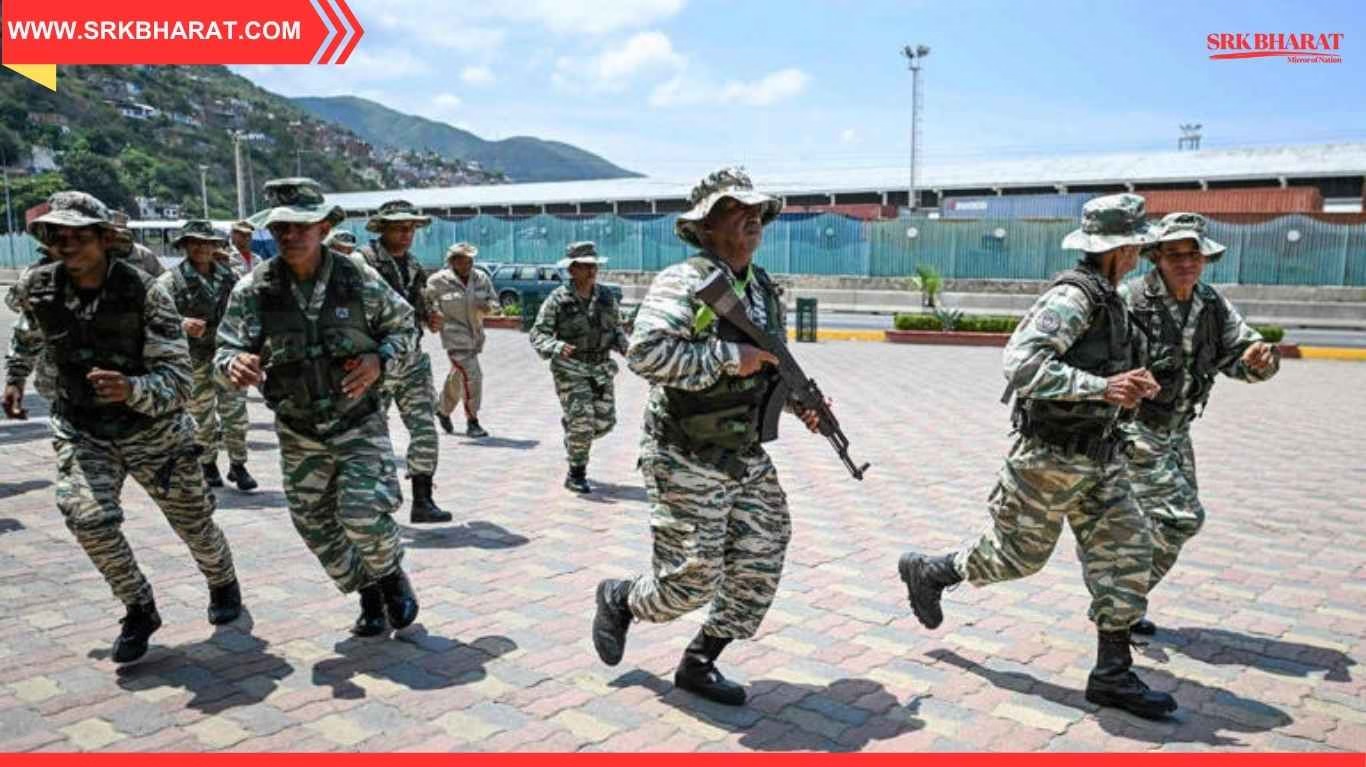
The United Nations Security Council witnessed a heated diplomatic standoff on October 11, 2025, as the United States and Venezuela clashed over a series of US-led military strikes in the southern Caribbean, which Washington claims targeted drug-trafficking vessels. The strikes, conducted between September 2 and October 3, reportedly killed 21 individuals, prompting Venezuela to declare a state of emergency and accuse the US of violating international law and threatening regional peace.
The emergency session, convened in response to escalating tensions, saw US Ambassador Linda Thomas-Greenfield defending the operations as part of a “legitimate counter-narcotics campaign,” while Venezuelan Foreign Minister Yván Gil condemned them as “acts of aggression” aimed at destabilizing the Maduro government. The UN urged restraint, warning of “mounting risks to regional peace and security.”
🧠 Key Points from the UN Emergency Meeting
| Issue Discussed | US Position | Venezuela’s Response |
|---|---|---|
| Legality of Strikes | Targeted drug cartels, within international law | Breach of sovereignty, illegal aggression |
| Civilian Casualties | Unconfirmed, under review | 21 dead, including non-combatants |
| Military Deployment | Maritime buildup for anti-narcotics ops | Threat of armed conflict, regional instability |
| UN Charter Compliance | Operations justified under self-defense | Violates Article 2(4) of UN Charter |
UN Assistant Secretary-General Miroslav Jenča stated that the UN could not independently verify US claims and emphasized that “counter-narcotics efforts must comply with international law.”
📊 Timeline of Caribbean Strikes and Diplomatic Fallout
| Date | Event Description |
|---|---|
| Sep 2–Oct 3 | US conducts multiple air and naval strikes |
| Oct 4, 2025 | Venezuela declares state of emergency |
| Oct 10, 2025 | UN calls for restraint and investigation |
| Oct 11, 2025 | Emergency Security Council meeting held |
The strikes reportedly targeted vessels near Trinidad and Tobago, Grenada, and Venezuelan waters, raising alarms across the Caribbean bloc.
🗣️ Global Reactions and Regional Impact
- Russia and China backed Venezuela, calling for an independent probe.
- Brazil and Colombia urged de-escalation and diplomatic engagement.
- Caribbean Community (CARICOM) expressed concern over sovereignty violations.
- European Union called for transparency and adherence to international norms.
| Country/Entity | Reaction Summary |
|---|---|
| Russia, China | Condemned US actions, supported Venezuela |
| Brazil, Colombia | Called for peaceful resolution |
| CARICOM | Alarmed by military activity near borders |
| EU | Urged compliance with UN protocols |
The incident has strained US relations with Latin America and reignited debates over unilateral military interventions.
🧾 Strategic and Legal Implications
| Dimension | Implication |
|---|---|
| International Law | Potential violation of sovereignty clauses |
| Regional Stability | Risk of escalation into armed conflict |
| US Foreign Policy | Scrutiny over counter-narcotics strategy |
| Venezuela’s Position | Strengthened domestic narrative against US |
Legal experts argue that the strikes may trigger proceedings at the International Court of Justice (ICJ) if Venezuela formally lodges a complaint.
🧭 What’s Next?
- UN Fact-Finding Mission: Proposed by non-aligned members to assess strike impact.
- Diplomatic Talks: Likely between US, Venezuela, and Caribbean nations.
- Security Council Resolution: Under discussion to prevent future unilateral actions.
- Regional Defense Posture: Venezuela has mobilized naval assets and air patrols.
The situation remains fluid, with both sides refusing to back down and the UN urging immediate dialogue.
Disclaimer
This news content is based on verified diplomatic statements, UN briefings, and global media reports as of October 12, 2025. It is intended for editorial use and public awareness. The information does not constitute legal advice, military assessment, or geopolitical endorsement and adheres to ethical journalism standards.