



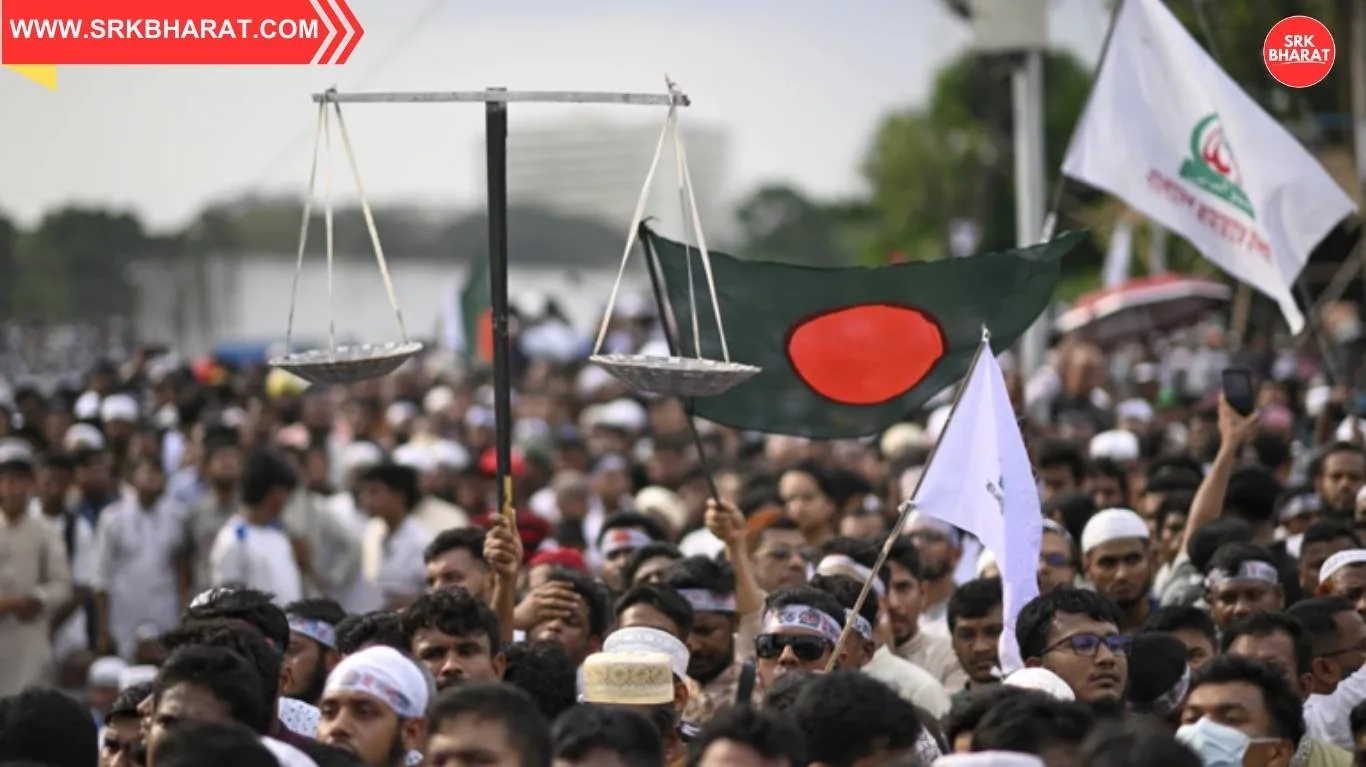
The upcoming Bangladesh general election has taken a dramatic turn with reports suggesting that the United States is seeking to build ties with Jamaat-e-Islami (JeI), a controversial Islamist political party long banned from contesting elections in Bangladesh. This development has sparked intense debate in South Asia, raising questions about Washington’s strategic motives and the potential implications for India’s security, diplomacy, and regional stability.
Background of the Issue
- Jamaat-e-Islami has historically been a powerful Islamist political force in Bangladesh, though its role in the 1971 Liberation War and subsequent controversies led to widespread criticism.
- The party was banned from contesting elections in Bangladesh due to its anti-secular stance and alleged involvement in extremist activities.
- Reports now suggest that the US is attempting to engage with Jamaat-e-Islami as part of its broader strategy to influence Bangladesh’s political landscape ahead of elections.
- India, which has consistently opposed Jamaat’s ideology, views this development with concern, given its implications for regional security.
Key Highlights
| Indicator | Details |
|---|---|
| Country in Focus | Bangladesh |
| Political Party | Jamaat-e-Islami |
| US Position | Seeking engagement, “friends” approach |
| India’s Concern | Security, extremism, regional stability |
| Impact | Could reshape South Asian geopolitics |
US Strategy vs India’s Concerns
| Factor | US Strategy | India’s Concerns | Implication |
|---|---|---|---|
| Political Engagement | Building ties with Jamaat-e-Islami | Fear of Islamist influence | Diplomatic tension |
| Election Influence | Supporting pluralism | Risk of destabilization | Electoral volatility |
| Security Dimension | Counterbalance China | Terrorism and extremism | Regional instability |
| Public Perception | Promoting democracy | Undermining secularism | Polarized narratives |
| Long-Term Outlook | Strategic leverage | Security challenges | Complex geopolitics |
Why This Story Matters
- Regional Security: Jamaat’s history of extremism raises concerns about terrorism and cross-border militancy.
- India’s Diplomacy: New Delhi must recalibrate its strategy if Washington backs Jamaat.
- Bangladesh Politics: Engagement with Jamaat could reshape electoral dynamics.
- Global Strategy: Reflects US efforts to counter China’s influence in South Asia.
- Future Outlook: Could redefine India-US relations in the context of Bangladesh.
Jamaat-e-Islami’s Role in Bangladesh
- Historically aligned with conservative Islamist ideology.
- Criticized for opposing Bangladesh’s independence in 1971.
- Accused of supporting extremist networks in the region.
- Despite its ban, Jamaat retains grassroots influence, particularly in rural areas.
US Perspective
- The US sees engagement with Jamaat as part of its broader democratic outreach.
- Washington aims to counterbalance China’s growing influence in Bangladesh.
- By engaging Jamaat, the US hopes to diversify political voices and reduce authoritarian tendencies.
India’s Perspective
- India views Jamaat as a destabilizing force due to its extremist leanings.
- New Delhi fears that US engagement could embolden Islamist networks.
- India has consistently supported secular and democratic forces in Bangladesh.
- The development could strain India-US relations if not managed carefully.
Expert Opinions
- Security Analysts: Warn that Jamaat’s empowerment could fuel extremism in South Asia.
- Political Commentators: Suggest US motives are driven by strategic rivalry with China.
- Diplomats: Emphasize the need for India to engage Washington on the issue.
- Critics: Argue that US policy risks undermining Bangladesh’s secular fabric.
Challenges Ahead
- Electoral Volatility: Jamaat’s involvement could polarize Bangladesh’s elections.
- Security Risks: Potential rise in extremist activities.
- Diplomatic Strain: India-US relations may face friction.
- Regional Balance: China’s role adds complexity to the situation.
- Public Trust: Bangladeshi citizens may question foreign interference.
Opportunities
- Dialogue: India can engage the US to express concerns diplomatically.
- Regional Cooperation: Strengthening ties with Bangladesh’s secular forces.
- Counterterrorism: Enhancing intelligence-sharing to mitigate risks.
- Strategic Balance: Using the situation to reinforce India’s regional leadership.
- Policy Innovation: Developing new frameworks for South Asian security.
Broader Context of South Asian Geopolitics
- Bangladesh is a key player in South Asia, strategically located near the Bay of Bengal.
- The US seeks to counter China’s Belt and Road Initiative influence in the region.
- India prioritizes stability in Bangladesh to prevent cross-border militancy.
- Jamaat’s role could complicate the balance between secularism and Islamist politics.
Sectoral Breakdown of Impact
| Sector | Impact | Strategic Importance |
|---|---|---|
| Politics | Electoral volatility | Shapes Bangladesh’s future |
| Security | Risk of extremism | Regional stability |
| Diplomacy | India-US tensions | Global strategy |
| Economy | Trade uncertainty | Regional growth |
| Society | Polarization | Secular vs Islamist divide |
Media Coverage
- Headlines emphasize US outreach to Jamaat-e-Islami.
- Analysts debate implications for Bangladesh’s elections.
- Coverage highlights India’s concerns about extremism.
- The story dominates discussions in South Asian political circles.
Conclusion
The US’s reported attempt to be “friends” with Jamaat-e-Islami ahead of Bangladesh’s election has sparked debate across South Asia. While Washington frames the move as part of its democratic outreach, India views it as a potential threat to regional stability. For Bangladesh, the development could reshape electoral dynamics, while for India, it underscores the need for vigilance, diplomacy, and strategic recalibration. The outcome of this engagement will have far-reaching consequences for South Asian geopolitics.
Disclaimer
This article is intended for informational purposes only and does not constitute political or professional advice. Statements, policies, and outcomes are subject to change based on evolving circumstances. Readers are encouraged to follow official updates for accurate information. The author and publisher are not responsible for any decisions made based on this article.