





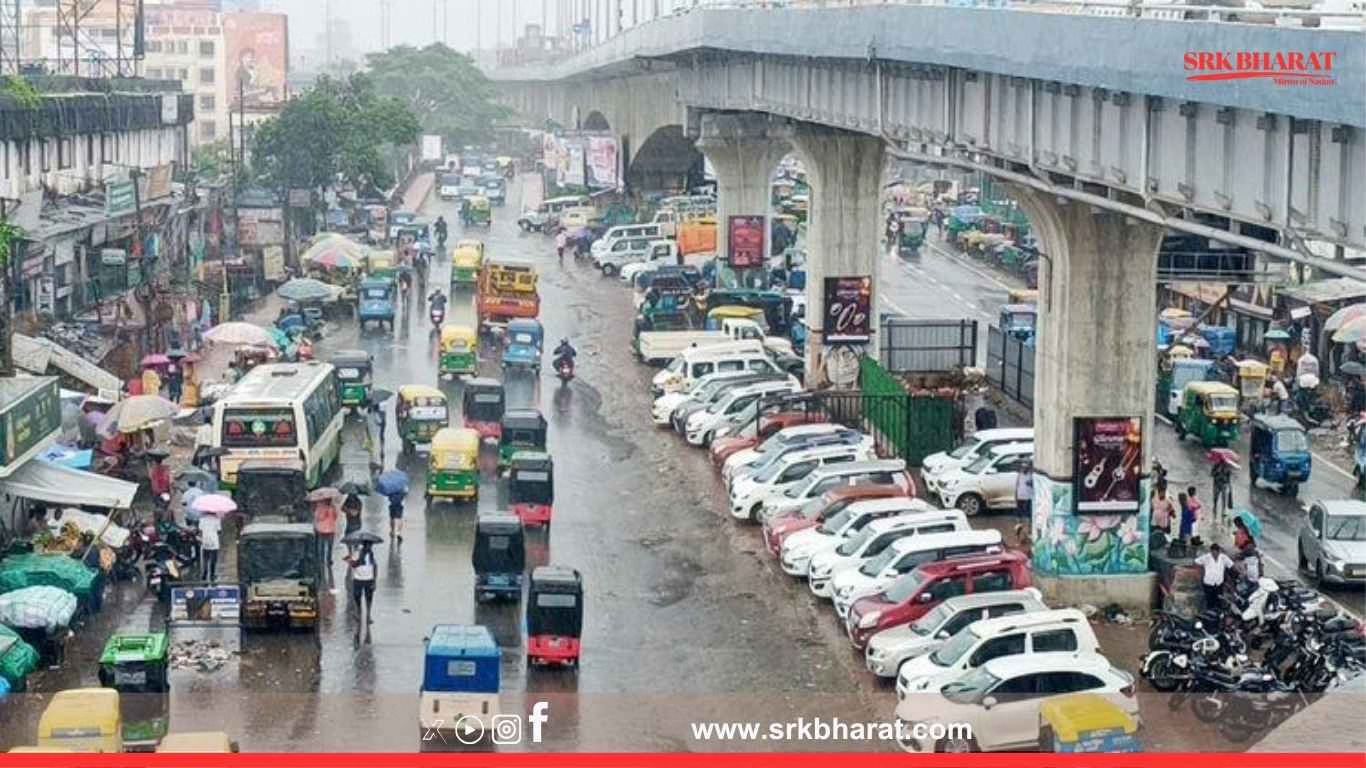
In a telling reflection of ground realities, residents across Tripura largely ignored the nationwide strike call given by trade unions and various opposition groups on Monday. Markets, transport, and daily life continued almost unaffected in the northeastern state as people prioritised their livelihoods over political demonstrations, citing economic compulsion amid rising living costs and fragile household finances.
Ground situation in Tripura on strike day
Unlike some states where the strike saw partial or complete shutdowns, Tripura witnessed near-normal public movement. Shops and local markets remained open in Agartala, Udaipur, and Dharmanagar. Autos and private buses plied their regular routes. Government offices, banks, and educational institutions functioned without disruption.
Speaking to reporters, many small vendors, daily wage earners, and shopkeepers voiced similar sentiments:
“We need to work to eat. Missing even one day of business means difficulty buying essentials for the family,” said Manik Debnath, a vegetable vendor at Agartala’s Lake Chowmuhani.
“Political parties can call for strikes anytime, but who will feed us if we sit at home?” asked Kalpana Das, who runs a small roadside tea stall.
Strike call: Reason and response
The nationwide strike was called by central trade unions to protest against issues including rising prices, unemployment, labour reforms, and privatisation. However, in Tripura, where unemployment remains high and informal employment dominates, residents felt participation in the bandh would only compound personal financial struggles.
| Key Factors Behind Tripura’s Non-Participation | Explanation |
|---|---|
| High informal sector dependence | Majority depend on daily earnings with no job security or paid leave. |
| Low strike enforcement | Weak organisational capacity of unions in the state compared to West Bengal or Kerala. |
| Economic stress post-Covid | Households still recovering from pandemic-induced financial shocks. |
| Fear of income loss | One day of lost wages means food insecurity for many families. |
Voices from the ground
In rural Gomati district, agricultural workers also continued their normal routines. Bhagirath Reang, a farm labourer, noted:
“If we miss a day in the paddy fields, there is no way to finish work on time. We will not get paid and our employer will hire someone else.”
At Battala market in Agartala, fish vendors like Sunil Sarkar said they arrived before dawn as usual, adding:
“Strikes have no meaning for us. Customers will go to other shops if we remain closed.”
Private bus driver Shyamal Das highlighted:
“Passengers don’t care about strike calls. They want to reach their offices and hospitals. If we don’t operate, they will curse us, not the government or unions.”
Political reactions
While opposition leaders claimed partial success, ruling BJP leaders stated the “bandh culture” has lost relevance among people focused on work and livelihood.
A senior Tripura government official observed:
“The administration ensured strict security and public order. No untoward incidents or forceful closures were reported.”
Left parties and trade unions in Tripura issued statements reiterating their demands, blaming fear of violence and government pressure for low participation, though on-ground interviews suggested people were largely indifferent to the bandh call itself.
Economic backdrop: Strikes versus survival
Data from Tripura’s Labour Department show over 70% of the state’s workforce is in the informal sector, with daily wage rates ranging between Rs 250 and Rs 400. For households living hand-to-mouth, every day’s earning is critical for food, medicines, and basic needs.
| Occupation | Average Daily Earning (Rs) | Impact of Missing One Day |
|---|---|---|
| Vegetable/Fish vendor | 600-800 | Loss of business to competitors, unsold stock wastage |
| Tea stall owner | 300-500 | Direct income loss plus milk and perishables wastage |
| Farm labourer | 250-350 | No wages for the day, risk of reduced future work allocation |
| Auto driver | 500-900 | Fuel cost recovery impacted; family rations affected |
Trade unions’ concern
Tripura’s trade union leaders, while acknowledging practical difficulties, stressed the need for workers to support collective protests to demand wage hikes and social security.
Tapan Das, a union organiser in Udaipur, said:
“People are scared about losing income for a day, but without struggle, how will they secure their future rights?”
He added that unions will continue educating workers about long-term benefits of participation while pushing for welfare legislation.
Governance focus: Employment and prices
With Tripura’s inflation rate hovering around 5.2% and unemployment, especially among youth, rising post-pandemic, the state government is emphasising industrial investment, entrepreneurship, and skill-based employment generation. However, economic diversification remains limited, and small traders and daily workers continue to bear the brunt of every price rise.
Experts’ view
Sociologist Dr Arpita Choudhury from Tripura University explained:
“People’s refusal to join strikes today stems from economic distress, not political alignment. They simply cannot afford to miss work when food prices and loan repayments burden them daily.”
She noted that with weakening trade union influence and expansion of unorganised sector, mass strike culture is unlikely to regain earlier momentum unless linked with localised grassroots mobilisation.
Conclusion
The nationwide strike call, though supported in principle by many, failed to evoke participation in Tripura where economic compulsions overshadowed ideological affinity. As the state navigates inflation, limited job opportunities, and an informal-heavy economy, its people remain focused on immediate survival rather than national-level political movements.
Disclaimer
This news report is based on field interviews, official statements, and public observations across Tripura on the day of the nationwide strike. Data on earnings and employment has been sourced from the Tripura Labour Department and independent academic research. Figures and perspectives are subject to future verification and policy updates. Readers are advised to consult official government advisories and trade union releases for authoritative positions.

автоматические рулонные шторы на створку http://rulonnaya-shtora-s-elektroprivodom.ru/ .