

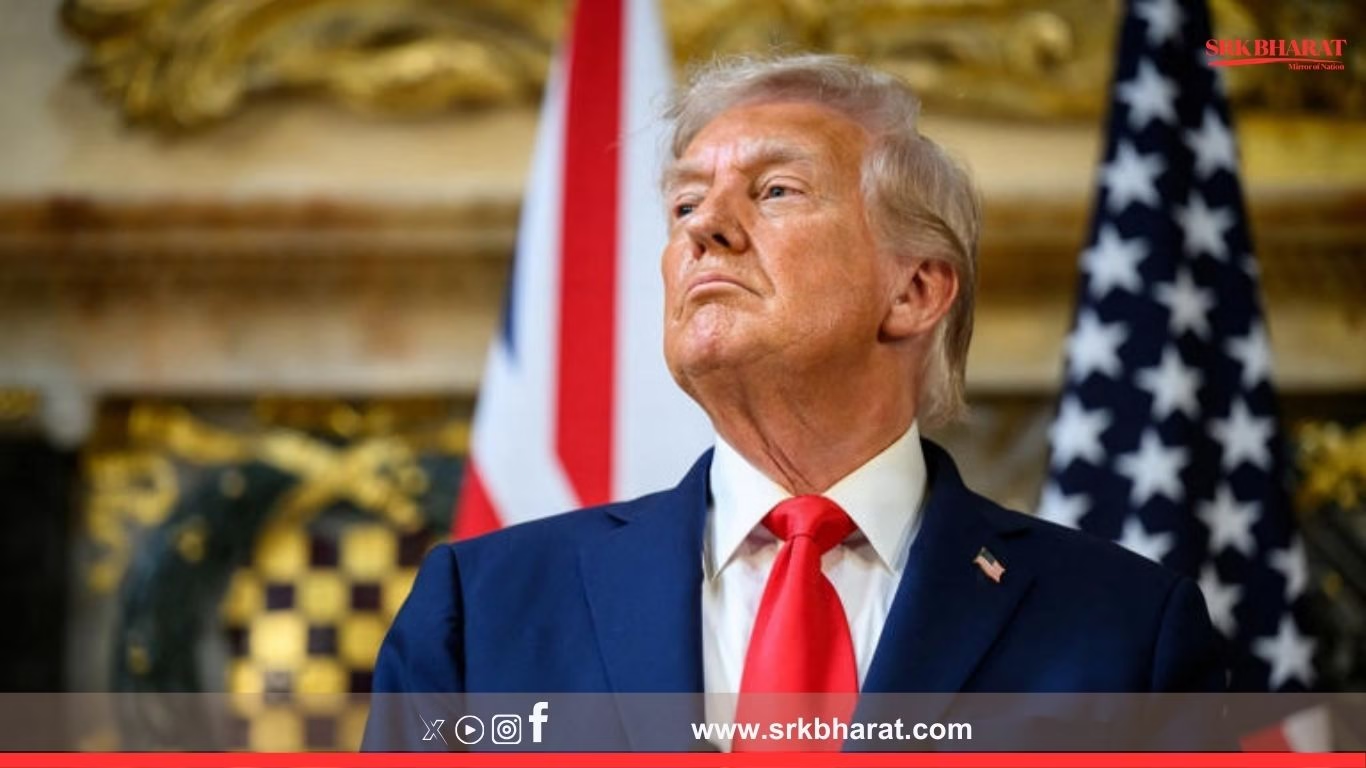
In a striking foreign policy declaration, President Donald Trump has announced that the United States is actively seeking to regain control of Bagram Air Base in Afghanistan, four years after its controversial abandonment during the 2021 withdrawal. Speaking at a joint press conference with UK Prime Minister Keir Starmer on September 18, 2025, Trump described the base as “one of the biggest airbases in the world” and emphasized its strategic proximity to China’s nuclear facilities.
The statement marks a dramatic shift in US posture toward Afghanistan, where the Taliban regained control following the chaotic exit of American forces. Trump’s comments have reignited debate over the legacy of the withdrawal, the future of US-Taliban relations, and the broader implications for regional security.
—
Timeline of Bagram Air Base: From Soviet Stronghold to US Strategic Asset
| Year | Event |
|---|---|
| 1950s | Bagram built by Soviet engineers |
| 2001 | US takes control post-9/11 invasion |
| 2010 | Peak deployment: over 100,000 US troops stationed |
| July 2021 | Final US troops exit Bagram under Biden administration |
| September 2025 | Trump announces plans to “get it back” |
The base served as a logistical hub, medical facility, and command center for US operations in Afghanistan for nearly two decades.
—
Trump’s Statement on Bagram: Key Quotes
| Quote | Context |
|---|---|
| “We gave it to them for nothing.” | On the 2021 withdrawal decision |
| “We’re trying to get it back, by the way.” | On current negotiations |
| “It’s an hour away from where China makes its nuclear weapons.” | On strategic importance |
| “We were going to leave Afghanistan with strength and dignity.” | On his original withdrawal plan |
Trump criticized the Biden administration’s handling of the exit, calling it a “total disaster” and linking it to subsequent global instability.
—
Strategic Importance of Bagram Air Base
| Feature | Value |
|---|---|
| Location | 50 km north of Kabul |
| Runway Length | 11,800 feet |
| Infrastructure | Hospital, prison, logistics hub |
| Proximity to China | ~1 hour from nuclear development zones |
| Intelligence Capability | Surveillance and drone operations |
Bagram’s location makes it a critical asset for monitoring regional threats, including China, Iran, and militant groups operating in Central Asia.
—
US Withdrawal from Afghanistan: Political Fallout
| Administration | Action |
|---|---|
| Trump (2020) | Negotiated Taliban deal; did not mention Bagram in agreement |
| Biden (2021) | Executed withdrawal; handed over Bagram to Afghan forces |
| Aftermath | Taliban takeover; ISIS-led Kabul airport bombing kills 13 US troops |
The withdrawal remains one of the most polarizing decisions in recent US foreign policy, with both parties blaming each other for its execution.
—
Taliban’s Control of Bagram: Current Status
| Factor | Status |
|---|---|
| Taliban Governance | Controls Bagram since August 2021 |
| Economic Crisis | Seeking international legitimacy and aid |
| Internal Rifts | Facing pressure from rival militant factions |
| US-Taliban Talks | Limited to hostage negotiations and prisoner swaps |
Trump hinted that the Taliban “need things from us,” suggesting potential leverage in negotiations.
—
Global Reactions to Trump’s Bagram Announcement
| Stakeholder | Response |
|---|---|
| Pentagon | Declined to comment on operational plans |
| Defense Analysts | Called move “strategic recalibration” |
| China | Yet to respond; likely to monitor developments closely |
| Republican Leaders | Praised Trump’s stance on national security |
| Democratic Leaders | Warned against re-engagement without clear objectives |
The announcement has sparked renewed debate on America’s role in post-conflict zones and its evolving China strategy.
—
Implications for US-China Strategic Competition
| Factor | Impact |
|---|---|
| Surveillance | Bagram offers proximity to Chinese military zones |
| Deterrence | Reestablishing base could counter Chinese expansionism |
| Diplomacy | Risks escalating tensions in South and Central Asia |
| Intelligence | Enhances US capability to monitor nuclear developments |
Trump’s framing of Bagram as a counter-China asset signals a shift toward Cold War-style strategic positioning.
—
Conclusion: Trump’s Bagram Gambit Reignites Afghanistan Debate
President Trump’s declaration that the US is “trying to get back” Bagram Air Base has reopened a chapter many thought closed. With the Taliban in control and regional dynamics shifting, the prospect of reestablishing a US military presence in Afghanistan raises complex questions about diplomacy, security, and global power balance.
Whether the move materializes or remains rhetorical, it underscores Trump’s intent to reshape America’s foreign policy narrative—and reclaim what he sees as a lost strategic foothold.
—
Disclaimer: This article is based on publicly available news reports, verified press statements, and expert commentary. It is intended for informational purposes only and does not constitute military, diplomatic, or political advice. All developments are subject to official confirmation and evolving geopolitical conditions.