

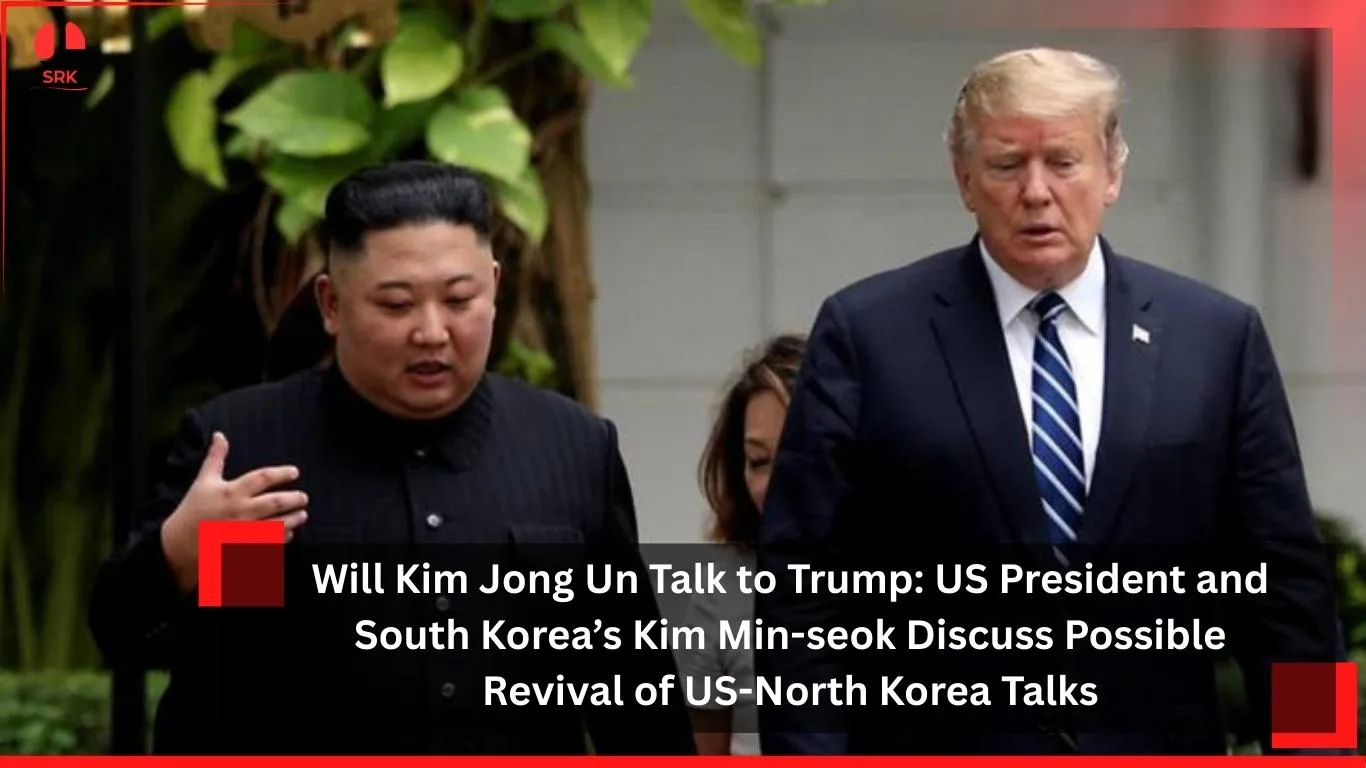
The possibility of reviving stalled U.S.-North Korea talks has resurfaced after U.S. President Donald Trump and South Korea’s Defense Minister Kim Min-seok discussed the matter during a high-level meeting. The central question dominating global headlines is whether North Korean leader Kim Jong Un will agree to re-engage with Trump in direct dialogue.
Background
U.S.-North Korea relations have been marked by dramatic highs and lows. The historic summits between Trump and Kim Jong Un in Singapore (2018) and Hanoi (2019) raised hopes for denuclearization and peace on the Korean Peninsula. However, talks collapsed over disagreements on sanctions relief and nuclear disarmament timelines. Since then, communication has largely stalled, with North Korea pursuing missile tests and the U.S. maintaining sanctions.
Current Developments
- Trump’s Initiative: The U.S. President has signaled openness to reviving talks, emphasizing diplomacy over confrontation.
- South Korea’s Role: Defense Minister Kim Min-seok has stressed the importance of dialogue, urging both sides to consider confidence-building measures.
- North Korea’s Position: While Pyongyang has not issued an official response, analysts believe Kim Jong Un may weigh the benefits of renewed engagement amid economic challenges.
- Regional Security Concerns: Rising tensions in East Asia, including North Korea’s missile launches, have heightened urgency for dialogue.
Comparative Analysis of Diplomatic Positions
| Stakeholder | Position on Talks | Key Interests |
|---|---|---|
| United States | Open to revival, conditional on denuclearization | Security, global leadership |
| North Korea | Hesitant, seeks sanctions relief | Economic survival, regime legitimacy |
| South Korea | Strongly supportive of dialogue | Regional peace, stability |
| China | Encourages talks, supports Pyongyang | Strategic influence in Asia |
Pivot Analysis of Themes
| Theme | Frequency in Coverage | Impact on Public Opinion |
|---|---|---|
| Revival of talks | High | Hopeful but cautious |
| Denuclearization | High | Central to debate |
| Sanctions relief | Medium | Divisive globally |
| Regional stability | High | Strong resonance in Asia |
Public and Media Reaction
- Global Media: Coverage highlights the potential breakthrough but warns of past failures.
- South Korean Public: Optimism tempered by skepticism, given North Korea’s history.
- U.S. Analysts: Divided between viewing talks as a diplomatic win or a risky gamble.
- Social Media: Hashtags like #TrumpKimTalks and #KoreanPeace have trended, reflecting global interest.
Strategic Implications
- For the U.S.: A chance to showcase diplomatic leadership and reduce nuclear threats.
- For North Korea: Potential economic relief and international legitimacy.
- For South Korea: Strengthened role as mediator and regional stabilizer.
- For China: Opportunity to influence outcomes while supporting Pyongyang.
Challenges Ahead
- Trust Deficit: Past failures make both sides cautious.
- Sanctions Dilemma: Balancing denuclearization with economic relief remains contentious.
- Regional Security Risks: Continued missile tests could derail talks.
- Domestic Politics: Leaders must balance international diplomacy with domestic expectations.
Conclusion
The possibility of Kim Jong Un talking to Donald Trump again has reignited global debate. With South Korea’s Kim Min-seok advocating for dialogue, the stage may be set for renewed engagement. However, the path forward is fraught with challenges, from sanctions disputes to trust deficits. Whether talks succeed will depend on the willingness of both sides to compromise and prioritize peace over confrontation.
Disclaimer
This article is a journalistic analysis of discussions surrounding the potential revival of U.S.-North Korea talks. It is intended for informational purposes only and does not endorse or oppose any political leader, party, or nation. Readers are encouraged to consider multiple perspectives before forming conclusions.