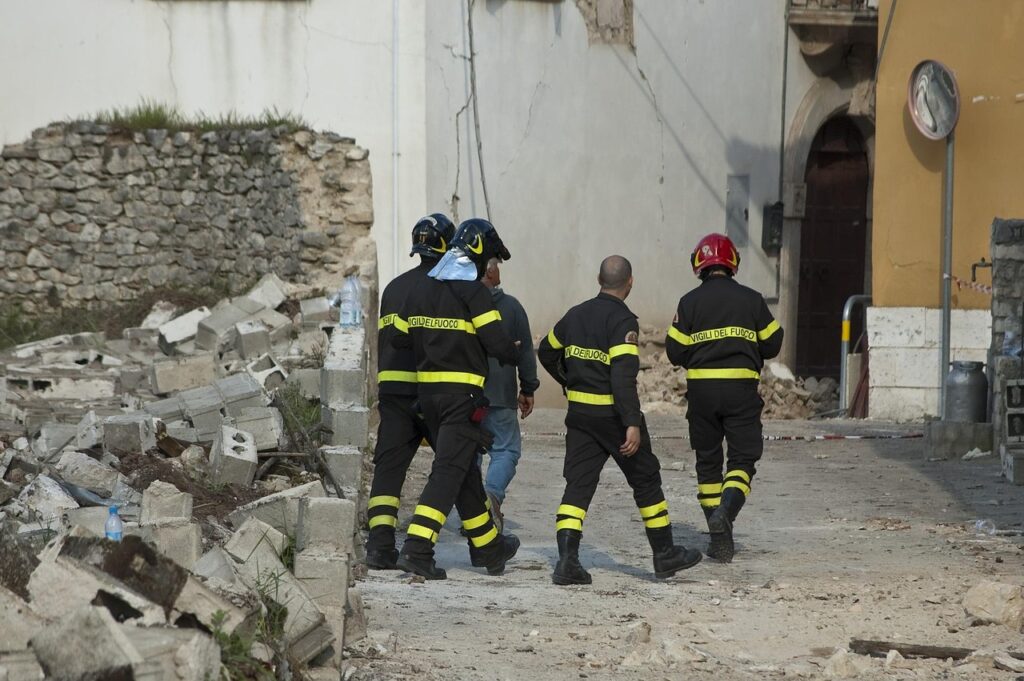

Coordinated Response Underway
Elite urban search and rescue teams from California, Virginia, and Florida have deployed to Venezuela this week, joining local emergency responders in a high-stakes effort to locate survivors trapped beneath the rubble of a catastrophic earthquake. The international coalition arrived on the ground Tuesday, immediately pivoting to manual extraction techniques after acoustic sensors detected rhythmic tapping sounds emanating from beneath a collapsed structural foundation in the capital.
Context of the Crisis
Venezuela has faced significant infrastructure challenges in recent years, leaving many residential and commercial buildings vulnerable to seismic activity. The sudden earthquake, which registered high on the Richter scale, caused widespread structural failure across densely populated urban centers. With local resources stretched thin, the Venezuelan government issued an urgent international appeal for specialized heavy-rescue equipment and trained personnel to bolster search-and-rescue operations.
A Grueling Marathon of Recovery
The operation is characterized by extreme physical and environmental hazards. Rescue specialists are working in shifts, navigating unstable concrete slabs and precarious debris piles that threaten further collapse. Teams are utilizing fiber-optic cameras and sensitive listening devices to pinpoint trapped individuals, while heavy hydraulic jacks and concrete saws are being deployed with extreme caution to avoid destabilizing the ruins.
Collaboration between American teams and local Venezuelan volunteers has become the backbone of the mission. While the international teams bring advanced logistical support and medical expertise, local responders provide critical knowledge of building layouts and neighborhood infrastructure. This integration is vital for navigating the complex web of collapsed power lines and ruptured water mains that have further complicated the search.
Expert Perspectives
According to data from the International Search and Rescue Advisory Group (INSARAG), the first 72 hours following a seismic event are the most critical for survival. However, experts note that incidents of survival beyond this window—often called the ‘golden window’—frequently occur in buildings that did not completely pancake, allowing for small air pockets. Dr. Elena Vance, a disaster management consultant, notes that these teams are trained for ‘prolonged endurance scenarios’ where structural integrity is compromised.
Technical specialists report that the density of the debris in Venezuela requires a slow, methodical approach rather than rapid excavation. ‘Every movement must be calculated to prevent secondary shifting of the structure,’ stated a lead coordinator on the scene. The teams are also managing the physical toll of extreme humidity and dust inhalation, which poses long-term health risks to the rescuers themselves.
Long-term Implications
The current operation serves as a test case for international disaster cooperation in politically complex environments. As the search transitions from rescue to potential recovery, the industry is closely monitoring how these cross-border collaborations affect future emergency protocols. Observers are also looking toward the inevitable rebuilding phase, which will likely necessitate stricter seismic building codes to mitigate the impact of future geological events in the region.
As the marathon continues, the focus remains on the acoustic anomalies detected in the rubble. Families of the missing remain stationed at a perimeter line, awaiting updates from the command center. International aid organizations are currently transitioning their logistics to provide sustained support for the thousands displaced by the event, with the next 48 hours expected to determine the viability of further survivor detection.