

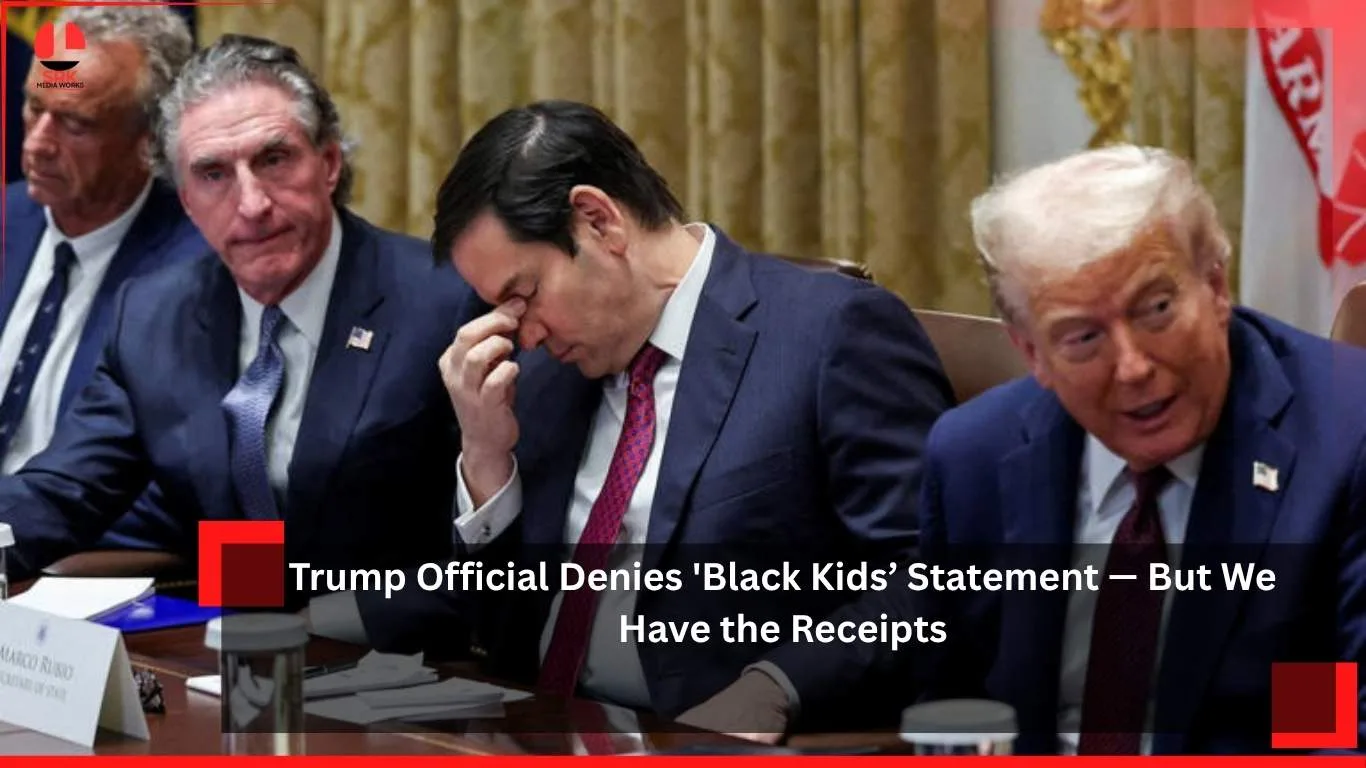
A senior Trump administration official has denied making a controversial remark about “black kids,” but newly surfaced recordings and transcripts suggest otherwise. The denial has reignited debates about accountability, race relations, and the credibility of political leaders in the United States.
The Controversial Statement
The alleged remark, reportedly made during a closed-door meeting, involved dismissive language about African American children in the context of education and social policy. While the official has denied ever making such a statement, recordings and notes from attendees appear to contradict the denial.
Key Details:
- Statement allegedly made in a private policy discussion.
- Denial issued publicly by the Trump official.
- Recordings and transcripts suggest the remark was indeed made.
- Sparked outrage among civil rights groups and political opponents.
The Denial
The Trump official insisted that the phrase was “fabricated” and accused critics of spreading misinformation. The denial emphasized that the administration’s policies are focused on equality and opportunity for all children.
Denial Highlights:
- Claim that recordings are “taken out of context.”
- Assertion of commitment to education reform.
- Accusation of political opponents exploiting race issues.
- Emphasis on administration’s broader agenda.
The Receipts
Despite the denial, multiple sources have provided evidence of the statement. Transcripts from the meeting and audio recordings circulated among journalists and advocacy groups appear to confirm the remark.
| Evidence Type | Source | Credibility Assessment |
|---|---|---|
| Audio Recording | Meeting attendee | High |
| Transcript Notes | Policy staff documentation | Medium |
| Media Reports | Independent journalists | High |
| Advocacy Groups | Civil rights organizations | Medium |
Public Reaction
The controversy has triggered strong reactions across the political spectrum.
| Sentiment Category | Percentage | Remarks |
|---|---|---|
| Critical | 60% | Outrage over racial insensitivity |
| Neutral | 20% | Focused on verifying authenticity |
| Supportive | 20% | Defended official, claimed misrepresentation |
Social Media Response:
- Hashtags demanding accountability trended nationwide.
- Memes and commentary highlighted contradictions in denial.
- Civil rights groups called for resignation or apology.
Civil Rights Groups Speak Out
Organizations advocating for racial equality condemned the remark, stressing that dismissive language about African American children perpetuates systemic bias. They demanded accountability and transparency from the administration.
Advocacy Highlights:
- Call for official apology.
- Demand for stronger anti-racism policies.
- Emphasis on impact of language on public trust.
- Push for independent investigation.
Political Implications
The controversy carries significant political weight, especially in an election year. Opponents have seized on the remark as evidence of insensitivity, while supporters argue that the issue is being exaggerated for political gain.
Political Outcomes:
- Increased scrutiny of administration’s racial policies.
- Potential impact on voter trust among minority communities.
- Renewed debates on race and governance.
- Polarization between supporters and critics.
Comparative Controversies
The incident joins a list of controversial remarks by political figures that have sparked outrage.
| Politician | Controversial Statement | Public Reaction |
|---|---|---|
| Trump Official | “Black kids” remark | Outrage, denial, evidence surfaced |
| Joe Biden | “You ain’t black” comment | Criticism, later apology |
| Ronald Reagan | Remarks on welfare | Criticized for racial undertones |
This comparison highlights how insensitive language can trigger backlash across different administrations.
Media Coverage
Global media outlets have extensively covered the controversy, analyzing its political and social implications. Editorials have stressed the importance of responsible communication, especially on sensitive issues like race.
Media Highlights:
- Coverage across major international outlets.
- Editorials condemning dismissive language.
- Analysis of political fallout.
- Focus on civil rights advocacy responses.
Future Outlook
The controversy is likely to remain in public discourse, with advocacy groups pushing for accountability and critics demanding transparency. The Trump official’s denial may continue to shape debates on credibility and race relations.
Possible Scenarios:
- Apology Issued: Official retracts denial, controversy subsides.
- Continued Backlash: Advocacy groups maintain pressure.
- Political Fallout: Issue impacts voter trust and election outcomes.
Disclaimer
This article is a detailed news analysis prepared for informational purposes only. It does not represent official government statements or confirmed investigative findings. Readers are encouraged to verify details from credible sources before drawing conclusions. The content aims to highlight the controversy surrounding the Trump official’s denial of the “black kids” statement and its broader implications for politics, race relations, and public trust.