




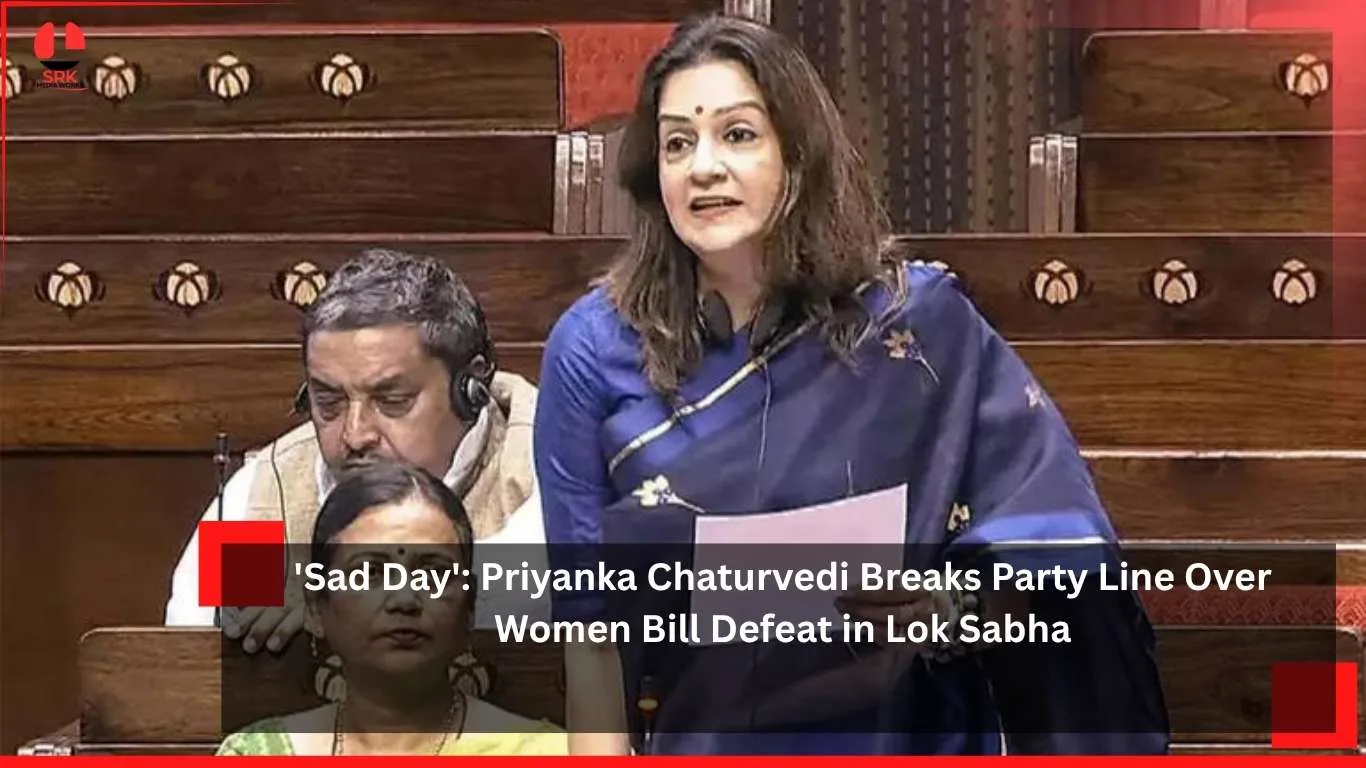
Shiv Sena (UBT) leader Priyanka Chaturvedi has described the defeat of the women’s reservation bill in the Lok Sabha as a “sad day,” breaking ranks with her party’s official position. Her remarks have sparked debate across political circles, highlighting the deep divisions over the bill and the broader issue of women’s representation in Indian politics.
Priyanka Chaturvedi’s Statement
Chaturvedi expressed disappointment at the bill’s failure, emphasizing that women’s reservation is a critical step toward gender equality in governance. She criticized political maneuvering that led to the bill’s defeat and urged parties to rise above partisan interests.
- Emotional Appeal: Called the defeat a “sad day” for Indian democracy.
- Criticism of Politics: Accused parties of prioritizing electoral gains over women’s rights.
- Call for Unity: Urged cross-party consensus to ensure women’s representation.
Key Highlights of Chaturvedi’s Remarks
| Issue | Chaturvedi’s Position | Implication |
|---|---|---|
| Women’s Reservation | Strongly supports | Advocates reform |
| Bill Defeat | “Sad day” | Criticism of political failure |
| Party Line | Broke ranks | Independent stance |
| Future Outlook | Calls for consensus | Push for renewed debate |
Party Reactions
Shiv Sena (UBT) has maintained a cautious stance on the bill, aligning with Opposition concerns about its structure and implementation. Chaturvedi’s remarks, however, reflect a more direct criticism, signaling internal differences.
- Party Position: Skeptical of bill’s current form.
- Chaturvedi’s Position: Stronger support for immediate implementation.
- Implication: Highlights diversity of opinion within parties.
Government’s Position
Prime Minister Narendra Modi and the BJP have championed the women’s reservation bill as a historic reform. The government argues that the legislation will transform Indian politics by ensuring greater participation of women in decision-making.
- BJP’s Stand: Strongly supports the bill.
- Implementation Timeline: Linked to delimitation, delaying benefits.
- Political Messaging: Presented as a landmark step toward gender equality.
Opposition’s Concerns
Opposition parties, including Congress and regional allies, have criticized the bill for its delayed implementation and lack of inclusivity. They argue that the bill must include provisions for marginalized women and be implemented immediately.
Opposition’s Key Concerns
| Concern | Explanation |
|---|---|
| Delayed Implementation | Linked to delimitation, delaying benefits |
| Inclusivity | No specific provisions for marginalized women |
| Political Strategy | Seen as electoral messaging |
| Structural Weakness | Ambiguity in execution mechanisms |
Historical Context
The debate over women’s reservation has spanned decades. Multiple attempts to pass the bill have failed due to disagreements over structure and inclusivity. Chaturvedi’s remarks reflect frustration at the continued inability to achieve consensus.
Timeline of Women’s Reservation Debate
| Year | Event |
|---|---|
| 1996 | First introduction of bill |
| 2010 | Bill passed in Rajya Sabha, stalled in Lok Sabha |
| 2026 | Defeat in Lok Sabha reignites debate |
Public Sentiment
Public opinion remains largely supportive of women’s reservation. Citizens view the bill as a necessary step toward gender equality, though many echo concerns about inclusivity and delays.
- Supporters: Applaud principle of reservation.
- Critics: Demand immediate and inclusive implementation.
- Neutral Observers: Call for consensus between government and Opposition.
Comparative Analysis of Global Practices
Women’s reservation is not unique to India. Several countries have implemented quotas to ensure female representation in legislatures.
| Country | Quota System | Impact |
|---|---|---|
| Rwanda | 30% reserved seats | Women hold majority in Parliament |
| Nepal | 33% reservation | Increased female participation |
| France | Gender parity laws | Balanced representation |
| India (Proposed) | 33% reservation | Pending implementation |
Strategic Implications
The defeat of the bill has significant political implications. For the government, it represents a setback in its reform agenda. For the Opposition, it highlights the need to push for inclusivity and immediate implementation. For leaders like Chaturvedi, it underscores the importance of independent voices within parties.
- Government Strategy: Showcase bill as reformist effort.
- Opposition Strategy: Highlight flaws to demand changes.
- Independent Voices: Strengthen democratic debate.
Future Outlook
The fate of women’s reservation will depend on renewed negotiations between government and Opposition. Chaturvedi’s remarks may encourage more leaders to break party lines and push for consensus.
Key Factors to Watch
| Factor | Potential Outcome |
|---|---|
| Government Flexibility | Could lead to consensus |
| Opposition Pressure | May force changes in bill |
| Public Opinion | Likely to influence political strategy |
| Independent Voices | Could shape future debate |
Conclusion
Priyanka Chaturvedi’s statement calling the defeat of the women’s reservation bill a “sad day” underscores the frustration felt by many leaders and citizens. By breaking party lines, she has highlighted the urgency of achieving consensus on women’s representation. The debate reflects the complexities of Indian politics, where agreement on principle often clashes with disagreements over execution. The coming months will determine whether India finally achieves a breakthrough or whether the issue continues to remain unresolved.
Disclaimer
This article is a comprehensive analytical report based on publicly available information and political developments. It is intended for informational purposes only and does not constitute political endorsement or advice. Readers are encouraged to verify facts independently and consider multiple perspectives before forming conclusions.