
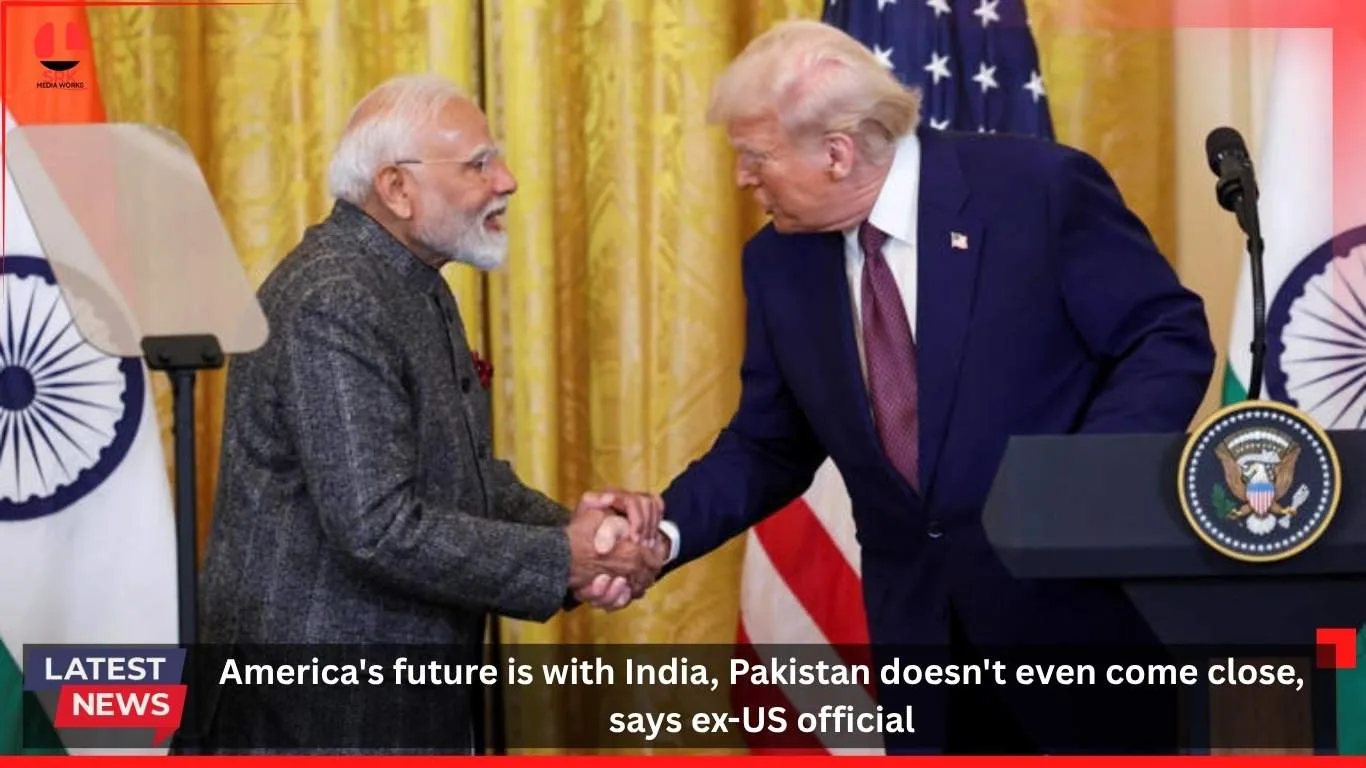
A former senior U.S. official has stated that America’s strategic future lies with India, emphasizing that Pakistan does not come close in terms of economic, political, and security relevance. This remark has reignited discussions about Washington’s South Asia policy, highlighting India’s growing role as a global partner and Pakistan’s diminishing influence in U.S. foreign policy calculations.
Statement and Context
The ex-official explained that India’s economic growth, technological advancements, and democratic framework make it a natural ally for the United States. In contrast, Pakistan’s limited economic capacity and internal challenges reduce its significance in shaping America’s long-term strategic interests. The statement reflects a broader shift in U.S. foreign policy, where India is increasingly seen as a counterbalance to China and a key partner in global security.
The official noted, “America’s future is with India. Pakistan doesn’t even come close when it comes to strategic importance.” This blunt assessment underscores the widening gap between the two South Asian nations in Washington’s geopolitical outlook.
India’s Strategic Importance
India has emerged as one of the fastest-growing economies in the world, with a strong focus on technology, defense modernization, and global diplomacy. Its role in the Indo-Pacific strategy, aimed at countering China’s influence, makes it indispensable to U.S. interests.
Key Factors:
- Economic Growth: India is projected to be among the top three global economies in the coming decades.
- Defense Cooperation: Increasing military collaboration with the U.S., including joint exercises and defense deals.
- Democratic Values: Shared democratic principles strengthen bilateral ties.
- Global Influence: India’s leadership in forums like G20 and BRICS enhances its international standing.
Pakistan’s Diminishing Role
Pakistan, once considered a crucial partner during the Cold War and the War on Terror, has seen its relevance decline. Economic instability, political turmoil, and reliance on external aid have weakened its position. While Pakistan remains strategically important due to its location and nuclear capabilities, it no longer commands the same level of attention in U.S. policy circles.
Comparative Analysis
| Factor | India’s Position | Pakistan’s Position |
|---|---|---|
| Economic Growth | Rapidly expanding, global influence | Struggling economy, reliant on aid |
| Defense Cooperation | Strong ties with U.S., modernization | Limited cooperation, reliance on China |
| Political Stability | Democratic framework, global partnerships | Political instability, governance issues |
| Strategic Relevance | Key Indo-Pacific partner | Reduced role in U.S. foreign policy |
U.S. Policy Shift in South Asia
The statement reflects a broader trend in U.S. foreign policy. Washington has increasingly prioritized India as a strategic partner, particularly in countering China’s rise. This shift is evident in initiatives such as the Quad alliance (U.S., India, Japan, Australia), which focuses on security and economic cooperation in the Indo-Pacific region.
Pakistan, meanwhile, has leaned more heavily on China for economic and military support, further distancing itself from U.S. strategic priorities.
Pivot Analysis: U.S. Engagement with India vs. Pakistan
| Factor | Engagement with India | Engagement with Pakistan |
|---|---|---|
| Economic Partnerships | Expanding trade, investment, technology | Limited trade, aid-dependent |
| Security Cooperation | Indo-Pacific strategy, Quad alliance | Counterterrorism cooperation, declining |
| Diplomatic Relations | Strengthening ties, global collaboration | Strained, overshadowed by China ties |
| Long-term Outlook | Strategic partner for future | Secondary role, limited influence |
Global Reactions
The statement has sparked debate across South Asia. Indian analysts view it as validation of India’s growing global stature, while Pakistani commentators criticize it as dismissive of Pakistan’s strategic importance. International observers note that the U.S. is aligning its policies with long-term economic and security realities.
Reactions Overview
| Group/Community | Reaction to Statement | Potential Impact |
|---|---|---|
| Indian Analysts | Positive, validation of India’s role | Strengthens India-U.S. partnership |
| Pakistani Analysts | Negative, criticism of U.S. stance | Fuels debate on Pakistan’s relevance |
| Global Observers | Recognition of policy shift | Highlights Indo-Pacific focus |
| U.S. Policy Experts | Agreement with strategic reasoning | Reinforces India-centric approach |
Implications for Future Relations
The statement underscores the trajectory of U.S. relations in South Asia. India is poised to become a cornerstone of America’s global strategy, while Pakistan’s role is likely to remain limited to regional security concerns.
Looking ahead:
- India-U.S. Relations: Expected to deepen across defense, technology, and trade.
- Pakistan-U.S. Relations: Likely to remain transactional, focused on security and counterterrorism.
- Regional Dynamics: The shift may influence South Asian geopolitics, with India gaining leverage in global forums.
Conclusion
The ex-U.S. official’s remark that “America’s future is with India, Pakistan doesn’t even come close” reflects a clear strategic shift in Washington’s outlook. India’s economic rise, democratic values, and role in the Indo-Pacific make it a natural partner for the U.S., while Pakistan’s challenges limit its relevance. This statement not only highlights the evolving dynamics of South Asia but also underscores the importance of India in shaping America’s future global strategy.
Disclaimer
This article is based on publicly available commentary and analysis of geopolitical developments. It does not represent endorsement or criticism of any nation. The content is intended for informational purposes only, highlighting the dynamics of U.S. foreign policy in South Asia. Readers are encouraged to explore diverse perspectives before forming conclusions.